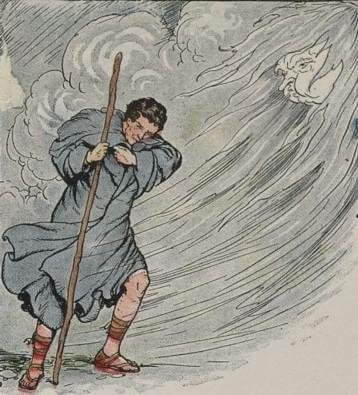
The North Wind And The Sun


The North Wind and the Sun (Perry Index 46) is one of Aesop’s most widely known fables, dating to the earliest collections attributed to the Greek fabulist (circa 600 BCE). The fable has been used in linguistics since 1949 as the standard text for phonetic transcription — the International Phonetic Association uses its translation into various languages to demonstrate pronunciation. Jean de La Fontaine retold it as Phébus et Borée in his Fables (1668), renaming the Sun after the Greek god Phoebus Apollo. The moral — that persuasion is more effective than force — has made it one of the most frequently cited fables in discussions of diplomacy, leadership, and conflict resolution.
The North Wind And The Sun by Aesop

The North Wind and the Sun were arguing about which of them was stronger. While they quarreled with much heat and bluster, a Traveler passed along the road wrapped in a cloak.

"Let us agree," said the Sun, "that whoever can strip that Traveler of his cloak is the stronger."

"Very well," growled the North Wind, and at once sent a cold, howling blast against the Traveler.

With the first gust of wind, the ends of the cloak whipped about the Traveler's body. But he immediately wrapped it tightly around him, and the harder the Wind blew, the tighter he held it. The North Wind tore at the cloak with all his fury, but every effort was useless.

Then the Sun began to shine. At first his beams were gentle, and in the pleasant warmth after the bitter cold, the Traveler unfastened his cloak and let it hang loosely from his shoulders. The Sun's rays grew warmer and warmer. The man took off his cap and wiped his brow. At last he became so hot that he pulled off his cloak and threw himself down in the welcome shade of a tree by the roadside.

Gentleness and kind persuasion win where force and bluster fail.

The North Wind and the Sun had a quarrel about which of them was the stronger. While they were disputing with much heat and bluster, a Traveler passed along the road wrapped in a cloak.

"Let us agree," said the Sun, "that he is the stronger who can strip that Traveler of his cloak."

"Very well," growled the North Wind, and at once sent a cold, howling blast against the Traveler.

With the first gust of wind the ends of the cloak whipped about the Traveler's body. But he immediately wrapped it closely around him, and the harder the Wind blew, the tighter he held it to him. The North Wind tore angrily at the cloak, but all his efforts were in vain.

Then the Sun began to shine. At first his beams were gentle, and in the pleasant warmth after the bitter cold of the North Wind, the Traveler unfastened his cloak and let it hang loosely from his shoulders. The Sun's rays grew warmer and warmer. The man took off his cap and mopped his brow. At last he became so heated that he pulled off his cloak, and, to escape the blazing sunshine, threw himself down in the welcome shade of a tree by the roadside.

Gentleness and kind persuasion win where force and bluster fail.


You may also enjoy a parody poem of this Aesop's fable, titled The Impetuous Breeze and the Diplomatic Sun and the Mother Goose nursery rhyme, The North Wind Doth Blow.


Frequently Asked Questions about The North Wind And The Sun

What is the moral of "The North Wind and the Sun"?

The moral is "Gentleness and kind persuasion win where force and bluster fail." The North Wind tries to rip the Traveler's cloak off by force, but the harder he blows, the tighter the Traveler holds on. The Sun simply shines with gentle warmth, and the Traveler removes his cloak willingly. The fable teaches that persuasion is more effective than coercion — people resist being forced into anything, but they willingly cooperate when the conditions make it feel natural and comfortable.

What do the North Wind and the Sun represent?

The North Wind represents brute force, aggression, and coercion — the belief that power means making others submit through intimidation. The Sun represents gentle persuasion, warmth, and patience — the understanding that true influence comes from making people want to cooperate rather than forcing them to comply. The Traveler represents any person whose behavior someone is trying to change. The fable's brilliance is that the Traveler never even knows he is being tested — the Sun's victory is so subtle that the Traveler believes removing his cloak was entirely his own idea.

What is the theme of "The North Wind and the Sun"?

The central theme is the superiority of persuasion over force. The fable demonstrates that aggression triggers resistance — the harder the North Wind blows, the more the Traveler clings to his cloak. But gentle warmth removes resistance entirely. Related themes include the nature of true power (strength isn't about domination but about effectiveness), psychological reactance (people push back harder when they feel coerced), and the wisdom of patience — the Sun doesn't rush or escalate; he simply shines and lets the result unfold.

Why did the North Wind lose the contest?

The North Wind lost because his method was self-defeating. By blowing cold, fierce gusts at the Traveler, he made the Traveler cold — which made the Traveler grip his cloak tighter for warmth. Every escalation by the Wind produced the exact opposite of the desired result. The North Wind's mistake was assuming that greater force would eventually break the Traveler's resistance. Instead, greater force created greater resistance. The fable shows that some problems cannot be solved by trying harder at the wrong approach — they require a fundamentally different strategy.

Is "The North Wind and the Sun" used in linguistics?

Yes — it is one of the most famous texts in the field of linguistics. Since 1949, the International Phonetic Association (IPA) has used translations of this fable as the standard passage for demonstrating phonetic transcription across different languages. When linguists want to show how a language sounds, they translate "The North Wind and the Sun" into that language and provide a phonetic transcription. The fable was chosen because it is short, widely known, contains a good variety of speech sounds, and exists in translations in nearly every language in the world.

How old is "The North Wind and the Sun" fable?

The fable is attributed to Aesop, the ancient Greek fabulist who lived circa 620–564 BCE, making the story roughly 2,600 years old. It is classified as Perry Index 46 in the standard catalogue of Aesop's fables. The earliest written version appears in classical Greek and Roman collections. Jean de La Fontaine retold it in 1668 as Phébus et Borée, renaming the Sun after the Greek god Phoebus Apollo and the North Wind after Boreas, the Greek god of the north wind.

What lesson does "The North Wind and the Sun" teach?

The fable teaches that kindness and warmth accomplish what force and intimidation cannot. It applies to nearly every area of life: parenting (encouragement works better than punishment), leadership (inspiration beats intimidation), diplomacy (negotiation beats threats), and everyday persuasion. South Korea's diplomatic policy toward North Korea was literally named the "Sunshine Policy" after this fable, reflecting the belief that engagement and warmth would achieve more than confrontation. The lesson is universal: when you want someone to change, make them want to change.

What are the best Aesop fables to read next?

If you enjoyed The North Wind and the Sun, here are more of Aesop's most compelling fables:

Save stories, build your reading list, and access all study tools — completely free.

Save The North Wind And The Sun to your library — it's free!

Need help with The North Wind And The Sun?

Study tools to help with homework, prepare for quizzes, and deepen your understanding.

Flashcards →