The Angel
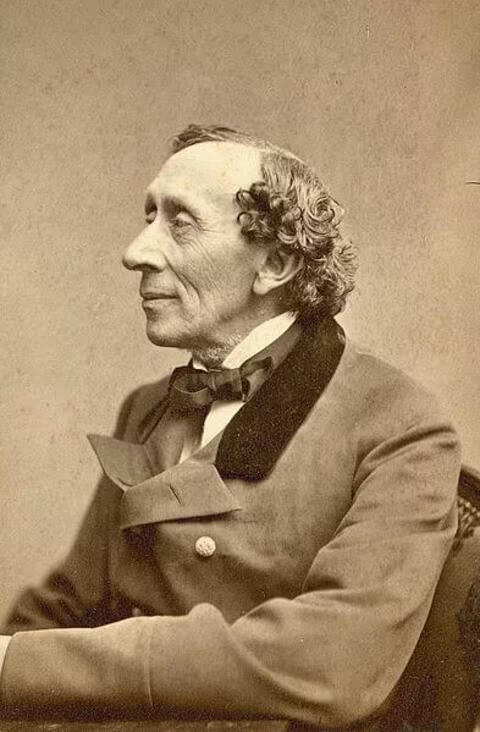
by Hans Christian Andersen
The Angel (1843) tells of an angel carrying a dead child to heaven, pausing to gather flowers along the way, including a humble wildflower that once brought comfort to a suffering boy. "The good God presses all flowers to His heart, but the one which has been kissed by thee He kisses above all the rest."
"Whenever a good child dies, an angel of God comes down from heaven, takes the dead child in his arms, spreads out his great white wings, and flies with him over all the places which the child had loved during his life. Then he gathers a large handful of flowers, which he carries up to the Almighty, that they may bloom more brightly in heaven than they do on earth. And the Almighty presses the flowers to His heart, but He kisses the flower that pleases Him best, and it receives a voice, and is able to join the song of the chorus of bliss."
These words were spoken by an angel of God, as he carried a dead child up to heaven, and the child listened as if in a dream. Then they passed over well-known spots, where the little one had often played, and through beautiful gardens full of lovely flowers.
"Which of these shall we take with us to heaven to be transplanted there?" asked the angel.
Close by grew a slender, beautiful, rose-bush, but some wicked hand had broken the stem, and the half-opened rosebuds hung faded and withered on the trailing branches.
"Poor rose-bush!" said the child, "let us take it with us to heaven, that it may bloom above in God's garden."
The angel took up the rose-bush; then he kissed the child, and the little one half opened his eyes. The angel gathered also some beautiful flowers, as well as a few humble buttercups and heart's-ease.
"Now we have flowers enough," said the child; but the angel only nodded, he did not fly upward to heaven.
It was night, and quite still in the great town. Here they remained, and the angel hovered over a small, narrow street, in which lay a large heap of straw, ashes, and sweepings from the houses of people who had removed. There lay fragments of plates, pieces of plaster, rags, old hats, and other rubbish not pleasant to see. Amidst all this confusion, the angel pointed to the pieces of a broken flower-pot, and to a lump of earth which had fallen out of it. The earth had been kept from falling to pieces by the roots of a withered field-flower, which had been thrown amongst the rubbish.
"We will take this with us," said the angel, "I will tell you why as we fly along."
And as they flew the angel related the history.
"Down in that narrow lane, in a low cellar, lived a poor sick boy; he had been afflicted from his childhood, and even in his best days he could just manage to walk up and down the room on crutches once or twice, but no more. During some days in summer, the sunbeams would lie on the floor of the cellar for about half an hour. In this spot the poor sick boy would sit warming himself in the sunshine, and watching the red blood through his delicate fingers as he held them before his face. Then he would say he had been out, yet he knew nothing of the green forest in its spring verdure, till a neighbor's son brought him a green bough from a beech-tree. This he would place over his head, and fancy that he was in the beech-wood while the sun shone, and the birds carolled gayly. One spring day the neighbor's boy brought him some field-flowers, and among them was one to which the root still adhered. This he carefully planted in a flower-pot, and placed in a window-seat near his bed. And the flower had been planted by a fortunate hand, for it grew, put forth fresh shoots, and blossomed every year. It became a splendid flower-garden to the sick boy, and his little treasure upon earth. He watered it, and cherished it, and took care it should have the benefit of every sunbeam that found its way into the cellar, from the earliest morning ray to the evening sunset. The flower entwined itself even in his dreams—for him it bloomed, for him spread its perfume. And it gladdened his eyes, and to the flower he turned, even in death, when the Lord called him. He has been one year with God. During that time the flower has stood in the window, withered and forgotten, till at length cast out among the sweepings into the street, on the day of the lodgers' removal. And this poor flower, withered and faded as it is, we have added to our nosegay, because it gave more real joy than the most beautiful flower in the garden of a queen."
"But how do you know all this?" asked the child whom the angel was carrying to heaven.
"I know it," said the angel, "because I myself was the poor sick boy who walked upon crutches, and I know my own flower well."
Then the child opened his eyes and looked into the glorious happy face of the angel, and at the same moment they found themselves in that heavenly home where all is happiness and joy. And God pressed the dead child to His heart, and wings were given him so that he could fly with the angel, hand in hand. Then the Almighty pressed all the flowers to His heart; but He kissed the withered field-flower, and it received a voice. Then it joined in the song of the angels, who surrounded the throne, some near, and others in a distant circle, but all equally happy. They all joined in the chorus of praise, both great and small,—the good, happy child, and the poor field-flower, that once lay withered and cast away on a heap of rubbish in a narrow, dark street.
Frequently Asked Questions about The Angel
What is "The Angel" by Hans Christian Andersen about?
The Angel by , first published in 1843, tells the story of an angel carrying a recently deceased child up to heaven. As they fly over the earth, they gather flowers from places the child loved — flowers that will bloom more brightly in God's garden. The child selects a broken rose-bush, and the angel adds buttercups and heart's-ease. But then the angel stops in a narrow, dirty street and retrieves a withered field-flower from a trash heap. He explains that this humble flower once brought immense joy to a poor, crippled boy who lived in a dark cellar and could barely walk on crutches. The flower was the boy's only treasure, his entire garden. When the child asks how the angel knows this, the angel reveals: "I myself was the poor sick boy who walked upon crutches, and I know my own flower well." In heaven, God kisses the withered flower and gives it a voice to sing among the angels.
What is the moral of "The Angel"?
The moral of The Angel is that true value lies not in outward beauty or worldly status, but in the love and joy something brings to a human heart. The withered field-flower, discarded on a trash heap, is more precious in heaven than the most beautiful rose in a queen's garden because it gave genuine happiness to a suffering child. The story teaches that small acts of kindness and humble sources of joy have eternal significance. It also carries the comforting message that suffering is not forgotten — the sick boy who endured a life of poverty and illness becomes an angel, and his beloved flower receives a voice in the heavenly chorus. suggests that what the world overlooks, God cherishes most.
What does the withered flower symbolize in "The Angel"?
The withered field-flower symbolizes humble, overlooked joy that possesses infinite spiritual value. In the earthly world, the flower is garbage — dried up, cast out with the trash when the sick boy's room is cleared after his death. But in the angel's eyes, it is the most important flower in the entire bouquet because it represents the pure love and happiness it brought to a boy who had nothing else. The flower also symbolizes the connection between earthly suffering and heavenly reward: just as the flower bloomed in a dark cellar and sustained the boy's spirit, it receives a voice in heaven and joins the angels' song. When God kisses this particular flower above all others, makes clear that genuine feeling matters more than worldly appearance.
What is the twist ending of "The Angel"?
The story's powerful twist comes when the child being carried to heaven asks the angel how he knows the story of the sick boy and his flower. The angel replies: "I know it because I myself was the poor sick boy who walked upon crutches, and I know my own flower well." This revelation transforms the entire narrative — the crippled child who spent his life in a dark cellar, whose only joy was a single field-flower, has become a radiant angel of God. The twist carries a profound theological message: that earthly suffering leads to heavenly glory, and that the most vulnerable and forgotten members of society are closest to the divine. It also gives the story a circular, redemptive structure — the former sick boy, now an angel, guides another dying child to the same peace he found.
What are the main themes of "The Angel"?
The central themes include the transcendent value of humble joys, innocence and redemption, death as a peaceful transition, and compassion for the suffering. contrasts the beautiful rose-bush and garden flowers with the discarded field-flower, arguing that the latter is more precious because of the love invested in it. The story also explores the Christian theme that earthly suffering is rewarded in heaven — the sick boy becomes an angel, and his humble flower receives the highest honor. The journey from earth to heaven is portrayed not as frightening but as a gentle, beautiful passage guided by love. The story affirms that nothing good is ever truly lost: every act of love and every moment of joy, no matter how small, has eternal significance.
When was "The Angel" published?
The Angel was first published in November 1843 as part of 's collection New Fairy Tales. First Volume. First Collection, published by C.A. Reitzel in Copenhagen. It appeared alongside The Ugly Duckling and The Nightingale. The collection was received with great acclaim by Danish critics. The story reflects Andersen's deeply held Christian faith and his personal familiarity with poverty and suffering — themes that recur throughout his body of work, from The Little Match Girl to this tender meditation on the value of humble lives.
What literary devices does Andersen use in "The Angel"?
employs several literary devices in this brief but powerful tale. Symbolism is central: the flowers represent different forms of joy and beauty, with the withered flower symbolizing the most profound kind — love given in suffering. Contrast structures the narrative — the beautiful gardens versus the trash heap, the elegant rose-bush versus the dried field-flower, the dark cellar versus the brightness of heaven. The story uses a frame narrative, with the angel telling the sick boy's story within the larger tale of the heavenly journey. The surprise revelation that the angel himself was the sick boy functions as an ironic reversal that redefines everything that came before. Personification gives the flower a voice in heaven, completing its transformation from discarded trash to participant in the divine chorus.
Who is the angel in "The Angel" by Hans Christian Andersen?
The angel is revealed at the story's climax to be the former poor sick boy who once lived in a dark cellar and could barely walk on crutches. During his earthly life, his only joy was a single field-flower that a neighbor's child brought him — a flower he planted, watered, and cherished until it became his "treasure upon earth." After his death, the boy was transformed into an angel who now carries other deceased children to heaven and gathers flowers for God's garden. The angel's identity carries a profound message: that those who suffered most on earth may be closest to God in heaven. His intimate knowledge of the withered flower — "I know my own flower well" — gives the story its emotional power and demonstrates that no life of suffering is forgotten or meaningless in the divine plan.
Save stories, build your reading list, and access all study tools — completely free.
Save The Angel to your library — it's free!Need help with The Angel?
Study tools to help with homework, prepare for quizzes, and deepen your understanding.
Flashcards →