Aristocracy Versus Hash
by O. Henry
Aristocracy Versus Hash is a brief, funny sketch about a hungry man who would trade all the social pretensions of high society for a good plate of cornbread and Irish stew. "I will shake you for the beer."
The snake reporter of The Rolling Stone was wandering up the avenue last night on his way home from the Y.M.C.A. rooms when he was approached by a gaunt, hungry-looking man with wild eyes and dishevelled hair. He accosted the reporter in a hollow, weak voice.
"'Can you tell me, Sir, where I can find in this town a family of scrubs?'
"'I don't understand exactly.'
"'Let me tell you how it is,' said the stranger, inserting his forefinger in the reporter's buttonhole and badly damaging his chrysanthemum. 'I am a representative from Soapstone County, and I and my family are houseless, homeless, and shelterless. We have not tasted food for over a week. I brought my family with me, as I have indigestion and could not get around much with the boys. Some days ago I started out to find a boarding house, as I cannot afford to put up at a hotel. I found a nice aristocratic-looking place, that suited me, and went in and asked for the proprietress. A very stately lady with a Roman nose came in the room. She had one hand laid across her stom--across her waist, and the other held a lace handkerchief. I told her I wanted board for myself and family, and she condescended to take us. I asked for her terms, and she said $300 per week.
"'I had two dollars in my pocket and I gave her that for a fine teapot that I broke when I fell over the table when she spoke.'
"'You appear surprised,' says she. `You will please remembah that I am the widow of Governor Riddle of Georgiah; my family is very highly connected; I give you board as a favah; I nevah considah money any equivalent for the advantage of my society, I--'
"'Well, I got out of there, and I went to some other places. The next lady was a cousin of General Mahone of Virginia, and wanted four dollars an hour for a back room with a pink motto and a Burnet granite bed in it. The next one was an aunt of Davy Crockett, and asked eight dollars a day for a room furnished in imitation of the Alamo, with prunes for breakfast and one hour's conversation with her for dinner. Another one said she was a descendant of Benedict Arnold on her father's side and Captain Kidd on the other.
"'She took more after Captain Kidd.
"'She only had one meal and prayers a day, and counted her society worth $100 a week.
"'I found nine widows of Supreme Judges, twelve relicts of Governors and Generals, and twenty-two ruins left by various happy Colonels, Professors, and Majors, who valued their aristocratic worth from $90 to $900 per week, with weak-kneed hash and dried apples on the side. I admire people of fine descent, but my stomach yearns for pork and beans instead of culture. Am I not right?'
"'Your words,' said the reporter, 'convince me that you have uttered what you have said.'
"'Thanks. You see how it is. I am not wealthy; I have only my per diem and my perquisites, and I cannot afford to pay for high lineage and moldy ancestors. A little corned beef goes further with me than a coronet, and when I am cold a coat of arms does not warm me.'
"'I greatly fear, 'said the reporter, with a playful hiccough, 'that you have run against a high-toned town. Most all the first-class boarding houses here are run by ladies of the old Southern families, the very first in the land.'
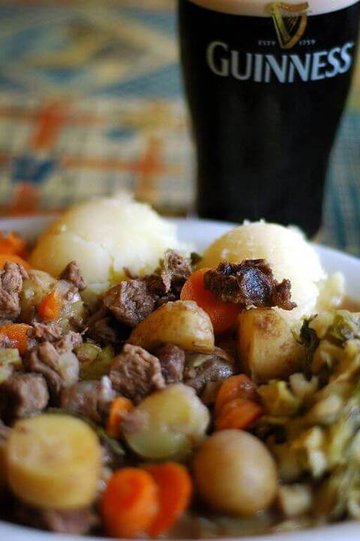
"'I am now desperate,' said the Representative, as he chewed a tack awhile, thinking it was a clove. 'I want to find a boarding house where the proprietress was an orphan found in a livery stable, whose father was a dago from East Austin, and whose grandfather was never placed on the map. I want a scrubby, ornery, low-down, snuff-dipping, back-woodsy, piebald gang, who never heard of finger bowls or Ward McAllister, but who can get up a mess of hot cornbread and Irish stew at regular market quotations.'
"'Is there such a place in Austin?'
"The snake reporter sadly shook his head. 'I do not know,' he said, 'but I will shake you for the beer.'
"Ten minutes later the slate in the Blue Ruin saloon bore two additional characters: 10."
Aristocracy Versus Hash is featured in our collection of Short Short Stories to read when you have five minutes to spare and Foodie Stories
Frequently Asked Questions about Aristocracy Versus Hash
What is "Aristocracy Versus Hash" by O. Henry about?
"Aristocracy Versus Hash" is a humorous sketch in which a state representative from Soapstone County tells a newspaper reporter about his failed search for affordable boarding in Austin, Texas. Every boarding house he visits is run by a widow or relative of some prominent Southern figure—governors, generals, judges—who charges outrageous rates based on her aristocratic pedigree rather than the quality of her food. The desperate man ultimately begs to find a humble, unpretentious household that can simply serve hot cornbread and Irish stew at fair prices.
What is the main theme of "Aristocracy Versus Hash"?
The central theme is the absurdity of valuing social status over practical needs. satirizes the post-Civil War Southern boarding house culture, where widows of former dignitaries charged exorbitant prices not for quality food or lodging, but for the privilege of associating with their family name. The story highlights the gap between aristocratic pretension and everyday reality, summed up in the line: "A little corned beef goes further with me than a coronet."
When was "Aristocracy Versus Hash" written and where was it first published?
"Aristocracy Versus Hash" was first published in The Rolling Stone, a weekly humor newspaper that (William Sydney Porter) ran in Austin, Texas from April 1894 to April 1895. The story was later collected in the posthumous volume Rolling Stones (1912). It represents some of O. Henry's earliest published fiction, written years before his famous New York stories.
What is the significance of the title "Aristocracy Versus Hash"?
The title encapsulates the story's core conflict in a single phrase. "Aristocracy" represents the inflated social pretensions of the boarding house landladies who trade on their distinguished family connections. "Hash" represents plain, affordable, everyday food—the practical sustenance the protagonist actually needs. The word versus frames it as a contest between high-born vanity and humble nourishment, with clearly siding with the hash.
What literary techniques does O. Henry use in "Aristocracy Versus Hash"?
employs several signature techniques in this early sketch. Hyperbole drives the humor, with boarding house rates escalating from $300 per week to $900. Satire targets class pretension through increasingly absurd ancestral claims—from a governor's widow to a descendant of both Benedict Arnold and Captain Kidd. The frame narrative structure (a reporter encountering a stranger) adds journalistic flavor, and O. Henry's characteristic wordplay appears in phrases like "weak-kneed hash" and "moldy ancestors."
Who is the "snake reporter" in "Aristocracy Versus Hash"?
The "snake reporter" is a journalist for The Rolling Stone—the actual humor newspaper published in Austin, Texas. The term "snake reporter" was 1890s slang for a reporter who covered odd, sensational, or humorous stories rather than hard news. By making the reporter a character in the story and naming the real newspaper, O. Henry blurred the line between his journalism and fiction, a technique common in his early Austin writings.
What is the historical context of "Aristocracy Versus Hash"?
The story reflects post-Reconstruction Southern culture in 1890s Austin, Texas. After the Civil War, many widows of former Confederate officers and Southern politicians had lost their wealth but retained their sense of social superiority. Running boarding houses was one of the few respectable ways for genteel women to earn income, and many charged premium rates based on their family's former prestige. observed this culture firsthand during his years in Austin (1884–1898) and used it as rich material for satire.
How does "Aristocracy Versus Hash" compare to O. Henry's later work?
As one of 's earliest published pieces, this sketch differs from his later masterworks in several ways. It lacks the tight plot structure and signature surprise endings of stories like The Gift of the Magi or "The Last Leaf." Instead, it reads more like a humorous newspaper column—essentially a comic monologue with a punchline. However, the themes of class conflict, sympathy for ordinary people, and sharp social observation that would define his career are already clearly present.
What does the ending of "Aristocracy Versus Hash" mean?
The story ends with the reporter suggesting they "shake for the beer"—a casual dice or coin game to decide who buys drinks. The final line notes "the slate in the Blue Ruin saloon bore two additional characters: 10," meaning their bar tab increased by ten cents. Rather than offering a solution to the man's housing problem, the reporter simply proposes a drink. This anticlimactic ending underscores the story's humor: the problem of aristocratic pretension in Austin is so entrenched that even a newspaper man has no answer for it.
What is the "Rolling Stones" collection that includes "Aristocracy Versus Hash"?
Rolling Stones (1912) is a posthumous collection of 's early and miscellaneous writings, published two years after his death. It includes sketches, poems, and stories originally written for The Rolling Stone newspaper and the Houston Post during the 1890s. The collection preserves O. Henry's apprentice work—rawer and more journalistic than his polished later stories, but full of the wit and social observation that made him famous. "Aristocracy Versus Hash" is one of several boarding house satires in the volume.
Save stories, build your reading list, and access all study tools — completely free.
Save Aristocracy Versus Hash to your library — it's free!Need help with Aristocracy Versus Hash?
Study tools to help with homework, prepare for quizzes, and deepen your understanding.
Flashcards →