Hearts and Hands
by O. Henry
Like O. Henry’s own life, this story is built on reversals and wordplay. Recently released from federal prison after a conviction for embezzlement, O. Henry wrote “Hearts and Hands” with an insider’s feel for judgment, mercy, and surprise—making its final turn of compassion especially poignant.
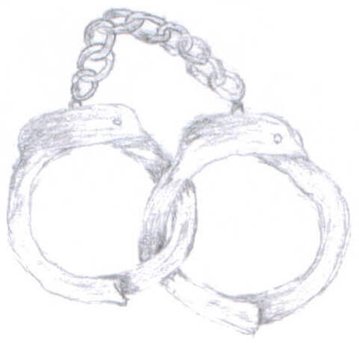
At Denver there was an influx of passengers into the coaches on the eastbound B. & M. Express. In one coach there sat a very pretty young woman dressed in elegant taste and surrounded by all the luxurious comforts of an experienced traveler. Among the newcomers were two young men, one of handsome presence with a bold, frank countenance and manner; the other a ruffled, glum-faced person, heavily built and roughly dressed. The two were handcuffed together.
As they passed down the aisle of the coach the only vacant seat offered was a reversed one facing the attractive young woman. Here the linked couple seated themselves. The young woman's glance fell upon them with a distant, swift disinterest; then with a lovely smile brightening her countenance and a tender pink tingeing her rounded cheeks, she held out a little gray-gloved hand. When she spoke her voice, full, sweet, and deliberate, proclaimed that its owner was accustomed to speak and be heard.
"Well, Mr. Easton, if you will make me speak first, I suppose I must. Don't you ever recognize old friends when you meet them in the West?"
The younger man roused himself sharply at the sound of her voice, seemed to struggle with a slight embarrassment which he threw off instantly, and then clasped her fingers with his left hand.
"It's Miss Fairchild," he said, with a smile. "I'll ask you to excuse the other hand; "it's otherwise engaged just at present."
He slightly raised his right hand, bound at the wrist by the shining "bracelet" to the left one of his companion. The glad look in the girl's eyes slowly changed to a bewildered horror. The glow faded from her cheeks. Her lips parted in a vague, relaxing distress. Easton, with a little laugh, as if amused, was about to speak again when the other forestalled him. The glum-faced man had been watching the girl's countenance with veiled glances from his keen, shrewd eyes.
"You'll excuse me for speaking, miss, but, I see you're acquainted with the marshal here. If you'll ask him to speak a word for me when we get to the pen he'll do it, and it'll make things easier for me there. He's taking me to Leavenworth prison. It's seven years for counterfeiting."
"Oh!" said the girl, with a deep breath and returning color. "So that is what you are doing out here? A marshal!"
"My dear Miss Fairchild," said Easton, calmly, "I had to do something. Money has a way of taking wings unto itself, and you know it takes money to keep step with our crowd in Washington. I saw this opening in the West, and--well, a marshalship isn't quite as high a position as that of ambassador, but--"
"The ambassador," said the girl, warmly, "doesn't call any more. He needn't ever have done so. You ought to know that. And so now you are one of these dashing Western heroes, and you ride and shoot and go into all kinds of dangers. That's different from the Washington life. You have been missed from the old crowd."
The girl's eyes, fascinated, went back, widening a little, to rest upon the glittering handcuffs.
"Don't you worry about them, miss," said the other man. "All marshals handcuff themselves to their prisoners to keep them from getting away. Mr. Easton knows his business."
"Will we see you again soon in Washington?" asked the girl.
"Not soon, I think," said Easton. "My butterfly days are over, I fear."
"I love the West," said the girl irrelevantly. Her eyes were shining softly. She looked away out the car window. She began to speak truly and simply without the gloss of style and manner: "Mamma and I spent the summer in Denver. She went home a week ago because father was slightly ill. I could live and be happy in the West. I think the air here agrees with me. Money isn't everything. But people always misunderstand things and remain stupid--"
"Say, Mr. Marshal," growled the glum-faced man. "This isn't quite fair. I'm needing a drink, and haven't had a smoke all day. Haven't you talked long enough? Take me in the smoker now, won't you? I'm half dead for a pipe."
The bound travelers rose to their feet, Easton with the same slow smile on his face.
"I can't deny a petition for tobacco," he said, lightly. "It's the one friend of the unfortunate. Good-bye, Miss Fairchild. Duty calls, you know." He held out his hand for a farewell.
"It's too bad you are not going East," she said, reclothing herself with manner and style. "But you must go on to Leavenworth, I suppose?"
"Yes," said Easton, "I must go on to Leavenworth."
The two men sidled down the aisle into the smoker.
The two passengers in a seat near by had heard most of the conversation. Said one of them: "That marshal's a good sort of chap. Some of these Western fellows are all right."
"Pretty young to hold an office like that, isn't he?" asked the other.
"Young!" exclaimed the first speaker, "why--Oh! didn't you catch on? Say--did you ever know an officer to handcuff a prisoner to his right hand?"
O. Henry's short story, Hearts and Hands, was first published in 1902. It was credited to Sidney Porter -- the author's real name is William Sidney Porter -- but like his other stories it is now collected under O. Henry, his more popular and famous pen name.
This story is featured in The Unreliable Narrator.
You may also like the collections: Short Short Stories and Middle School Short Stories II
Frequently Asked Questions about Hearts and Hands
What is "Hearts and Hands" by O. Henry about?
"Hearts and Hands" is a short story about a chance encounter on a Denver-bound train, where a well-dressed young woman named Miss Fairchild recognizes an old acquaintance, Mr. Easton, who is handcuffed to a rough-looking man. The glum-faced companion claims that Easton is a U.S. marshal transporting him to Leavenworth prison for counterfeiting. Miss Fairchild is relieved and impressed, but the story's famous twist ending reveals that Easton is actually the prisoner — the real marshal lied to protect Easton's dignity in front of the woman he once courted.
What is the twist ending in "Hearts and Hands"?
The twist is revealed in the story's final lines, when two passengers who overheard the conversation note that an officer would never handcuff a prisoner to his right hand — he would keep his gun hand free. Since the handcuffs are on Easton's right wrist, it means Easton is the prisoner being taken to Leavenworth, and the glum-faced man is actually the marshal. The marshal had lied to spare Easton the humiliation of being exposed as a criminal in front of Miss Fairchild.
What are the main themes of "Hearts and Hands"?
The central themes of "Hearts and Hands" include appearance versus reality, as the handsome Easton appears to be the marshal while the rough-looking man appears to be the criminal. The story also explores compassion and kindness — the marshal's selfless decision to pose as the prisoner shows "heart" with no benefit to himself. Additional themes include social class and identity, since Easton turned to counterfeiting to keep up with wealthy Washington society, and deception, as nearly every character in the story is either deceiving or being deceived.
What literary devices does O. Henry use in "Hearts and Hands"?
employs several literary devices in this story. Situational irony drives the plot — readers assume the handsome man is the marshal, but he is the criminal. Dramatic irony emerges once the twist is revealed, as lines like "My butterfly days are over" and "I must go on to Leavenworth" carry double meanings the characters miss. The title itself is ironic, suggesting romance but actually referring to handcuffs and an act of compassion. O. Henry also uses foreshadowing through details like Easton shaking hands with his left hand and his visible embarrassment upon seeing Miss Fairchild.
What is the significance of the title "Hearts and Hands"?
The title "Hearts and Hands" operates on multiple levels. The "hands" literally refer to the handcuffs binding the two men together, while "hearts" refers to the compassion shown by the marshal, who lies to protect a stranger's reputation. The title also alludes to the romantic feelings between Miss Fairchild and Easton — her "heart" still drawn to him. creates irony by pairing a word associated with love and kindness ("hearts") with one associated with physical restraint ("hands"), mirroring the story's tension between outward appearances and hidden truths.
Who are the main characters in "Hearts and Hands"?
The story features three main characters. Mr. Easton is a handsome young man from Washington, D.C., who once moved in high society alongside Miss Fairchild but has fallen into crime — specifically counterfeiting — to maintain his expensive lifestyle. Miss Fairchild is an elegant, well-traveled young woman who clearly has romantic feelings for Easton and is delighted to see him again. The unnamed marshal is a glum-faced, roughly dressed man who, despite his gruff exterior, shows remarkable kindness by pretending to be the prisoner so Easton is not humiliated in front of the woman he once courted.
What role does the marshal play in "Hearts and Hands"?
The marshal is arguably the most morally significant character in the story. Despite being a law enforcement officer transporting a criminal, he voluntarily pretends to be the prisoner when he notices Miss Fairchild's horror at seeing Easton in handcuffs. He invents the story that Easton is a marshal taking him to Leavenworth for counterfeiting. His compassion extends further when he tactfully ends the conversation by requesting a smoke, preventing Easton from having to sustain the lie. The marshal embodies the "heart" of the title — showing genuine human decency to someone who does not deserve or expect it.
What type of irony is used in "Hearts and Hands"?
uses three types of irony in "Hearts and Hands." Situational irony is the foundation: readers and Miss Fairchild both assume the handsome, well-spoken Easton is the marshal and the rough-looking man is the criminal, but the truth is the opposite. Verbal irony appears in Easton's statements — "My butterfly days are over" and "I must go on to Leavenworth" sound like a marshal's modest remarks but are actually a prisoner's resigned confessions. Dramatic irony exists on a re-reading, when the audience knows the truth and can see how every character's words carry a hidden second meaning.
Why did Mr. Easton become a criminal in "Hearts and Hands"?
The story implies that Easton turned to counterfeiting to fund a lavish lifestyle he could not afford. As he tells Miss Fairchild, "Money has a way of taking wings unto itself, and you know it takes money to keep step with our crowd in Washington." Easton had been part of the wealthy social elite in Washington, D.C., where he courted Miss Fairchild and moved in ambassadorial circles. Unable to sustain that lifestyle honestly, he turned to crime. uses Easton's downfall to critique social pressure and materialism — the idea that maintaining appearances in high society can drive people to desperate and illegal acts.
When was "Hearts and Hands" by O. Henry published?
"Hearts and Hands" was first published in 1902 and later included in 's short story collection The Four Million (1906). O. Henry, whose real name was William Sydney Porter, wrote the story during his prolific period in New York City, when he was producing a story nearly every week for various magazines. The story reflects O. Henry's signature style — a compact plot, colorful characters, and a surprise twist ending that reframes everything the reader thought they knew.
Save stories, build your reading list, and access all study tools — completely free.
Save Hearts and Hands to your library — it's free!Need help with Hearts and Hands?
Study tools to help with homework, prepare for quizzes, and deepen your understanding.
Flashcards →