The Survivor Who Refused to Be Defined
Most of Aesop's fables punish characters for being something they are not — the ass in the lion's skin, the crow in borrowed feathers. But the …
Understanding The Bat And The Weasels
The Survivor Who Refused to Be Defined
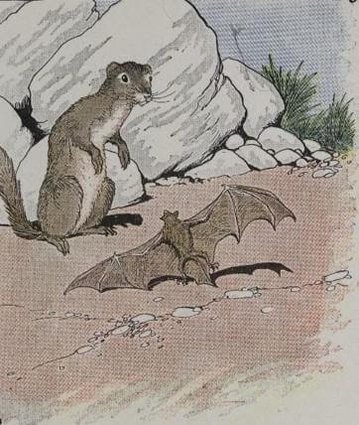
Most of Aesop's fables punish characters for being something they are not — the ass in the lion's skin, the crow in borrowed feathers. But the Bat is rewarded for his shapeshifting, and that makes this fable one of Aesop's most psychologically complex. The Bat does not lie, exactly. He does have wings like a bird. He does lack feathers like a mammal. His genius is knowing which truth to offer to which audience.
The two Weasels represent rigid, binary thinking — the kind of mind that sorts the world into neat categories and destroys anything that does not fit. One hates all Mice. The other hates all Birds. Neither can conceive of a creature that exists between their categories. The Bat exploits this cognitive limitation with what modern psychologists might call strategic self-presentation: emphasizing whichever aspect of his identity serves the moment. He is not pretending to be something he is not — he is choosing which part of himself to reveal.
This distinction matters. Aesop is not celebrating dishonesty or cowardice. The Bat does not abandon his nature; he reframes it. In a world where powerful creatures want to destroy you for belonging to the wrong group, the ability to resist being pinned down is not weakness — it is survival intelligence. The fable quietly argues that identity is more fluid than the categories others impose on us, and that insisting on a single rigid label can be as dangerous as the Weasels' blind prejudice.
The moral — "set your sails with the wind" — is practical rather than idealistic. It does not ask us to be dishonest. It asks us to be adaptable. Sailors do not control the wind; they adjust to it. The Bat cannot change what the Weasels hate, but he can change how he presents himself. In modern life, this wisdom appears everywhere: in negotiations where framing matters more than facts, in careers where versatility outlasts specialization, and in any situation where survival depends on reading the room rather than insisting on being read.
There is also a quiet comedy in the fable's structure. The Bat is described as "foolish" for blundering into danger twice — yet he is clever enough to talk his way out both times. Aesop seems to wink at the reader: wisdom and foolishness can coexist in the same creature. The Bat may be clumsy, but he is never stupid. And sometimes, that combination is more than enough.
Find this helpful? Create a free account to bookmark stories and save explanations for quick reference.
Sign Up FreeAlready have an account? Log in