The Short Story of the Day
The Story of An Hour
by Kate Chopin
"The Story of an Hour" by Kate Chopin is a short story about a woman who, upon hearing of her husband’s death, experiences an unexpected and complex awakening to personal freedom.
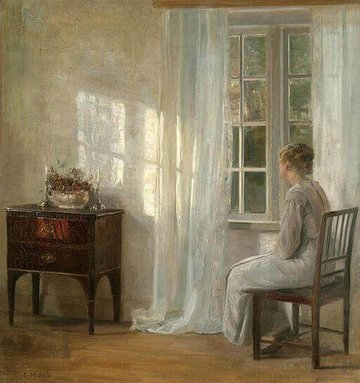
Knowing that Mrs. Mallard was afflicted with a heart trouble, great care was taken to break to her as gently as possible the news of her husband's death.
It was her sister Josephine who told her, in broken sentences; veiled hints that revealed in half concealing. Her husband's friend Richards was there, too, near her. It was he who had been in the newspaper office when intelligence of the railroad disaster was received, with Brently Mallard's name leading the list of “killed.” He had only taken the time to assure himself of its truth by a second telegram, and had hastened to forestall any less careful, less tender friend in bearing the sad message.
She did not hear the story as many women have heard the same, with a paralyzed inability to accept its significance. She wept at once, with sudden, wild abandonment, in her sister's arms. When the storm of grief had spent itself she went away to her room alone. She would have no one follow her.
There stood, facing the open window, a comfortable, roomy armchair. Into this she sank, pressed down by a physical exhaustion that haunted her body and seemed to reach into her soul.
She could see in the open square before her house the tops of trees that were all aquiver with the new spring life. The delicious breath of rain was in the air. In the street below a peddler was crying his wares. The notes of a distant song which someone was singing reached her faintly, and countless sparrows were twittering in the eaves.
There were patches of blue sky showing here and there through the clouds that had met and piled one above the other in the west facing her window.
She sat with her head thrown back upon the cushion of the chair, quite motionless, except when a sob came up into her throat and shook her, as a child who has cried itself to sleep continues to sob in its dreams.
She was young, with a fair, calm face, whose lines bespoke repression and even a certain strength. But now there was a dull stare in her eyes, whose gaze was fixed away off yonder on one of those patches of blue sky. It was not a glance of reflection, but rather indicated a suspension of intelligent thought.
There was something coming to her and she was waiting for it, fearfully. What was it? She did not know; it was too subtle and elusive to name. But she felt it, creeping out of the sky, reaching toward her through the sounds, the scents, the color that filled the air.
Now her bosom rose and fell tumultuously. She was beginning to recognize this thing that was approaching to possess her, and she was striving to beat it back with her will—as powerless as her two white slender hands would have been. When she abandoned herself a little whispered word escaped her slightly parted lips. She said it over and over under the breath: “free, free, free!” The vacant stare and the look of terror that had followed it went from her eyes. They stayed keen and bright. Her pulses beat fast, and the coursing blood warmed and relaxed every inch of her body.
She did not stop to ask if it were or were not a monstrous joy that held her. A clear and exalted perception enabled her to dismiss the suggestion as trivial. She knew that she would weep again when she saw the kind, tender hands folded in death; the face that had never looked save with love upon her, fixed and gray and dead. But she saw beyond that bitter moment a long procession of years to come that would belong to her absolutely. And she opened and spread her arms out to them in welcome.
There would be no one to live for during those coming years; she would live for herself. There would be no powerful will bending hers in that blind persistence with which men and women believe they have a right to impose a private will upon a fellow-creature. A kind intention or a cruel intention made the act seem no less a crime as she looked upon it in that brief moment of illumination.
And yet she had loved him—sometimes. Often she had not. What did it matter! What could love, the unsolved mystery, count for in the face of this possession of self-assertion which she suddenly recognized as the strongest impulse of her being!
“Free! Body and soul free!” she kept whispering.
Josephine was kneeling before the closed door with her lips to the keyhole, imploring for admission. “Louise, open the door! I beg; open the door—you will make yourself ill. What are you doing, Louise? For heaven's sake open the door.”
“Go away. I am not making myself ill.” No; she was drinking in a very elixir of life through that open window.
Her fancy was running riot along those days ahead of her. Spring days, and summer days, and all sorts of days that would be her own. She breathed a quick prayer that life might be long. It was only yesterday she had thought with a shudder that life might be long.
She arose at length and opened the door to her sister's importunities. There was a feverish triumph in her eyes, and she carried herself unwittingly like a goddess of Victory. She clasped her sister's waist, and together they descended the stairs. Richards stood waiting for them at the bottom.
Someone was opening the front door with a latchkey. It was Brently Mallard who entered, a little travel-stained, composedly carrying his grip-sack and umbrella. He had been far from the scene of the accident, and did not even know there had been one. He stood amazed at Josephine's piercing cry; at Richards' quick motion to screen him from the view of his wife.
When the doctors came they said she had died of heart disease—of the joy that kills.
Earlier, I pointed out that this story was first published in 1894 as The Dream of an Hour before being republished in 1895 as The Story of an Hour. Having read the story, why do you suppose chose to change that one word? Given societal norms and expecations about women and marriage in 1895, do you see how simply changing a single word in the title may have been an answer to the controversy and criticism that the story received at that time?
The Story of an Hour is one of the stories featured in our collection of Short Stories for High School I and Short Short Stories to read when you have five minutes to indulge yourself reading a great story.
📬 Get a Great Story Every Day
Join readers who start their morning with a classic short story
Frequently Asked Questions
What is "The Story of an Hour" by Kate Chopin about?
"The Story of an Hour" (1894) follows Louise Mallard, a young woman with a heart condition, who learns that her husband Brently has been killed in a railroad disaster. After an initial burst of grief, Louise retreats to her room and experiences an unexpected revelation: she feels profoundly free. She whispers "Free! Body and soul free!" as she contemplates a future entirely her own. However, when Brently walks through the front door alive and unharmed, Louise collapses and dies. The doctors attribute her death to "the joy that kills," though readers understand the true cause is the devastating loss of the freedom she had just discovered.
What is the main theme of "The Story of an Hour"?
The central theme is freedom versus oppression within marriage. Chopin suggests that even loving marriages can suppress a woman's individual identity, since Louise acknowledges her husband was kind yet still feels liberated by his death. The story explores how 19th-century patriarchal society imposed "a powerful will" upon women, bending their desires through what Chopin calls "blind persistence." Louise's brief hour of freedom—and her death when it is snatched away—underscores how essential personal autonomy is to the human spirit, making the story a landmark of early feminist literature.
What is the irony in "The Story of an Hour"?
Chopin layers three types of irony into this brief story. Situational irony drives the plot: Louise dies at the very moment she is beginning to truly live, and her husband—reported dead—is the one who survives. Dramatic irony appears in the final line, when the doctors declare Louise died of "the joy that kills"; readers know her heart failed not from joy at seeing Brently alive but from the crushing realization that her freedom is gone. Verbal irony threads throughout, as words like "free" and "alive" take on opposite meanings depending on whether we read them through society's lens or Louise's private experience.
What does "the joy that kills" mean at the end of the story?
The phrase "the joy that kills" is the doctors' misinterpretation of Louise's death. They assume she died from the overwhelming happiness of seeing her husband alive. In reality, Chopin invites readers to understand the opposite: Louise dies because the freedom she tasted for one glorious hour has been ripped away. The phrase is a masterful example of dramatic irony—the characters believe one thing while the reader knows another. It also serves as a critique of how society refuses to see a woman's desire for independence, interpreting her death through the only framework it can accept: wifely devotion.
What literary devices does Kate Chopin use in "The Story of an Hour"?
Chopin employs a rich array of literary devices in just over 1,000 words. Foreshadowing appears in the opening line's mention of Louise's heart trouble, which prepares readers for the fatal ending. Symbolism is woven through the open window—representing possibility and freedom—and the springtime imagery of new life, birdsong, and rain-washed air. Personification describes the feeling of freedom as "something coming to her," creeping from the sky like a living force. Chopin also uses repetition ("free, free, free!") to convey the intensity of Louise's awakening, and juxtaposition between life and death imagery to reinforce the story's central paradox.
What does the open window symbolize in "The Story of an Hour"?
The open window is the story's most important symbol, representing freedom, possibility, and a new life beyond the confines of marriage. Through it, Louise sees trees "aquiver with the new spring life," hears birdsong, and smells rain—all images of renewal and rebirth. The window frames the outside world that will now belong to her. Significantly, Louise drinks in "a very elixir of life" through that open window, contrasting the closed door of her room where her sister begs for entry. The open window connects Louise to an expansive future, while the closed door represents the societal expectations she is momentarily shutting out.
Who are the main characters in "The Story of an Hour"?
Louise Mallard is the protagonist, a young woman with heart trouble whose complex reaction to her husband's reported death drives the entire narrative. Brently Mallard, her husband, is described as kind and loving but nonetheless represents the oppressive force of marriage; his unexpected return triggers the story's tragic climax. Josephine, Louise's sister, delivers the news of Brently's death with great care and later pleads at Louise's locked door, embodying conventional feminine concern. Richards, Brently's friend, first learns of the railroad disaster and rushes to tell the family; he later tries to shield Louise from seeing Brently, but it is too late.
Why does Louise Mallard feel happy when she learns her husband has died?
Louise's happiness is not about her husband's death itself—she acknowledges she "had loved him—sometimes"—but about the sudden promise of self-determination. In her 19th-century marriage, even a kind husband's will was imposed upon her, something she calls "a crime" during her "brief moment of illumination." With Brently gone, she envisions "a long procession of years to come that would belong to her absolutely." Chopin portrays this not as cruelty but as an honest, human response to the realization that one's life is finally one's own. Her joy is the joy of self-assertion, which she recognizes as "the strongest impulse of her being."
When was "The Story of an Hour" written and why was it controversial?
wrote the story on April 19, 1894, and it was first published in Vogue magazine on December 6, 1894, under the title "The Dream of an Hour." It was controversial because it depicted a married woman feeling liberated by her husband's death at a time when women were expected to find fulfillment solely through marriage and motherhood. The story challenged Victorian ideals of wifely devotion and suggested that marriage itself could be a form of oppression—a radical claim in 1890s America. Chopin's frank exploration of female desire for autonomy made her work ahead of its time, and the story is now considered a cornerstone of feminist literature.
How does "The Story of an Hour" end?
The story ends with a devastating reversal. Louise descends the stairs with "a feverish triumph in her eyes," carrying herself "like a goddess of Victory." At that moment, Brently Mallard opens the front door with his latchkey—alive, unharmed, and completely unaware of the reported disaster. Josephine screams, Richards tries to block Louise's view, but it is too late. Louise collapses and dies on the spot. The doctors who arrive conclude that she died of heart disease—"of the joy that kills"—believing she was overcome with happiness at her husband's return. The reader, however, understands that Louise's heart gave out because her one hour of freedom had been irrevocably taken away.
Need help with The Story of An Hour?
Study tools to help with homework, prepare for quizzes, and deepen your understanding.
Flashcards → | Study Guide →