The Real Moral
The traditional moral of this fable is often given as "Do not attempt too much at once" — but that misses the point. The real lesson is about greed and …
Understanding The Boy And The Filberts
The Real Moral
The traditional moral of this fable is often given as "Do not attempt too much at once" — but that misses the point. The real lesson is about greed and the inability to let go. The boy doesn't fail because the task is too hard. He fails because he refuses to take less than everything.
The jar's narrow opening is not the obstacle — the boy's unwillingness to release even a single nut is what traps him. He could easily take a few at a time, but his desire for the maximum possible handful blinds him to the simple solution.
What This Fable Teaches
This fable illustrates a pattern that shows up everywhere in modern life: the person who insists on the perfect job offer and turns down every good one, the investor who refuses to sell at a profit because they want more, or the child who melts down because they can't have all the candy.
The key insight is that wanting everything often means getting nothing. Compromise and moderation aren't signs of weakness — they're how you actually get what you want. The boy who takes a few nuts at a time ends up with more than the boy whose fist is stuck in the jar.
- Greed defeats itself. By grabbing for the maximum, the boy ends up with nothing at all.
- Small, repeated gains beat one impossible grab. Patience and moderation would have filled his pockets.
- Know when to let go. The boy's real trap isn't the jar — it's his refusal to release what he's holding.
Historical Context
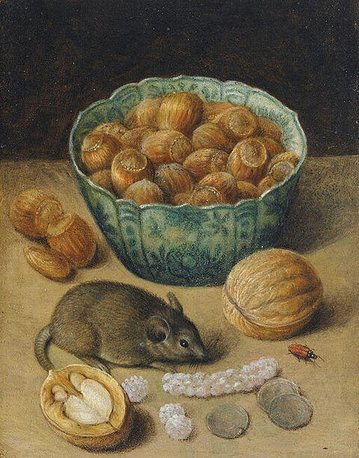
"The Boy and the Filberts" is one of Aesop's most widely retold fables, appearing in collections from ancient Greece through the present day. It is also known as "The Boy and the Nuts" or "The Boy and the Hazelnuts." The word "filberts" in older versions is an archaic English term for hazelnuts, named after St. Philibert, whose feast day falls during the hazelnut harvest.
This fable has parallels across many cultures. In South and Southeast Asia, a nearly identical story is told about catching monkeys — a hunter places bait in a narrow-mouthed container, and the monkey, unwilling to release the food, traps itself. The universality of this story speaks to how deeply the pattern of self-defeating greed resonates across human experience.
Find this helpful? Create a free account to bookmark stories and save explanations for quick reference.
Sign Up FreeAlready have an account? Log in