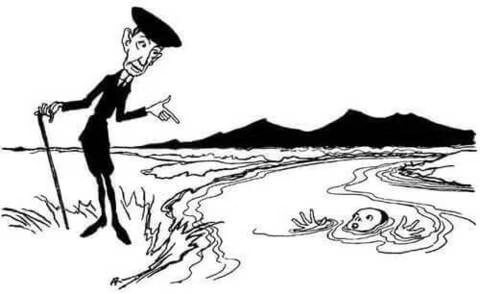
The Boy Bathing


The Boy Bathing (Perry Index 211) is one of Aesop’s shortest fables, yet its moral — "give assistance, not advice, in a crisis" — has resonated for centuries. Also known as The Boy Bathing in the River, it belongs to a group of Aesop’s fables about the gap between words and deeds. It pairs naturally with Hercules And The Wagoner, which teaches the opposite lesson from the helper’s perspective: the gods only help those who help themselves.
The Boy Bathing

A Boy was bathing in a river and got out of his depth. He was in great danger of drowning. A man passing along the road heard his cries for help and went to the riverside — but instead of reaching out a hand, he stood there scolding the Boy for being so careless as to go into deep water.

"Oh, sir," cried the Boy, "please help me first and scold me afterwards!"

Give assistance, not advice, in a crisis.

A Boy was bathing in a river and got out of his depth, and was in great danger of being drowned. A man who was passing along a road heard his cries for help, and went to the riverside and began to scold him for being so careless as to get into deep water, but made no attempt to help him. "Oh, sir," cried the Boy, "please help me first and scold me afterwards."

Give assistance, not advice, in a crisis.


Frequently Asked Questions about The Boy Bathing

What is the moral of The Boy Bathing?

The moral is “Give assistance, not advice, in a crisis.” A boy drowning in a river cries for help, but a passing man scolds him for being careless instead of rescuing him. The fable teaches that when someone is in trouble, the priority is action, not criticism. There will be time for lessons after the emergency is over — but only if you help first.

What happens in The Boy Bathing by Aesop?

A Boy bathing in a river gets out of his depth and starts drowning. He cries out for help. A man passing by on the road hears him, comes to the riverside, but instead of helping, he scolds the Boy for being careless. The Boy replies: “Please help me first and scold me afterwards!” It is one of Aesop’s shortest and sharpest fables, making its point in barely a hundred words.

What does "give assistance, not advice, in a crisis" mean?

It means that when someone is in immediate danger or trouble, the right response is to help them, not to lecture them about what they should have done differently. Advice has its place, but that place is after the crisis is over. During the emergency itself, what people need is a hand, not a lesson. The proverb warns against the common habit of criticizing people in their worst moments instead of actually doing something useful.

Why didn't the man help the boy?

The fable doesn’t say the man couldn’t help — it says he chose to lecture instead. He stood at the riverside scolding the Boy for being careless rather than reaching out a hand. Aesop suggests this is a common human failing: some people are more interested in being right than being helpful. The man gets to feel superior by pointing out the Boy’s mistake, while doing nothing to solve the actual problem.

What lesson does The Boy Bathing teach children?

The fable teaches children two things. First: when someone needs help, help them — don’t stand there telling them what they did wrong. Second: it’s okay to ask directly for what you need. The Boy doesn’t argue with the man or get angry. He simply says, “Help me first, scold me afterwards.” It’s a model for how to speak up clearly when you’re in a tough situation and the people around you aren’t responding the right way.

What is the Perry Index number for The Boy Bathing?

The Boy Bathing is Perry Index 211 in the standard classification of Aesop’s fables. Also known as The Boy Bathing in the River, it belongs to a group of Aesop’s fables about the gap between words and deeds. Despite being one of the shortest fables in the collection, its moral has been widely quoted for over two thousand years.

How is The Boy Bathing related to Hercules And The Wagoner?

The two fables are natural companions that teach the same lesson from opposite angles. In The Boy Bathing, a bystander refuses to help someone in crisis, offering only criticism. In Hercules And The Wagoner, a man in trouble refuses to help himself, expecting the gods to do all the work. Together, they deliver a complete message: help those who need it, but also help yourself.

What are the best Aesop fables to read next?

If you enjoyed The Boy Bathing, try these related fables: Hercules And The Wagoner — the companion fable about a man who expects help but won’t lift a finger himself. The Grasshopper and the Ant — another story about refusing to help someone in need, and whether the refusal is justified. The Farmer And His Sons — a father who teaches through action instead of empty words. The Fox And The Goat — a tale about someone who gives advice that only serves himself.

Save stories, build your reading list, and access all study tools — completely free.

Save The Boy Bathing to your library — it's free!

Need help with The Boy Bathing?

Study tools to help with homework, prepare for quizzes, and deepen your understanding.

Flashcards →