Understanding "The Lion and the Ass"
At its surface, this brief fable tells the story of a hunting partnership between a Lion and an Ass. They devise a clever plan: the Ass will …
Understanding The Lion And The Ass (2nd Fable)
Understanding "The Lion and the Ass"
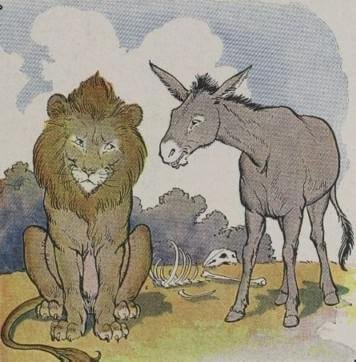
At its surface, this brief fable tells the story of a hunting partnership between a Lion and an Ass. They devise a clever plan: the Ass will enter a cave and use his loud braying to frighten Wild Goats into the open, where the Lion waits to catch them. The plan succeeds, but it is what happens afterward that contains the real lesson.
When the Ass emerges from the cave, he is bursting with pride. "Did you see how I made them run?" he asks, clearly expecting praise. The Lion's dry reply cuts through the boast with quiet precision: "If I had not known you and your kind, I should certainly have run, too." In other words, the Ass's noise was impressive only to those who did not know its source. To anyone who understood the true nature of a braying donkey, the racket was meaningless bluster.
The moral—"The loud-mouthed boaster does not impress nor frighten those who know him"—targets a universal human weakness: the tendency to confuse noise with accomplishment. The Ass did play a genuine role in the hunt, but his mistake was not in contributing—it was in inflating his contribution beyond all proportion. He wanted credit not just for doing his part, but for being fearsome. The Lion, who actually did the dangerous work of striking down the prey, saw no reason to boast at all.
Aesop draws a clear distinction between real power and the mere appearance of it. The Lion is confident and composed precisely because his strength is genuine. He does not need to announce it. The Ass, whose contribution was noise and nothing more, desperately seeks validation because deep down he knows his role was less impressive than he pretends. This dynamic plays out constantly in everyday life—in workplaces, in politics, and in personal relationships. The people who talk the loudest about their achievements are often the ones whose contributions are the least substantial.
There is also a subtle lesson about self-awareness. The Ass is not a villain—he genuinely helped with the hunt. But he lacks the perspective to see his role clearly. He confuses the goats' fear of noise with fear of him, and that confusion leads him to embarrass himself in front of someone who sees right through the pretense. True competence, Aesop suggests, is quiet. It does not need to advertise itself because its results speak plainly enough.
This fable pairs naturally with other Aesopic tales about boasting and self-deception, such as The Ass in the Lion's Skin and The Trumpeter Taken Prisoner, both of which explore how easily people mistake outward noise for inner substance.
Find this helpful? Create a free account to bookmark stories and save explanations for quick reference.
Sign Up FreeAlready have an account? Log in