The Hardest Advice to Follow Is Your Own
At first glance, this fable seems to be about a foolish mother who doesn’t know her own limitations. But Aesop’s real target is subtler and …
Understanding The Young Crab And His Mother
The Hardest Advice to Follow Is Your Own
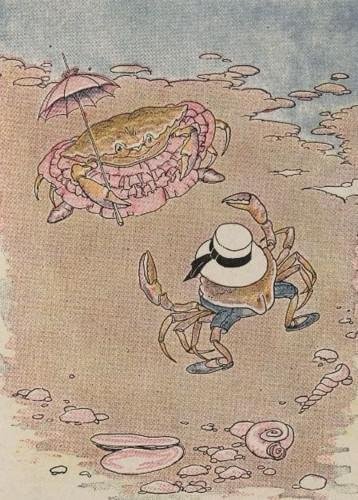
At first glance, this fable seems to be about a foolish mother who doesn’t know her own limitations. But Aesop’s real target is subtler and more universal: the instinct to correct others before examining ourselves. The Mother Crab is not malicious. She genuinely wants the best for her child. Her advice—walk straight, turn your toes out—is technically sound counsel for creatures that can walk forward. The problem is that she has never tested this advice against her own body. She dispenses wisdom she has never lived.
What makes the young crab’s response so devastating is its innocence. He doesn’t argue. He doesn’t rebel. He simply says, "Show me how." It is the most reasonable request in the world, and it immediately exposes his mother’s hypocrisy—not through confrontation, but through trust. The child takes his mother at her word and asks for a demonstration, which is exactly what any good student would do. The mother’s failure isn’t a failure of love or intention; it’s a failure of self-knowledge.
This distinction matters because Aesop is not saying we should never give advice. He is saying that advice without demonstrated competence is hollow. In modern psychology, this gap between stated values and actual behavior is called cognitive dissonance, and research consistently shows that people are far more influenced by what leaders do than by what they say. A parent who lectures about honesty but lies to avoid inconvenience teaches dishonesty. A manager who demands punctuality but arrives late teaches carelessness. The message received is always the behavior, never the sermon.
There is also a quieter lesson here about the limits of nature. Crabs are built to walk sideways. No amount of willpower changes their anatomy. Aesop seems to suggest that before we criticize someone’s shortcomings, we should ask whether those shortcomings are truly failures—or simply the natural shape of who they are. The mother’s deepest error is not her sideways walk but her refusal to see that it is shared. She holds her son to a standard she has never met herself, and the result is a humbling fall.
The fable endures because its moral—do not tell others how to act unless you can set a good example—is easy to understand and almost impossible to consistently follow. We all have an inner Mother Crab, quick to spot faults in others that we quietly tolerate in ourselves. Aesop’s genius is making us laugh at her stumble while recognizing, uncomfortably, that we walk the same way.
Find this helpful? Create a free account to bookmark stories and save explanations for quick reference.
Sign Up FreeAlready have an account? Log in