God Sees the Truth, But Waits
by Leo Tolstoy
God Sees the Truth, But Waits (1872), is about a man falsely convicted and serving a sentence for a murder he did not commit; Tolstoy's parable for forgiveness. Tolstoy's story inspired Stephen King's novella, Rita Hayworth and Shawshank Redemption (1982), adapted into the memorable 1994 film.
In the town of Vladimir lived a young merchant named Ivan Dmitrich Aksionov. He had two shops and a house of his own.
Aksionov was a handsome, fair-haired, curly-headed fellow, full of fun, and very fond of singing. When quite a young man he had been given to drink, and was riotous when he had had too much; but after he married he gave up drinking, except now and then.
One summer Aksionov was going to the Nizhny Fair, and as he bade good-bye to his family, his wife said to him, "Ivan Dmitrich, do not start to-day; I have had a bad dream about you."
Aksionov laughed, and said, "You are afraid that when I get to the fair I shall go on a spree."
His wife replied: "I do not know what I am afraid of; all I know is that I had a bad dream. I dreamt you returned from the town, and when you took off your cap I saw that your hair was quite grey."
Aksionov laughed. "That's a lucky sign," said he. "See if I don't sell out all my goods, and bring you some presents from the fair."
So he said good-bye to his family, and drove away.
When he had travelled half-way, he met a merchant whom he knew, and they put up at the same inn for the night. They had some tea together, and then went to bed in adjoining rooms.
It was not Aksionov's habit to sleep late, and, wishing to travel while it was still cool, he aroused his driver before dawn, and told him to put in the horses.
Then he made his way across to the landlord of the inn (who lived in a cottage at the back), paid his bill, and continued his journey.
When he had gone about twenty-five miles, he stopped for the horses to be fed. Aksionov rested awhile in the passage of the inn, then he stepped out into the porch, and, ordering a samovar to be heated, got out his guitar and began to play.
Suddenly a troika drove up with tinkling bells and an official alighted, followed by two soldiers. He came to Aksionov and began to question him, asking him who he was and whence he came. Aksionov answered him fully, and said, "Won't you have some tea with me?" But the official went on cross-questioning him and asking him. "Where did you spend last night? Were you alone, or with a fellow-merchant? Did you see the other merchant this morning? Why did you leave the inn before dawn?"
Aksionov wondered why he was asked all these questions, but he described all that had happened, and then added, "Why do you cross-question me as if I were a thief or a robber? I am travelling on business of my own, and there is no need to question me."
Then the official, calling the soldiers, said, "I am the police-officer of this district, and I question you because the merchant with whom you spent last night has been found with his throat cut. We must search your things."
They entered the house. The soldiers and the police-officer unstrapped Aksionov's luggage and searched it. Suddenly the officer drew a knife out of a bag, crying, "Whose knife is this?"
Aksionov looked, and seeing a blood-stained knife taken from his bag, he was frightened.
"How is it there is blood on this knife?"
Aksionov tried to answer, but could hardly utter a word, and only stammered: "I--don't know--not mine." Then the police-officer said: "This morning the merchant was found in bed with his throat cut. You are the only person who could have done it. The house was locked from inside, and no one else was there. Here is this blood-stained knife in your bag and your face and manner betray you! Tell me how you killed him, and how much money you stole?"
Aksionov swore he had not done it; that he had not seen the merchant after they had had tea together; that he had no money except eight thousand rubles of his own, and that the knife was not his. But his voice was broken, his face pale, and he trembled with fear as though he went guilty.
The police-officer ordered the soldiers to bind Aksionov and to put him in the cart. As they tied his feet together and flung him into the cart, Aksionov crossed himself and wept. His money and goods were taken from him, and he was sent to the nearest town and imprisoned there. Enquiries as to his character were made in Vladimir. The merchants and other inhabitants of that town said that in former days he used to drink and waste his time, but that he was a good man. Then the trial came on: he was charged with murdering a merchant from Ryazan, and robbing him of twenty thousand rubles.
His wife was in despair, and did not know what to believe. Her children were all quite small; one was a baby at her breast. Taking them all with her, she went to the town where her husband was in jail. At first she was not allowed to see him; but after much begging, she obtained permission from the officials, and was taken to him. When she saw her husband in prison-dress and in chains, shut up with thieves and criminals, she fell down, and did not come to her senses for a long time. Then she drew her children to her, and sat down near him. She told him of things at home, and asked about what had happened to him. He told her all, and she asked, "What can we do now?"
"We must petition the Czar not to let an innocent man perish."
His wife told him that she had sent a petition to the Czar, but it had not been accepted.
Aksionov did not reply, but only looked downcast.
Then his wife said, "It was not for nothing I dreamt your hair had turned grey. You remember? You should not have started that day." And passing her fingers through his hair, she said: "Vanya dearest, tell your wife the truth; was it not you who did it?"
"So you, too, suspect me!" said Aksionov, and, hiding his face in his hands, he began to weep. Then a soldier came to say that the wife and children must go away; and Aksionov said good-bye to his family for the last time.
When they were gone, Aksionov recalled what had been said, and when he remembered that his wife also had suspected him, he said to himself, "It seems that only God can know the truth; it is to Him alone we must appeal, and from Him alone expect mercy."
And Aksionov wrote no more petitions; gave up all hope, and only prayed to God.
Aksionov was condemned to be flogged and sent to the mines. So he was flogged with a knot, and when the wounds made by the knot were healed, he was driven to Siberia with other convicts.
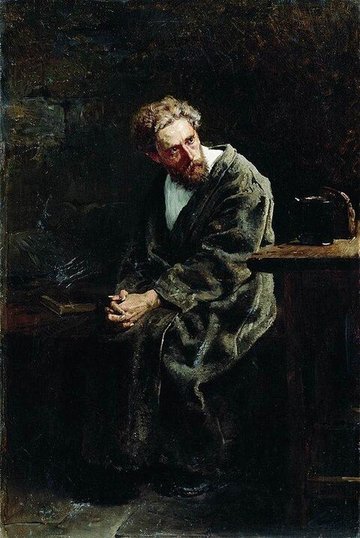
For twenty-six years Aksionov lived as a convict in Siberia. His hair turned white as snow, and his beard grew long, thin, and grey. All his mirth went; he stooped; he walked slowly, spoke little, and never laughed, but he often prayed.
In prison Aksionov learnt to make boots, and earned a little money, with which he bought The Lives of the Saints. He read this book when there was light enough in the prison; and on Sundays in the prison-church he read the lessons and sang in the choir; for his voice was still good.
The prison authorities liked Aksionov for his meekness, and his fellow-prisoners respected him: they called him "Grandfather," and "The Saint." When they wanted to petition the prison authorities about anything, they always made Aksionov their spokesman, and when there were quarrels among the prisoners they came to him to put things right, and to judge the matter.
No news reached Aksionov from his home, and he did not even know if his wife and children were still alive.
One day a fresh gang of convicts came to the prison. In the evening the old prisoners collected round the new ones and asked them what towns or villages they came from, and what they were sentenced for. Among the rest Aksionov sat down near the newcomers, and listened with downcast air to what was said.
One of the new convicts, a tall, strong man of sixty, with a closely-cropped grey beard, was telling the others what be had been arrested for.
"Well, friends," he said, "I only took a horse that was tied to a sledge, and I was arrested and accused of stealing. I said I had only taken it to get home quicker, and had then let it go; besides, the driver was a personal friend of mine. So I said, 'It's all right.' 'No,' said they, 'you stole it.' But how or where I stole it they could not say. I once really did something wrong, and ought by rights to have come here long ago, but that time I was not found out. Now I have been sent here for nothing at all... Eh, but it's lies I'm telling you; I've been to Siberia before, but I did not stay long."
"Where are you from?" asked some one.
"From Vladimir. My family are of that town. My name is Makar, and they also call me Semyonich."
Aksionov raised his head and said: "Tell me, Semyonich, do you know anything of the merchants Aksionov of Vladimir? Are they still alive?"
"Know them? Of course I do. The Aksionovs are rich, though their father is in Siberia: a sinner like ourselves, it seems! As for you, Gran'dad, how did you come here?"
Aksionov did not like to speak of his misfortune. He only sighed, and said, "For my sins I have been in prison these twenty-six years."
"What sins?" asked Makar Semyonich.
But Aksionov only said, "Well, well--I must have deserved it!" He would have said no more, but his companions told the newcomers how Aksionov came to be in Siberia; how some one had killed a merchant, and had put the knife among Aksionov's things, and Aksionov had been unjustly condemned.
When Makar Semyonich heard this, he looked at Aksionov, slapped his own knee, and exclaimed, "Well, this is wonderful! Really wonderful! But how old you've grown, Gran'dad!"
The others asked him why he was so surprised, and where he had seen Aksionov before; but Makar Semyonich did not reply. He only said: "It's wonderful that we should meet here, lads!"
These words made Aksionov wonder whether this man knew who had killed the merchant; so he said, "Perhaps, Semyonich, you have heard of that affair, or maybe you've seen me before?"
"How could I help hearing? The world's full of rumours. But it's a long time ago, and I've forgotten what I heard."
"Perhaps you heard who killed the merchant?" asked Aksionov.
Makar Semyonich laughed, and replied: "It must have been him in whose bag the knife was found! If some one else hid the knife there, 'He's not a thief till he's caught,' as the saying is. How could any one put a knife into your bag while it was under your head? It would surely have woke you up."
When Aksionov heard these words, he felt sure this was the man who had killed the merchant. He rose and went away. All that night Aksionov lay awake. He felt terribly unhappy, and all sorts of images rose in his mind. There was the image of his wife as she was when he parted from her to go to the fair. He saw her as if she were present; her face and her eyes rose before him; he heard her speak and laugh. Then he saw his children, quite little, as they: were at that time: one with a little cloak on, another at his mother's breast. And then he remembered himself as he used to be-young and merry. He remembered how he sat playing the guitar in the porch of the inn where he was arrested, and how free from care he had been. He saw, in his mind, the place where he was flogged, the executioner, and the people standing around; the chains, the convicts, all the twenty-six years of his prison life, and his premature old age. The thought of it all made him so wretched that he was ready to kill himself.
"And it's all that villain's doing!" thought Aksionov. And his anger was so great against Makar Semyonich that he longed for vengeance, even if he himself should perish for it. He kept repeating prayers all night, but could get no peace. During the day he did not go near Makar Semyonich, nor even look at him.
A fortnight passed in this way. Aksionov could not sleep at night, and was so miserable that he did not know what to do.
One night as he was walking about the prison he noticed some earth that came rolling out from under one of the shelves on which the prisoners slept. He stopped to see what it was. Suddenly Makar Semyonich crept out from under the shelf, and looked up at Aksionov with frightened face. Aksionov tried to pass without looking at him, but Makar seized his hand and told him that he had dug a hole under the wall, getting rid of the earth by putting it into his high-boots, and emptying it out every day on the road when the prisoners were driven to their work.
"Just you keep quiet, old man, and you shall get out too. If you blab, they'll flog the life out of me, but I will kill you first."
Aksionov trembled with anger as he looked at his enemy. He drew his hand away, saying, "I have no wish to escape, and you have no need to kill me; you killed me long ago! As to telling of you--I may do so or not, as God shall direct."
Next day, when the convicts were led out to work, the convoy soldiers noticed that one or other of the prisoners emptied some earth out of his boots. The prison was searched and the tunnel found. The Governor came and questioned all the prisoners to find out who had dug the hole. They all denied any knowledge of it. Those who knew would not betray Makar Semyonich, knowing he would be flogged almost to death. At last the Governor turned to Aksionov whom he knew to be a just man, and said:
"You are a truthful old man; tell me, before God, who dug the hole?"
Makar Semyonich stood as if he were quite unconcerned, looking at the Governor and not so much as glancing at Aksionov. Aksionov's lips and hands trembled, and for a long time he could not utter a word. He thought, "Why should I screen him who ruined my life? Let him pay for what I have suffered. But if I tell, they will probably flog the life out of him, and maybe I suspect him wrongly. And, after all, what good would it be to me?"
"Well, old man," repeated the Governor, "tell me the truth: who has been digging under the wall?"
Aksionov glanced at Makar Semyonich, and said, "I cannot say, your honour. It is not God's will that I should tell! Do what you like with me; I am your hands."
However much the Governor! tried, Aksionov would say no more, and so the matter had to be left.
That night, when Aksionov was lying on his bed and just beginning to doze, some one came quietly and sat down on his bed. He peered through the darkness and recognised Makar.
"What more do you want of me?" asked Aksionov. "Why have you come here?"
Makar Semyonich was silent. So Aksionov sat up and said, "What do you want? Go away, or I will call the guard!"
Makar Semyonich bent close over Aksionov, and whispered, "Ivan Dmitrich, forgive me!"
"What for?" asked Aksionov.
"It was I who killed the merchant and hid the knife among your things. I meant to kill you too, but I heard a noise outside, so I hid the knife in your bag and escaped out of the window."
Aksionov was silent, and did not know what to say. Makar Semyonich slid off the bed-shelf and knelt upon the ground. "Ivan Dmitrich," said he, "forgive me! For the love of God, forgive me! I will confess that it was I who killed the merchant, and you will be released and can go to your home."
"It is easy for you to talk," said Aksionov, "but I have suffered for you these twenty-six years. Where could I go to now?... My wife is dead, and my children have forgotten me. I have nowhere to go..."
Makar Semyonich did not rise, but beat his head on the floor. "Ivan Dmitrich, forgive me!" he cried. "When they flogged me with the knot it was not so hard to bear as it is to see you now ... yet you had pity on me, and did not tell. For Christ's sake forgive me, wretch that I am!" And he began to sob.
When Aksionov heard him sobbing he, too, began to weep. "God will forgive you!" said he. "Maybe I am a hundred times worse than you." And at these words his heart grew light, and the longing for home left him. He no longer had any desire to leave the prison, but only hoped for his last hour to come.
In spite of what Aksionov had said, Makar Semyonich confessed, his guilt. But when the order for his release came, Aksionov was already dead.
Tolstoy's story is featured in our guide to Russian Writers.
Frequently Asked Questions about God Sees the Truth, But Waits
What is "God Sees the Truth, But Waits" about?
God Sees the Truth, But Waits tells the story of Ivan Dmitrich Aksionov, a prosperous young merchant from the town of Vladimir who is falsely accused of murdering a fellow traveler at an inn. A blood-stained knife is planted in his luggage, and despite his innocence, he is convicted, flogged, and sentenced to twenty-six years of hard labor in Siberia. In prison, Aksionov transforms from a carefree merchant into a deeply devout man whom other prisoners call "Grandfather" and "The Saint." The story reaches its climax when the real killer, Makar Semyonich, arrives at the same prison camp. When given the chance to expose Makar and win his freedom, Aksionov instead chooses mercy — and in doing so, prompts Makar to confess. The release order comes too late: Aksionov has already died.
What are the main themes of "God Sees the Truth, But Waits"?
The story explores several interconnected themes. Forgiveness stands at the heart of the narrative: Aksionov spends decades consumed by the injustice done to him, yet ultimately chooses to forgive the man who destroyed his life. Faith and spiritual transformation is equally central — Aksionov abandons earthly hope (petitions, legal appeals) and surrenders entirely to God, finding peace through prayer and acceptance. The story also examines the contrast between divine justice and human justice: the courts convict an innocent man, but God ultimately reveals the truth through Makar's guilty conscience. Finally, suffering as spiritual purification runs throughout — Aksionov's wrongful imprisonment, rather than breaking him, refines him into a figure of moral authority respected by prisoners and guards alike.
What is the moral of "God Sees the Truth, But Waits"?
The moral, signaled by the title itself, is that God perceives all truth but operates on a timeline beyond human understanding. Earthly justice is flawed and often fails the innocent, but divine justice is certain, even if it arrives only after a lifetime of suffering — or beyond death itself. also teaches that forgiveness liberates the one who forgives: when Aksionov says "God will forgive you" to Makar, "his heart grew light, and the longing for home left him." The act of mercy frees Aksionov from twenty-six years of bitterness. Tolstoy considered this story among his finest works, placing it in what he called the "first class" of religious art — stories that teach through parable rather than argument.
What does the title "God Sees the Truth, But Waits" mean?
The title encapsulates 's central theological argument: God is omniscient and knows the truth of every situation, but He does not intervene on a human timetable. "Waits" does not imply indifference — it suggests that divine justice operates through spiritual processes (conscience, repentance, forgiveness) rather than through immediate punishment or rescue. In the story, God "sees" Aksionov's innocence from the beginning but allows twenty-six years to pass before the truth surfaces through Makar Semyonich's confession. The title also carries an implicit warning: because God sees all truth, the guilty cannot hide forever, even if human courts fail to catch them.
What role does foreshadowing play in "God Sees the Truth, But Waits"?
Foreshadowing appears most prominently in the opening scene, when Aksionov's wife begs him not to travel to the Nizhny Fair. She tells him she dreamed that he returned from the town with completely grey hair — a vision that proves prophetic, as twenty-six years of wrongful imprisonment turn his hair "white as snow." Aksionov dismisses the dream as superstition, calling grey hair "a lucky sign," which deepens the dramatic irony: the reader senses danger that the cheerful protagonist cannot. This early exchange also establishes a contrast between Aksionov's carefree materialism at the start of the story and the gravity of the suffering that awaits him, reinforcing 's theme that worldly confidence is fragile.
Why does Aksionov choose not to expose Makar Semyonich?
When the prison governor asks Aksionov — known as the most honest man in the camp — who dug the escape tunnel, Aksionov faces the defining moral choice of his life. He knows Makar is guilty both of the tunnel and of the murder that stole twenty-six years from him. Yet he refuses to speak, telling the governor, "It is not God's will that I should tell." His reasoning is layered: he reflects that exposing Makar would likely result in a flogging severe enough to kill him, and he wonders whether he may "suspect him wrongly." Most importantly, he asks himself, "what good would it be to me?" Aksionov has reached a spiritual state where vengeance holds no value — his faith has taught him that judgment belongs to God alone. This act of mercy is what finally breaks Makar, driving him to confess voluntarily and beg forgiveness.
What happens at the end of "God Sees the Truth, But Waits"?
After Aksionov refuses to betray him, Makar Semyonich comes to Aksionov's bed that night, kneels on the floor, and confesses that he was the one who murdered the merchant and planted the knife in Aksionov's bag twenty-six years earlier. He begs forgiveness and offers to confess to the authorities so Aksionov can go free. Aksionov replies, "God will forgive you! Maybe I am a hundred times worse than you" — and at these words, his heart grows light and his longing for home vanishes. Despite Aksionov's protest, Makar confesses to the governor and the order for Aksionov's release is issued. But in the story's devastating final line, reveals that Aksionov was already dead — achieving spiritual freedom but never earthly freedom, the ultimate expression of the story's title.
Who is Makar Semyonich in "God Sees the Truth, But Waits"?
Makar Semyonich is the story's antagonist — a convict from Vladimir who arrives at Aksionov's Siberian prison camp after twenty-six years. He is described as a tall, strong man of sixty with a closely-cropped grey beard, and he initially presents himself as having been arrested for a minor horse theft. When Aksionov's fellow prisoners recount how an innocent man was framed for murder, Makar's startled reaction — slapping his knee and exclaiming "Well, this is wonderful!" — reveals that he knows more than he lets on. Makar is in fact the real murderer who killed the merchant at the inn and planted the blood-stained knife in Aksionov's bag. He serves as both the cause of Aksionov's suffering and, ultimately, the instrument of his spiritual liberation — when Aksionov forgives Makar, both men are transformed.
When was "God Sees the Truth, But Waits" written and why is it significant?
God Sees the Truth, But Waits was written by Leo Tolstoy in 1872, during a pivotal period in his career. At this time, Tolstoy was shifting from the sweeping realist novels that made his reputation — War and Peace (1869) and the soon-to-follow Anna Karenina (1877) — toward the moral and religious parables that would dominate his later work. Tolstoy himself considered this story one of his greatest accomplishments, classifying it in the "first class" of religious art. The story also prefigures themes that Fyodor Dostoevsky would explore in works about guilt, confession, and redemption. Its influence on the tradition of Russian moral fiction extends well beyond its modest length.
What literary devices does Tolstoy use in "God Sees the Truth, But Waits"?
employs several literary devices with deliberate economy. Foreshadowing appears in the wife's prophetic dream of Aksionov's grey hair. Dramatic irony pervades the story — the reader gradually suspects Makar's guilt long before Aksionov confronts it, especially when Makar nervously deflects questions about the murder. Situational irony drives the devastating ending: Aksionov is finally exonerated, but only after he has died, rendering earthly justice meaningless. The story functions as a parable — a compact moral tale where characters represent spiritual positions (innocence, guilt, forgiveness) more than psychological complexity. Tolstoy also uses symbolism: Aksionov's hair turning white mirrors his transformation from worldly merchant to spiritual elder, and the blood-stained knife represents how easily evidence can be manipulated to destroy an innocent life.
Save stories, build your reading list, and access all study tools — completely free.
Save God Sees the Truth, But Waits to your library — it's free!Need help with God Sees the Truth, But Waits?
Study tools to help with homework, prepare for quizzes, and deepen your understanding.
Flashcards → | Vocabulary → | Study Guide →