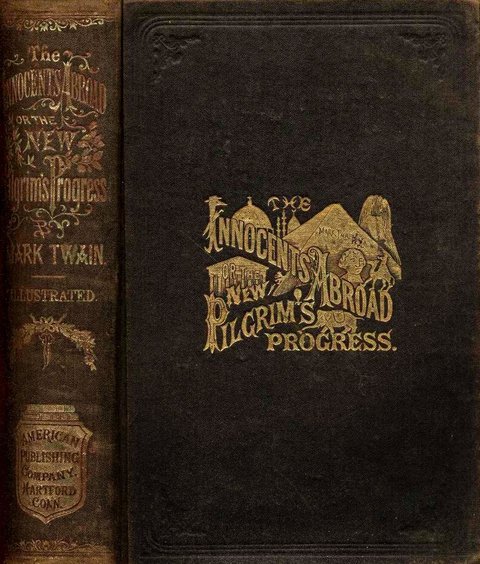
The Innocents Abroad
by Mark Twain
The Innocents Abroad, or The New Pilgrims' Progress (1869) is a travel book by based on his letters to the Daily Alta California and other newspapers during a five-month excursion aboard the steamship Quaker City through Europe and the Holy Land in 1867. The trip took Twain and his fellow passengers from New York to the Azores, Gibraltar, France, Italy, Greece, Turkey, the Crimea, Syria, Palestine, and Egypt before returning home.
With his characteristic irreverence and sharp wit, Twain skewers the pretensions of both the "Old Masters" of European art and the pious, self-satisfied American tourists who worship them. He lampoons travel guidebooks, phony relics, pompous guides, and his own fellow pilgrims with equal gusto, while also capturing moments of genuine awe at sights like the Sphinx, the Sea of Galilee, and the Acropolis.
The Innocents Abroad was Twain's first major published work and became the best-selling book in America during the 19th century, establishing him as one of the country's foremost humorists. Its blend of irreverent comedy, vivid travel description, and social commentary set the template for Twain's later masterworks and remains one of the most entertaining travel narratives ever written.
Return to the Mark Twain library.