Mark Twain: A Child's Biography
by Mark Twain
This biography of Mark Twain (whose given name was Samuel Clemens) for children was excerpted from Mary Stoyell Stimpson's book, A Child's Book of American Biography (1915). Add over one hundred years to Ms. Stimpson's time reference when you read it with your own children.
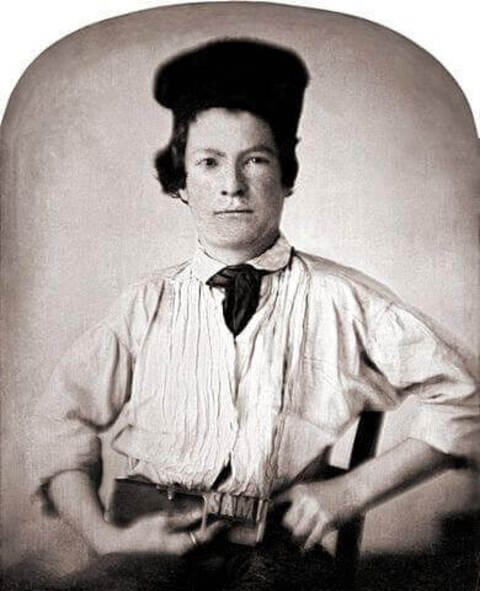
John Clemens, Samuel's father, was a farmer, merchant, and postmaster in a Missouri town, called Florida. His wife, Jane Clemens, was a stirring, busy woman, who liked to get her work out of the way and then have a real frolic. Her husband did not know what it meant to frolic. He was not very well to begin with, and when he had any spare time, he sat by himself figuring away on an invention, year after year. He spent a good deal of time, too, thinking what fine things he would do for his family when he sold a great tract of land in Tennessee. He had bought seventy-five thousand acres of land when he was much younger, for just a few cents an acre, and when that land went up in price, he expected to be pointed out as a millionaire, at least. John Clemens was a good man and something of a scholar, but he was not the least bit merry. His children never saw him laugh once in his whole life! Think of it!
Mrs. Clemens did not like to have any one around when she was bustling through the housework, so the six children spent the days roaming through the country, picking nuts and berries. When it came night and they had had their supper, they would crowd around the open fire and coax Jennie, a slave girl, or Uncle Ned, a colored farm-hand, to tell them stories.
Uncle Ned was a famous story-teller. When he described witches and goblins, the children would look over their shoulders as if they half expected to see the queer creatures in the room. All these stories began "Once 'pon a time," but each one ended differently. One of the children, Sam Clemens, admired Uncle Ned's stories so that he could hardly wait for evening to come.
Sam was a delicate child. The neighbors used to shake their heads and declare he would never live to be a man, and every one always spoke of him as "little Sam."
When Mr. Clemens moved to another town some distance away, the mother said instantly: "Well, Hannibal may be all right for your business, but Florida agrees so well with little Sam, that I shall spend every summer here with the children, on the Quarles farm."
The children were glad she held to this plan, for Mr. Quarles laughed and joked with them, built them high swings, let them ride in ox-teams and go on horseback, and tumble in the hayfields all they wished. They had so much fun and exercise that they were even willing to go to bed without any stories. Sam grew plump.
A funny thing happened the first summer they went to nice Mr. Quarles's. Mrs. Clemens, with the older children, the new baby, and Jennie, went on ahead in a large wagon. Sam was asleep. Mr. Clemens was to wait until he woke up and then was to carry him on horseback, to join the rest. Well, as Mr. Clemens was waiting for Sam to finish his nap, he got to thinking of his invention, or his Tennessee land, and presently he saddled and bridled the horse and rode away without him. He never thought of Sam again until his wife said, as he reached the Quarles's dooryard: "Where is little Sam?"
"Why—why—" he stammered, "I must have forgotten him." Of course he was ashamed of himself and hurried a man off to Hannibal, on a swift horse, where Sam was found hungry and frightened, wandering through the locked house.
Sam was sent to school when he was five. He certainly did not like to study very well but did learn to be a fine reader and speller.
At the age of nine, Sam was a good swimmer (although he came very near being drowned three different times, while he was learning) and loved the river so that he was to be found on its shore almost any hour of the day. He longed to travel by steamer. Once he ran away and hid on board one until it was well down the river. As soon as he showed himself to the captain, he was put ashore, his father was sent for, and he received a whipping that he remembered a long time.
At nine he had a head rather too large for his body, and it looked even bigger because he had such a lot of waving, sandy hair. He had fine gray eyes, a slow, drawling voice, and said such droll things that the boys listened to everything he said. His two best chums were Will Bowen and John Briggs. These three friends could run like deer, and what time they were not fishing or swimming they usually spent in a cave which they had found.
At twelve he was just a careless, happy, barefoot boy, often in mischief, and only excelling in two things at school. He won the weekly medal for spelling, and his compositions were so funny that the teachers and pupils used to laugh till the tears came, when they were read aloud. His teachers said he ought to train himself for a writer, but it did not seem to him that there was anything so noble or desirable in this world as being a pilot. And he loved the great Mississippi River better than any place he had known or could imagine.
Sam's father died, whispering: "Don't sell the Tennessee land! Hold on to it, and you will all be rich!"
After his death Sam learned the printer's trade. He was very quick in setting type and accurate, so that he soon helped his older brother start a newspaper. He worked with his brother until he was eighteen, and then he told his mother that he wanted to start out for himself in the world. Jane Clemens loved him dearly and hated to part with him, but when she saw his heart was set on going, she took up a testament and said: "Well, Sam, you may try it, but I want you to take hold of this book and make me a promise. I want you to repeat after me these words—'I do solemnly swear that I will not throw a card or drink a drop of liquor while I am gone!'"
He repeated these words after her, bade her good-by, and went to St. Louis. He meant to travel, and as he earned enough by newspaper work, he visited New York, Philadelphia, and was on his way to South America when he got a chance to be a pilot on the Mississippi River. While he was learning this trade, he was happier than he had ever been in his life. If you want to know what happened to him at this time you must read a book he wrote, Life on the Mississippi River. He wrote a great many books and signed whatever he wrote with a queer name—MARK TWAIN. This was an old term used by pilots to show how deep the water is where they throw the lead. His writings, like his boyish compositions, made people laugh. So that now, although he has been dead several years, whenever the name of Mark Twain is mentioned, a smile goes around. If you want to know more about the actual doings of Sam and his chums, Will Bowen and John Briggs, read Tom Sawyer and Huckleberry Finn, for in those books Sam has set down a pretty fair account of their escapades.
Mr. Clemens had a wife and children of whom he was very fond. As he made much money from his books and lectures, they were all able to travel in foreign countries, and his best book of travel is Innocents Abroad. It seems to me that even his father would have laughed over that book. Speaking of his father again reminds me to tell you that the Tennessee land never brought any luxuries to the Clemens family. It was sold for less than the taxes had amounted to.
Mark Twain's (Samuel Clemens') story is featured in our collection, American Biographies for Kids. Visit American History to find out about other important people and their writings which helped shape the country.
Frequently Asked Questions about Mark Twain: A Child's Biography
What is "Mark Twain: A Child's Biography" about?
This brief biography, originally published in 1915 as part of Mary Stoyell Stimpson's A Child's Book of American Biography, tells the story of Samuel Clemens's boyhood in a way young readers can enjoy. It follows Sam from his earliest years in Florida, Missouri — where his father forgot him during a nap and rode off without him — through his barefoot adventures in Hannibal, his apprenticeship as a printer, and his dream of becoming a steamboat pilot on the Mississippi River. The biography ends with Clemens adopting the pen name Mark Twain and becoming one of America's most beloved humorists.
Who wrote "A Child's Biography" of Mark Twain?
The biography was written by Mary Stoyell Stimpson and appeared in her 1915 collection A Child's Book of American Biography, which presented the lives of famous Americans in short, accessible chapters aimed at young readers. It is attributed to Mark Twain on many sites because the piece is about Twain, but Stimpson is the actual author. Her writing style uses direct address and humorous anecdotes — qualities she borrowed from Twain's own voice — to make the biography feel lively and personal rather than dry.
What was Mark Twain's real name?
Mark Twain's real name was Samuel Langhorne Clemens. He was born on November 30, 1835, in Florida, Missouri, the sixth of seven children born to John and Jane Clemens. He adopted the pen name "Mark Twain" during his early career as a journalist in Nevada in 1863. As the biography explains, the name comes from an old Mississippi River piloting term — when crew members measured the water depth with a lead line, "mark twain" meant two fathoms (twelve feet), which was the minimum depth safe for a steamboat to pass.
What was Mark Twain's childhood like in Hannibal, Missouri?
According to this biography, Sam Clemens was a delicate child whom neighbors doubted would survive to adulthood — everyone called him "little Sam." The family moved from Florida to Hannibal, Missouri, but his mother insisted on sending the children back each summer to the Quarles farm, where kindly Mr. Quarles built them swings, let them ride in ox-teams, and tumble in hayfields until Sam "grew plump." In Hannibal, Sam became a strong swimmer (nearly drowning three times while learning), explored a cave with his best friends Will Bowen and John Briggs, and spent every spare hour on the banks of the Mississippi River. At school he cared little for most subjects but won weekly spelling medals, and his compositions were so funny that teachers and classmates "laughed till the tears came."
How did Mark Twain's boyhood inspire Tom Sawyer and Huckleberry Finn?
The biography makes the connection explicit: "If you want to know more about the actual doings of Sam and his chums, Will Bowen and John Briggs, read Tom Sawyer and Huckleberry Finn, for in those books Sam has set down a pretty fair account of their escapades." The cave the three boys explored near Hannibal became the cave where Tom Sawyer and Becky Thatcher get lost. Sam's love of the Mississippi, his barefoot summers, and his mischievous streak all fed directly into the world of Tom and Huck. Even the colorful storytelling of Uncle Ned by the fireside echoes the oral traditions woven throughout both novels.
Why did Mark Twain love the Mississippi River?
The biography describes Sam Clemens's passion for the Mississippi as something approaching obsession. By age nine he could be found on the riverbank "almost any hour of the day," and he once ran away and hid aboard a steamboat until the captain put him ashore and his father gave him a whipping "that he remembered a long time." His dream of becoming a pilot eclipsed everything else — he felt "there was nothing so noble or desirable in this world as being a pilot." He eventually fulfilled that dream, and his time on the river became the basis for Life on the Mississippi, which he considered among his finest work. The river gave him not only his career but also his pen name.
What promise did Mark Twain make to his mother before leaving home?
One of the most touching scenes in the biography comes when eighteen-year-old Sam tells his mother he wants to leave home and make his own way. Jane Clemens, who "loved him dearly and hated to part with him," picked up a Bible and made him repeat a solemn oath: "I do solemnly swear that I will not throw a card or drink a drop of liquor while I am gone!" Sam repeated the words, said goodbye, and headed to St. Louis. The scene captures both his mother's fierce protectiveness and the values she impressed upon him — a portrait of a frontier family where love took the form of practical moral instruction rather than sentimentality.
What happened to the Tennessee land Mark Twain's father invested in?
John Clemens spent years convinced that seventy-five thousand acres of Tennessee land, purchased cheaply in his youth, would someday make the family rich. The biography notes that he "expected to be pointed out as a millionaire, at least," and his dying words were: "Don't sell the Tennessee land! Hold on to it, and you will all be rich!" In one of the story's most ironic details, the land was eventually "sold for less than the taxes had amounted to." This failed inheritance became a running theme in Twain's own writings — he referenced the Tennessee land repeatedly as a symbol of false hope and the gap between American dreams and American reality.
Save stories, build your reading list, and access all study tools — completely free.
Save Mark Twain: A Child's Biography to your library — it's free!Need help with Mark Twain: A Child's Biography?
Study tools to help with homework, prepare for quizzes, and deepen your understanding.
Flashcards → | Vocabulary → | Study Guide →