The Five Boons of Life
by Mark Twain
A "boon" (noun) is something that is considered beneficial or helpful.
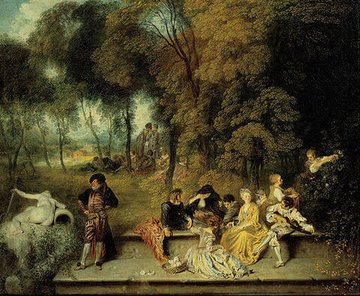
In the morning of life came a good fairy with her basket, and said:
"Here are gifts. Take one, leave the others. And be wary, chose wisely; oh, choose wisely! for only one of them is valuable."
The gifts were five: Fame, Love, Riches, Pleasure, Death. The youth said, eagerly:
"There is no need to consider"; and he chose Pleasure.
He went out into the world and sought out the pleasures that youth delights in. But each in its turn was short-lived and disappointing, vain and empty; and each, departing, mocked him. In the end he said: "These years I have wasted. If I could but choose again, I would choose wisely.
Chapter II
The fairy appeared, and said:
"Four of the gifts remain. Choose once more; and oh, remember-- time is flying, and only one of them is precious."
The man considered long, then chose Love; and did not mark the tears that rose in the fairy's eyes.
After many, many years the man sat by a coffin, in an empty home. And he communed with himself, saying: "One by one they have gone away and left me; and now she lies here, the dearest and the last. Desolation after desolation has swept over me; for each hour of happiness the treacherous trader, Love, as sold me I have paid a thousand hours of grief. Out of my heart of hearts I curse him."
Chapter III
"Choose again." It was the fairy speaking.
"The years have taught you wisdom--surely it must be so. Three gifts remain. Only one of them has any worth--remember it, and choose warily."
The man reflected long, then chose Fame; and the fairy, sighing, went her way.
Years went by and she came again, and stood behind the man where he sat solitary in the fading day, thinking. And she knew his thought:
"My name filled the world, and its praises were on every tongue, and it seemed well with me for a little while. How little a while it was! Then came envy; then detraction; then calumny; then hate; then persecution. Then derision, which is the beginning of the end. And last of all came pity, which is the funeral of fame. Oh, the bitterness and misery of renown! target for mud in its prime, for contempt and compassion in its decay."
Chapter IV
"Chose yet again." It was the fairy's voice.
"Two gifts remain. And do not despair. In the beginning there was but one that was precious, and it is still here."
"Wealth--which is power! How blind I was!" said the man. "Now, at last, life will be worth the living. I will spend, squander, dazzle. These mockers and despisers will crawl in the dirt before me, and I will feed my hungry heart with their envy. I will have all luxuries, all joys, all enchantments of the spirit, all contentments of the body that man holds dear. I will buy, buy, buy! deference, respect, esteem, worship--every pinchbeck grace of life the market of a trivial world can furnish forth. I have lost much time, and chosen badly heretofore, but let that pass; I was ignorant then, and could but take for best what seemed so."
Three short years went by, and a day came when the man sat shivering in a mean garret; and he was gaunt and wan and hollow-eyed, and clothed in rags; and he was gnawing a dry crust and mumbling:
"Curse all the world's gifts, for mockeries and gilded lies! And miscalled, every one. They are not gifts, but merely lendings. Pleasure, Love, Fame, Riches: they are but temporary disguises for lasting realities--Pain, Grief, Shame, Poverty. The fairy said true; in all her store there was but one gift which was precious, only one that was not valueless. How poor and cheap and mean I know those others now to be, compared with that inestimable one, that dear and sweet and kindly one, that steeps in dreamless and enduring sleep the pains that persecute the body, and the shames and griefs that eat the mind and heart. Bring it! I am weary, I would rest."
Chapter V
The fairy came, bringing again four of the gifts, but Death was wanting. She said:
"I gave it to a mother's pet, a little child. It was ignorant, but trusted me, asking me to choose for it. You did not ask me to choose."
"Oh, miserable me! What is left for me?"
"What not even you have deserved: the wanton insult of Old Age."
This story is featured in our collection of Short-Short Stories to read when you have five minutes to spare.
Frequently Asked Questions about The Five Boons of Life
What is "The Five Boons of Life" by Mark Twain about?
The Five Boons of Life is a fable divided into five short chapters, each representing a stage of a man’s life. A fairy offers the man five gifts — Pleasure, Love, Fame, Riches, and Death — warning that only one is truly valuable. The man chooses them one by one across his lifetime, and each proves to be a bitter disappointment: Pleasure is empty, Love brings grief, Fame invites persecution, and Riches vanish. When he finally understands that Death was the only genuine gift, the fairy reveals she has already given it to a trusting child. All that remains for the man is "the wanton insult of Old Age."
What is the theme of "The Five Boons of Life" by Mark Twain?
The central theme is the futility of worldly pursuits. Twain argues that Pleasure, Love, Fame, and Riches are not genuine gifts but "temporary disguises for lasting realities — Pain, Grief, Shame, Poverty." A closely related theme is the value of death as release: in Twain’s dark vision, death is the only true mercy life offers, "that dear and sweet and kindly one, that steeps in dreamless and enduring sleep the pains that persecute the body." The story also explores the impossibility of wisdom without experience — the fairy warns the man to choose wisely, but he cannot understand her warning until he has suffered through every wrong choice.
Why is Death the most valuable gift in "The Five Boons of Life"?
In the logic of the fable, Death is the only gift that delivers what it promises. Pleasure turns to emptiness, Love to grief, Fame to persecution, and Riches to poverty — each is a "mockery and gilded lie" that disguises its opposite. Death alone offers permanent relief: an end to the accumulated pain, shame, and sorrow that the other gifts leave behind. The story reflects ’s late-period pessimism, shaped by the deaths of his daughter Susy and his wife Olivia, which deepened his conviction that life was more suffering than reward.
What literary devices does Mark Twain use in "The Five Boons of Life"?
The story employs allegory, with the fairy representing fate or providence and the five gifts standing for the major pursuits of human existence. Twain uses repetition and parallel structure — each chapter follows the same pattern of choice, passage of time, and disillusionment, creating a rhythmic inevitability. Dramatic irony runs throughout: the reader quickly grasps what the man cannot, that his choices will fail. The final chapter delivers a devastating reversal when the last desirable gift has already been given away, and the personification of abstract concepts (Love as a "treacherous trader," Old Age as a "wanton insult") gives the fable its emotional force.
What is the significance of the ending of "The Five Boons of Life"?
The ending is the story’s cruelest twist. When the man finally understands that Death was the only worthwhile gift and begs for it, the fairy tells him she gave it to "a mother’s pet, a little child" who trusted her to choose. The child received Death’s mercy innocently, without the decades of suffering the man endured. What awaits the man instead is Old Age — something "not even you have deserved." The ending suggests that wisdom always arrives too late, and that the universe’s final joke is not death but the prolonged decay that precedes it.
When was "The Five Boons of Life" by Mark Twain published?
The Five Boons of Life was first published in Harper’s Weekly in 1902 and later included in ’s 1906 collection The 0,000 Bequest and Other Stories. The story belongs to Twain’s late period, a time marked by profound personal losses and an increasingly pessimistic worldview. His daughter Susy had died in 1896, and his wife Olivia’s health was declining rapidly — circumstances that gave the fable’s meditation on death and suffering an unmistakably autobiographical edge.
What does the fairy represent in "The Five Boons of Life"?
The fairy functions as a figure of fate or cosmic wisdom. She knows from the beginning which gift is truly valuable but cannot force the man to choose it — she can only warn and weep. Her tears when the man chooses Love, and her sighs when he chooses Fame, signal her foreknowledge of his suffering. Unlike traditional fairy-tale benefactors, she is not benevolent in any comforting sense: she offers genuine counsel, but the rules of her gift-giving ensure that understanding comes only through lived experience. She represents the painful truth that no amount of good advice can substitute for personal failure.
Is "The Five Boons of Life" a fable or a parable?
The story has elements of both. As a fable, it uses a supernatural figure (the fairy) and a simplified narrative to convey a moral lesson. As a parable, it illustrates a spiritual or philosophical truth through a brief fictional scenario. Most literary scholars classify it as a philosophical fable or allegory, placing it alongside other late-Twain works like A Fable and The Mysterious Stranger that use simple narrative forms to express deeply pessimistic ideas about the human condition.
Save stories, build your reading list, and access all study tools — completely free.
Save The Five Boons of Life to your library — it's free!Need help with The Five Boons of Life?
Study tools to help with homework, prepare for quizzes, and deepen your understanding.
Flashcards →