Summary
A cat falls hopelessly in love with a handsome young man. She prays to Venus, goddess of love, who takes pity and transforms her into a beautiful woman. The young man is immediately …
Understanding The Cat-Maiden
Summary
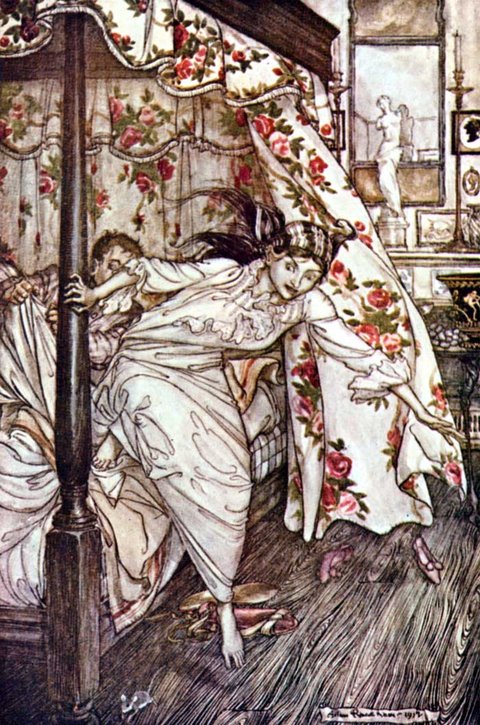
A cat falls hopelessly in love with a handsome young man. She prays to Venus, goddess of love, who takes pity and transforms her into a beautiful woman. The young man is immediately smitten, and they marry that same day. But at the wedding feast, Venus releases a mouse to test whether the transformation goes deeper than skin. The bride instantly abandons all human composure — leaping from her chair to chase the mouse on all fours. Venus, seeing that nature has not truly changed, turns the bride back into a cat.
Moral
"Nature will out, no matter what shape it takes."
The fable's central lesson is that fundamental character cannot be disguised or erased by outward change. No matter how convincing the transformation — whether physical appearance, social status, or learned behavior — a creature's deepest instincts will eventually reveal themselves. The moral applies broadly: people who adopt new habits, new surroundings, or new identities may still revert to their core nature under pressure.
Analysis
"The Cat-Maiden" belongs to a family of Aesop's fables exploring the theme that nature is permanent and unchangeable. Similar lessons appear in "The Raven and the Swan" (where a raven tries to become white by washing) and "The Ass in the Lion's Skin" (where disguise fails under scrutiny). The theme reflects an ancient Greek philosophical belief — championed by Aristotle and the Cynics — that character (ethos) is fixed and innate.
Venus's role is significant. As the goddess of love and beauty, she has the power to reshape the body entirely. Yet even divine intervention cannot reshape instinct. This sets up a hierarchy: nature ranks above even the power of the gods, a surprisingly bold claim within Greek mythology. The mouse is the perfect test because it triggers an unconscious reflex — not a deliberate choice. The bride doesn't decide to chase the mouse; she simply cannot help herself.
The fable also carries a subtler message about self-deception and authenticity. The cat-maiden's new life looks perfect on the surface — beauty, love, a wedding feast. But it is built on a false foundation. The mouse shatters the illusion not because the woman is flawed, but because she was never truly transformed. Aesop suggests that genuine change requires more than a new exterior; it must come from within.
Modern readers often connect this fable to discussions about nature versus nurture, the limits of self-reinvention, and the dangers of judging by appearances alone.
Find this helpful? Create a free account to bookmark stories and save explanations for quick reference.
Sign Up FreeAlready have an account? Log in