Understanding "The Fox Without a Tail"
"The Fox Without a Tail" is one of Aesop's most psychologically perceptive fables. At its heart, the story explores how personal misfortune can drive people to manipulate …
Understanding The Fox Without A Tail
Understanding "The Fox Without a Tail"
"The Fox Without a Tail" is one of Aesop's most psychologically perceptive fables. At its heart, the story explores how personal misfortune can drive people to manipulate others under the guise of offering helpful advice. The Fox who has lost his tail does not simply accept his loss and move on. Instead, he devises an elaborate scheme to convince every other Fox to voluntarily give up what he himself has been forced to lose.
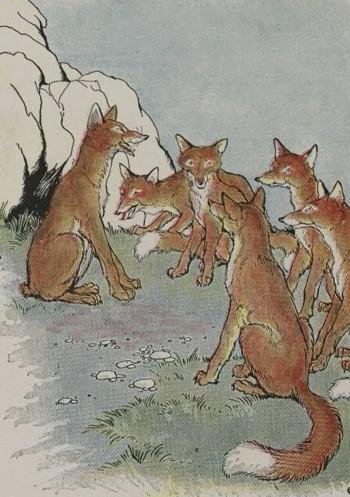
The Fox's strategy is remarkably sophisticated. Rather than admitting the truth about his accident, he reframes the absence of a tail as a deliberate choice—one that all sensible Foxes should make. He presents carefully selected evidence: stories of Foxes harmed by their tails, arguments about the weight slowing them down, and the claim that hunters target Foxes specifically for their tails. Each point sounds reasonable on its own, yet the entire argument is constructed to serve one purpose: making the Fox Without a Tail feel less alone in his misfortune.
This is what makes the old Fox's response so devastating in its simplicity. He does not bother to refute the arguments point by point. Instead, he asks the tailless Fox to turn around. The visual proof of the Fox's true motivation—his missing tail—is more powerful than any counter-argument could be. The laughter that follows is the community's collective recognition that they were nearly deceived by someone acting out of self-interest rather than genuine concern.
The fable illustrates a pattern of behavior that psychologists today might call "leveling"—the impulse to bring others down to one's own level rather than working to rise above adversity. It is closely related to the modern saying "misery loves company." People who have experienced a loss or setback sometimes find it easier to normalize their situation by persuading others to join them, rather than confronting their own feelings of inadequacy or shame.
Aesop's moral—"Do not listen to the advice of him who seeks to lower you to his own level"—is a call for critical thinking. It urges us to consider the motives behind any advice we receive. When someone passionately argues that you should give up something valuable, it is worth asking: does this person stand to benefit from my loss? The Fox Without a Tail teaches us that the most dangerous advice often comes wrapped in the language of concern and practicality, and that the wisest response is to look at the advisor's circumstances before following their counsel.
This fable remains remarkably relevant in modern life, where social pressure, advertising, and even well-meaning friends may encourage us to abandon things of value for reasons that ultimately serve someone else's interests. The lesson is timeless: always consider the source.
Find this helpful? Create a free account to bookmark stories and save explanations for quick reference.
Sign Up FreeAlready have an account? Log in