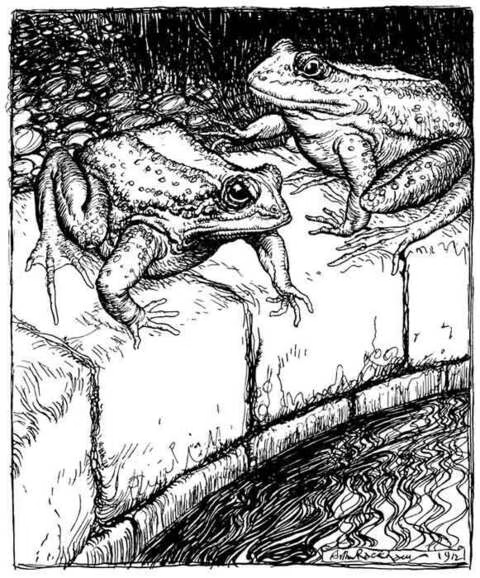
The Frogs and the Well


The Frogs and the Well (Perry Index 43) is one of Aesop's shortest and most practical fables, dating to the earliest Greek collection (circa 600 BCE). Also known as "The Two Frogs," it is the origin of the English proverb "Look before you leap" — one of the most widely used idioms in the English language. The fable's brevity makes it a favorite in elementary education, where it is often the first Aesop fable children encounter.
The Frogs and the Well

Two Frogs lived together in a marsh. But one hot summer the marsh dried up, and they left it to look for another place to live, for frogs need damp places if they can find them. Before long they came to a deep well, and one of them looked down into it and said to the other, "This looks like a nice, cool place. Let us jump in and settle here."

But the other, who had a wiser head on his shoulders, replied, "Not so fast, my friend. Suppose this well dried up like the marsh — how should we get out again?"

Think twice before you act.

Two Frogs lived together in a marsh. But one hot summer the marsh dried up, and they left it to look for another place to live in: for frogs like damp places if they can get them. By and by they came to a deep well, and one of them looked down into it, and said to the other, "This looks a nice cool place: let us jump in and settle here." But the other, who had a wiser head on his shoulders, replied, "Not so fast, my friend: supposing this well dried up like the marsh, how should we get out again?"

Think twice before you act.


Frequently Asked Questions about The Frogs and the Well

What is the moral of The Frogs and the Well?

The moral is "Think twice before you act" — also expressed as "Look before you leap." When two frogs discover a deep well after their marsh dries up, one wants to jump in immediately. The wiser frog stops him by asking: what if this well dries up too? How would they escape? The fable teaches that an attractive solution can become a permanent trap if you don't consider the consequences before committing to it.

What does "Look before you leap" mean?

"Look before you leap" is an English proverb that originated from this Aesop fable. It means you should carefully consider the potential consequences of an action before taking it. In the fable, the first frog wants to leap into the well without thinking about how they'd get out. The wiser frog's caution — asking "how should we get out again?" — embodies the proverb perfectly. The phrase has been in use since at least the 16th century and remains one of the most commonly used idioms in English.

What is the theme of The Frogs and the Well?

The central theme is foresight versus impulsiveness. The fable presents two ways of making decisions: acting on what looks good right now (the first frog) versus imagining what could go wrong in the future (the second frog). A second theme is learning from experience — the frogs have already watched one body of water dry up. The wise frog applies that lesson; the impulsive frog ignores it. The fable suggests that wisdom is simply the habit of asking "what if?" before acting.

Why is The Frogs and the Well so short?

At barely a hundred words, this is one of Aesop's shortest fables — and the brevity is the point. The lesson is so clear that it needs almost no setup. Two characters, one decision, one question. There are no tricks, no villains, no animals being eaten. The entire drama is internal: will you think before you act, or won't you? The simplicity also makes it one of the most effective fables for young children, which is why it's often the first Aesop fable taught in schools.

What happens to the frogs at the end?

Aesop deliberately leaves the ending open. We don't know whether the first frog listens to the second frog's warning or jumps in anyway. The fable ends on the question itself: "How should we get out again?" This is a powerful storytelling choice — Aesop forces the reader to answer the question instead of resolving it. The open ending turns the fable from a story into a decision-making exercise: what would you do?

How old is The Frogs and the Well?

The Frogs and the Well is Perry Index 43, placing it among the earliest fables attributed to Aesop (circa 600 BCE). The fable appears in the oldest Greek collections and was retold by Phaedrus in Latin. It has been translated into virtually every European language and remains a staple of children's literature worldwide. Its enduring popularity comes from its universally applicable moral — the advice to think before acting transcends every culture and era.

What are the best Aesop fables to read next?

If you enjoyed The Frogs and the Well, here are more of Aesop's most thought-provoking fables:

Save stories, build your reading list, and access all study tools — completely free.

Save The Frogs and the Well to your library — it's free!

Need help with The Frogs and the Well?

Study tools to help with homework, prepare for quizzes, and deepen your understanding.

Flashcards →