Cassius Hueffer Spoon River Anthology

Previous Chapter Next Chapter

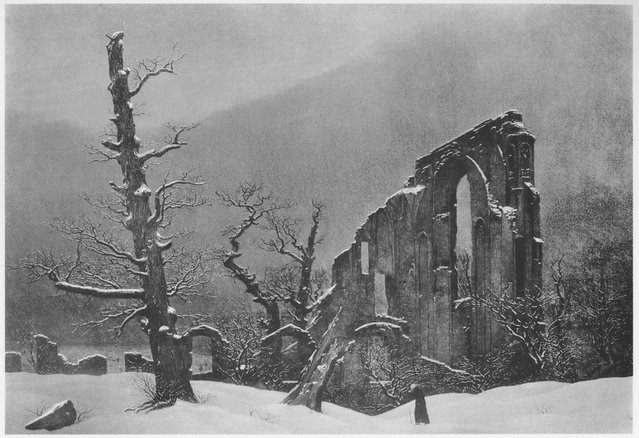
Winter Landscape with Ruins by Caspar David Friedrich
"Winter Landscape with Ruins" by C.D. Friedrich, c. 1825

They have chiseled on my stone the words:
“His life was gentle, and the elements so mixed in him
That nature might stand up and say to all the world,
This was a man.”
Those who knew me smile
As they read this empty rhetoric.
My epitaph should have been:
“Life was not gentle to him,
And the elements so mixed in him
That he made warfare on life
In the which he was slain.”
While I lived I could not cope with slanderous tongues,
Now that I am dead I must submit to an epitaph
Graven by a fool!

Frequently Asked Questions about Cassius Hueffer from Spoon River Anthology

What is the meaning of "Cassius Hueffer" by Edgar Lee Masters?

Cassius Hueffer exposes the gap between tombstone rhetoric and lived reality. His gravestone bears a famous Shakespeare quote—"His life was gentle, and the elements so mixed in him / That nature might stand up and say to all the world, / This was a man"—but those who knew him "smile / As they read this empty rhetoric." His real epitaph should say that life was NOT gentle to him, and he "made warfare on life / In the which he was slain." The poem critiques how the dead are remembered with flattering lies rather than honest truths.

What Shakespeare quote appears on Cassius Hueffer’s tombstone?

The quote is from Julius Caesar (Act V, Scene 5), spoken by Mark Antony about Brutus: "His life was gentle, and the elements so mixed in him / That nature might stand up and say to all the world, / This was a man." It is Shakespeare’s highest praise for a noble character. The irony is that Cassius’s life was nothing like Brutus’s—he was battered by slanderous tongues and fought back bitterly.

What epitaph does Cassius say he should have had?

He rewrites his own epitaph as: "Life was not gentle to him, / And the elements so mixed in him / That he made warfare on life / In the which he was slain." This inverts the Shakespeare quote point by point—gentle becomes not gentle, nature’s praise becomes warfare, and the noble man becomes a casualty. The revision is more honest and more devastating than the flattering original.

What is the tone of "Cassius Hueffer"?

The tone is sardonic and indignant. Cassius is angry not just at his life but at the final insult of a dishonest epitaph. His closing line—"Now that I am dead I must submit to an epitaph / Graven by a fool!"—shows a man who could not escape hypocrisy even in death. Among Spoon River Anthology’s many critiques of small-town dishonesty, this one targets the performative mourning that replaces truth with sentiment.

What theme does "Cassius Hueffer" explore?

The poem explores the dishonesty of conventional mourning. Tombstone inscriptions, eulogies, and memorials often tell the story the living want to hear, not the truth the dead would tell. Masters built Spoon River Anthology on exactly this premise—giving the dead a chance to speak their real epitaphs. Cassius makes the contrast explicit: the chiseled lie vs. the spoken truth.


Previous Chapter Next Chapter
Return to the Spoon River Anthology Summary Return to the Edgar Lee Masters Library