Elsa Wertman Spoon River Anthology

Previous Chapter Next Chapter

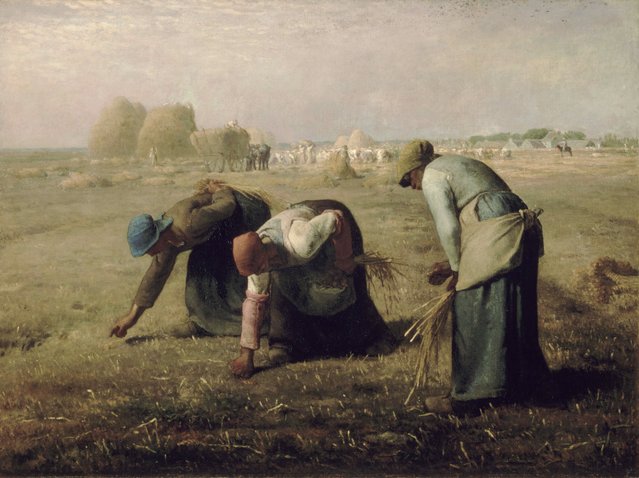
The Gleaners by Jean-Francois Millet
"The Gleaners" by Jean-Francois Millet, 1857
Read Hamilton Greene’s poem next—the son who never knew Elsa was his real mother.

I was a peasant girl from Germany,
Blue-eyed, rosy, happy and strong.
And the first place I worked was at Thomas Greene’s.
On a summer’s day when she was away
He stole into the kitchen and took me
Right in his arms and kissed me on my throat,
I turning my head. Then neither of us
Seemed to know what happened.
And I cried for what would become of me.
And cried and cried as my secret began to show.
One day Mrs. Greene said she understood,
And would make no trouble for me,
And, being childless, would adopt it.
(He had given her a farm to be still.)
So she hid in the house and sent out rumors,
As if it were going to happen to her.
And all went well and the child was born—
They were so kind to me.
Later I married Gus Wertman, and years passed.
But—at political rallies when sitters-by thought I was crying
At the eloquence of Hamilton Greene
That was not it. No! I wanted to say:
That’s my son!
That’s my son.

Frequently Asked Questions about Elsa Wertman from Spoon River Anthology

What is the meaning of "Elsa Wertman" by Edgar Lee Masters?

Elsa Wertman tells the story of a German immigrant servant who was sexually exploited by her employer, Thomas Greene, and bore a child that was raised as the Greenes’ own. That child grew up to be Hamilton Greene—a judge, congressman, and state leader. Elsa’s secret was sealed by social convention and the Greenes’ generosity (Greene "had given her a farm to be still"). The poem’s devastating ending shows Elsa weeping at Hamilton’s political rallies—not from political emotion but from the agony of watching her son succeed without knowing she exists.

What is the significance of the ending "That’s my son! That’s my son"?

The repeated line is the emotional climax of two paired poems. While everyone at the rally thinks Elsa is crying at Hamilton’s eloquence, she is actually bursting with a secret she can never speak: "That’s my son!" The repetition—first with an exclamation mark, then with a period—shifts from a cry of pride to a quiet, resigned statement of fact. It is one of the most heartbreaking moments in Spoon River Anthology.

How does "Elsa Wertman" connect to "Hamilton Greene"?

The two poems form one of the anthology’s most devastating pairs. Elsa reveals that Hamilton is her biological son, fathered by Thomas Greene and raised as the Greenes’ legitimate child. In Hamilton’s own poem, he proudly credits "the honorable blood" of Thomas Greene and Frances Harris for his success—never knowing his real mother was a German servant girl. The dramatic irony is devastating: his self-understanding is built on a lie.

What happened between Elsa and Thomas Greene?

Thomas Greene, Elsa’s employer, took advantage of her on a summer day when his wife was away—"He stole into the kitchen and took me / Right in his arms and kissed me on my throat." Elsa’s account—"Then neither of us / Seemed to know what happened"—shows her as young, confused, and powerless. When her pregnancy showed, Mrs. Greene arranged to adopt the baby and pretend it was her own, while Thomas paid her off with a farm. The power imbalance—employer/servant, American/immigrant—makes the encounter exploitative.

What is the tone of "Elsa Wertman"?

The tone shifts from naive innocence to quiet devastation. Elsa describes her youth—"Blue-eyed, rosy, happy and strong"—with the simplicity of a fairy tale that goes wrong. The middle section is matter-of-fact (the Greenes’ arrangement, her later marriage). But the ending explodes with suppressed emotion: the gap between what the crowd sees (a woman moved by eloquence) and what is actually happening (a mother claiming her son in silence) is almost unbearable.

What themes does "Elsa Wertman" explore?

The poem explores class exploitation, immigrant vulnerability, silenced motherhood, and the lies that underpin social respectability. The Greenes’ reputation rested on a deception; Hamilton’s career was built on false lineage; and Elsa’s sacrifice was erased from history. Masters shows how small-town respectability is maintained by burying the truths of the powerless.


Previous Chapter Next Chapter
Return to the Spoon River Anthology Summary Return to the Edgar Lee Masters Library