Emily Sparks Spoon River Anthology

Previous Chapter Next Chapter

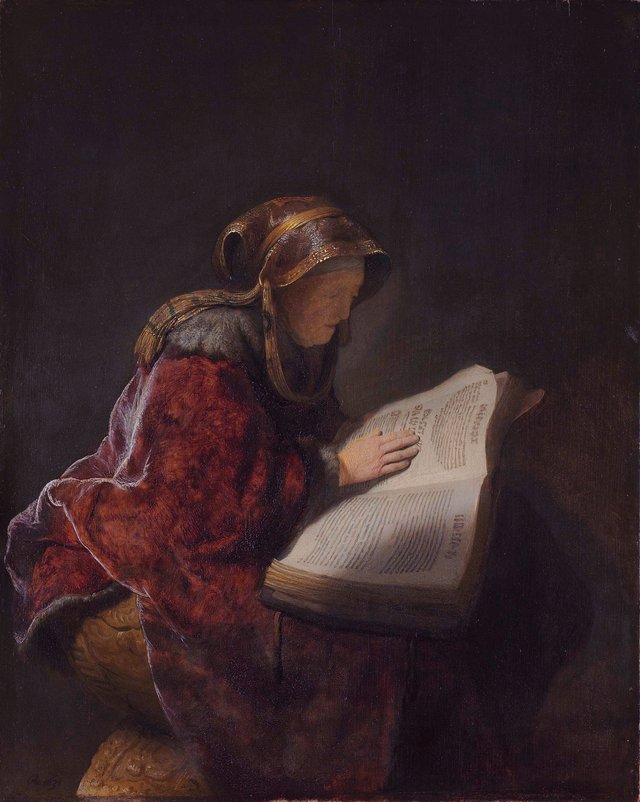
Prophetess Anna by Rembrandt
"Prophetess Anna" by Rembrandt, 1631
Emily’s beloved student is likely Reuben Pantier, who tells his own story elsewhere in the anthology—and remembers her.

Where is my boy, my boy
In what far part of the world?
The boy I loved best of all in the school?—
I, the teacher, the old maid, the virgin heart,
Who made them all my children.
Did I know my boy aright,
Thinking of him as a spirit aflame,
Active, ever aspiring?
Oh, boy, boy, for whom I prayed and prayed
In many a watchful hour at night,
Do you remember the letter I wrote you
Of the beautiful love of Christ?
And whether you ever took it or not,
My, boy, wherever you are,
Work for your soul’s sake,
That all the clay of you, all of the dross of you,
May yield to the fire of you,
Till the fire is nothing but light!…
Nothing but light!

Frequently Asked Questions about Emily Sparks from Spoon River Anthology

What is the meaning of "Emily Sparks" by Edgar Lee Masters?

Emily Sparks is the voice of a devoted teacher who never married and instead poured all her love into her students, making them her children. From the grave she still searches for "my boy"—the student she loved best, whom she saw as "a spirit aflame, / Active, ever aspiring." Her plea that he "work for your soul’s sake" until "the fire is nothing but light" is both a prayer and a last will—the hope that her influence outlasted her life.

Who is Emily Sparks in Spoon River Anthology?

Emily is the village schoolteacher, self-described as "the old maid, the virgin heart" who channeled all her maternal and romantic energy into her students. She is one of the gentlest voices in Spoon River Anthology—no bitterness, no irony, only yearning love for a former student she still calls "my boy." She likely taught Reuben Pantier, who appears in his own epitaph.

What does "Till the fire is nothing but light" mean?

Emily urges her former student to refine himself—to burn away "all the clay of you, all of the dross" until only pure light remains. The metaphor draws on smelting: raw ore is heated to separate impurities from precious metal. She wants him to transform passion ("fire") into enlightenment ("light"). It is both a spiritual exhortation and a teacher’s highest hope—that a student will become the best version of themselves.

What is the tone of "Emily Sparks"?

The tone is tender, yearning, and prayerful. Emily speaks without irony or regret—unusual in a collection full of both. Her repeated "my boy, my boy" has the rhythm of a lullaby or a prayer. Even from the grave she reaches toward the living, hoping her influence endures. Among the many disillusioned voices in Spoon River Anthology, hers is one of the purest expressions of selfless love.

What literary device structures "Emily Sparks"?

The poem is structured as an apostrophe—a direct address to an absent person. Emily speaks to her former student who is still alive somewhere in the world, making it one of the few Spoon River poems that bridges the gap between the dead and the living. The repeated "my boy" and the escalating fire/light imagery create a crescendo that builds to the final ecstatic cry: "Nothing but light!"


Previous Chapter Next Chapter
Return to the Spoon River Anthology Summary Return to the Edgar Lee Masters Library