Lucinda Matlock Spoon River Anthology

Previous Chapter Next Chapter

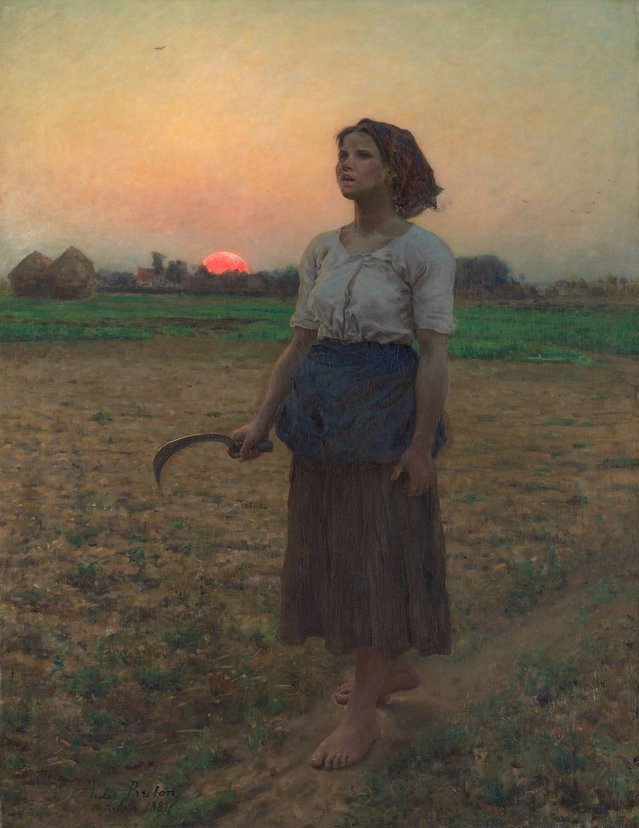
Song of the Lark by Jules Breton — a young woman pausing in a field at dawn to listen to birdsong
"Song of the Lark" by Jules Breton, 1884

I went to the dances at Chandlerville,
And played snap-out at Winchester.
One time we changed partners,
Driving home in the moonlight of middle June,
And then I found Davis.
We were married and lived together for seventy years,
Enjoying, working, raising the twelve children,
Eight of whom we lost
Ere I had reached the age of sixty.
I spun,
I wove,
I kept the house,
I nursed the sick,
I made the garden, and for holiday
Rambled over the fields where sang the larks,
And by Spoon River gathering many a shell,
And many a flower and medicinal weed—
Shouting to the wooded hills, singing to the green valleys.
At ninety—six I had lived enough, that is all,
And passed to a sweet repose.
What is this I hear of sorrow and weariness,
Anger, discontent and drooping hopes?
Degenerate sons and daughters,
Life is too strong for you—
It takes life to love Life.

Frequently Asked Questions about Lucinda Matlock from Spoon River Anthology

What is the message of "Lucinda Matlock" by Edgar Lee Masters?

The central message is that a full life requires active engagement, not passive complaint. Lucinda recounts a long life of work, love, loss, and joy—marrying Davis, raising twelve children, losing eight of them, spinning, weaving, gardening, and rambling the fields until age ninety-six. Her epitaph is a rebuke to those who would surrender to "sorrow and weariness." Life, she insists, rewards those who meet it with energy and courage.

Who is Lucinda Matlock based on?

Lucinda Matlock is based on Edgar Lee Masters' own paternal grandmother, Lucinda Matlock Masters, who lived in the Spoon River region of Illinois. Like her fictional counterpart, she was known for her resilience, practicality, and long life. Masters drew heavily on family history throughout Spoon River Anthology, and Lucinda is one of the most autobiographical characters in the collection.

What does "It takes life to love Life" mean?

This famous closing line means that you must live fully—with all the effort, pain, and engagement that entails—to truly appreciate being alive. The capitalized "Life" suggests life as a force or principle larger than any individual. Lucinda earned her appreciation for existence through ninety-six years of labor, grief, and joy. Those who shrink from difficulty, she implies, will never understand what makes life worth living.

What hardships did Lucinda Matlock face?

Lucinda lost eight of her twelve children before she reached the age of sixty—a staggering loss that she states plainly, without self-pity. Despite this, she continued spinning, weaving, keeping house, nursing the sick, tending her garden, and rambling the fields gathering shells and wildflowers. Her refusal to be broken by grief is the poem's central argument: hardship is not a reason to stop living, but part of what gives life its depth.

Why does Lucinda Matlock criticize the younger generation?

In her final lines, Lucinda addresses the living directly: "What is this I hear of sorrow and weariness, / Anger, discontent and drooping hopes?" She calls them "Degenerate sons and daughters" because she sees a generation consumed by self-pity despite having easier lives than hers. Her critique reflects a tension Masters observed between rural frontier resilience and the spiritual malaise of modern life in early 20th-century America.

What does "One time we changed partners, driving home in the moonlight" mean?

This refers to a 19th-century rural courtship custom. At country dances, young people often rode home in groups, and "changing partners" meant swapping who you rode with for the journey back. It was how couples paired off—a socially acceptable way to spend time alone with someone new. Lucinda changed partners on the moonlit drive home from a dance and ended up with Davis, who became her husband of seventy years. The detail captures the casual, almost accidental way that a life-defining relationship began.

What is "snap-out" in "Lucinda Matlock"?

Snap-out (also called "Snap" or "Snatch") was a popular parlor and dance-floor game in rural 19th-century America. Players stood in a circle while one person ran around the outside, "snatching" a partner by tapping them—similar to a kissing game. Lucinda mentions playing snap-out at Winchester alongside attending dances at Chandlerville, painting a picture of the lively social life that young people enjoyed in small-town Illinois before the Civil War.

What is the form and structure of "Lucinda Matlock"?

The poem is a dramatic monologue in free verse—Lucinda speaks from beyond the grave in unrhymed lines of varying length, a form Masters uses throughout Spoon River Anthology. The first twenty lines narrate her life chronologically, building a portrait of work and loss. Then the tone shifts abruptly in the final five lines to direct address, as she confronts the living. This structural pivot—from quiet autobiography to fierce rebuke—gives the ending its power.


Previous Chapter Next Chapter
Return to the Spoon River Anthology Summary Return to the Edgar Lee Masters Library