Federigo's Falcon
by Giovanni Boccaccio
Federigo's Falcon is Boccaccio's clever use of the ironic twist, often paired with The Necklace or The Gift of the Magi. It was originally published in The Decameron in 1353. Translation by Mark Musa and Peter Bondanella.
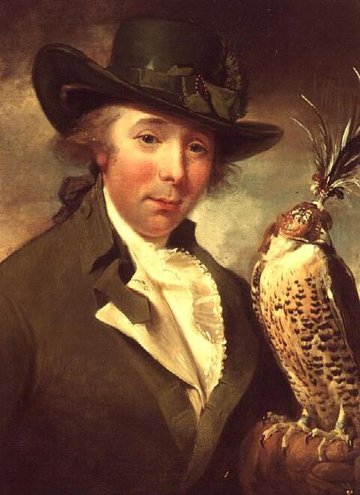
There was once in Florence a young man named Federigo, the son of Messer Filippo Alberighi, renowned above all other men in Tuscany for his prowess in arms and for his courtliness. As often happens to most gentlemen, he fell in love with a lady named Monna Giovanna, in her day considered to be one of the most beautiful and one of the most charming women that ever there was in Florence; and in order to win her love, he participated in jousts and tournaments, organized and gave feasts, and spent his money without restraint; but she, no less virtuous than beautiful, cared little for these things done on her behalf, nor did she care for him who did them. Now, as Federigo was spending far beyond his means and was taking nothing in, as easily happens he lost his wealth and became poor, with nothing but his little farm to his name (from whose revenues he lived very meagerly) and one falcon which was among the best in the world.
More in love than ever, but knowing that he would never be able to live the way he wished to in the city, he went to live at Campi, where his farm was. There he passed his time hawking whenever he could, asked nothing of anyone, and endured his poverty patiently. Now, during the time that Federigo was reduced to dire need, it happened that the husband of Monna Giovanna fell ill, and realizing death was near, he made his last will. He was very rich, and he made his son, who was growing up, his heir, and, since he had loved Monna Giovanna very much, he made her his heir should his son die without a legitimate heir; and then he died.
Monna Giovanna was now a widow, and as is the custom among our women, she went to the country with her son to spend a year on one of her possessions very close by to Federigo’s farm, and it happened that this young boy became friends with Federigo and began to enjoy birds and hunting dogs; and after he had seen Federigo’s falcon fly many times, it pleased him so much that he very much wished it were his own, but he did not dare to ask for it, for he could see how dear it was to Federigo. And during this time, it happened that the young boy took ill, and his mother was much grieved, for he was her only child and she loved him enormously. She would spend the entire day by his side, never ceasing to comfort him, and often asking him if there was anything he desired, begging him to tell her what it might be, for if it were possible to obtain it, she would certainly do everything possible to get it. After the young boy had heard her make this offer many times, he said:
“Mother, if you can arrange for me to have Federigo’s falcon, I think I would be well very soon.”
When the lady heard this, she was taken aback for a moment, and she began to think what she should do. She knew that Federigo had loved her for a long while, in spite of the fact that he never received a single glance from her, and so, she said to herself:
“How can I send or go and ask for this falcon of his which is, as I have heard tell, the best that ever flew, and besides this, his only means of support? And how can I be so insensitive as to wish to take away from this gentleman the only pleasure which is left to him?”
And involved in these thoughts, knowing that she was certain to have the bird if she asked for it, but not knowing what to say to her son, she stood there without answering him. Finally the love she bore her son persuaded her that she should make him happy, and no matter what the consequences might be, she would not send for the bird, but rather go herself for it and bring it back to him; so she answered her son:
“My son, take comfort and think only of getting well, for I promise you that the first thing I shall do tomorrow morning is to go for it and bring it back to you.”
The child was so happy that he showed some improvement that very day. The following morning, the lady, accompanied by another woman, as if going for a stroll, went to Federigo’s modest house and asked for him. Since it was not the season for it, Federigo had not been hawking for some days and was in his orchard, attending to certain tasks. When he heard that Monna Giovanna was asking for him at the door, he was very surprised and happy to run there. As she saw him coming, she greeted him with feminine charm, and once Federigo had welcomed her courteously, she said:
“Greetings, Federigo!” Then she continued: “I have come to compensate you for the harm you have suffered on my account by loving me more than you needed to; and the compensation is this: I, along with this companion of mine, intend to dine with you—a simple meal—this very day.”
To this Federigo humbly replied: “Madonna, I never remember having suffered any harm because of you. On the contrary, so much good have I received from you that if ever I have been worth anything, it has been because of your merit and the love I bore for you; and your generous visit is certainly so dear to me that I would spend all over again that which I spent in the past; but you have come to a poor host.”
And having said this, he received her into his home humbly, and from there he led her into his garden, and since he had no one there to keep her company, he said:
“My lady, since there is no one else, this good woman here, the wife of this workman, will keep you company while I go to set the table.”
Though he was very poor, Federigo, until now, had never before realized to what extent he had wasted his wealth; but this morning, the fact that he found nothing with which he could honor the lady for the love of whom he had once entertained countless men in the past gave him cause to reflect. In great anguish, he cursed himself and his fortune and, like a man beside himself, he started running here and there, but could find neither money nor a pawnable object. The hour was late and his desire to honor the gracious lady was great, but not wishing to turn for help to others (not even to his own workman), he set his eyes upon his good falcon, perched in a small room; and since he had nowhere else to turn, he took the bird, and finding it plump, he decided that it would be a worthy food for such a lady. So, without further thought, he wrung its neck and quickly gave it to his servant girl to pluck, prepare, and place on a spit to be roasted with care; and when he had set the table with the whitest of tablecloths (a few of which he still had left), he returned, with a cheerful face, to the lady in his garden, saying that the meal he was able to prepare for her was ready.
The lady and her companion rose, went to the table together with Federigo, who waited upon them with the greatest devotion, and they ate the good falcon without knowing what it was they were eating. And having left the table and spent some time in pleasant conversation, the lady thought it time now to say what she had come to say, and so she spoke these kind words to Federigo:
“Federigo, if you recall your past life and my virtue, which you perhaps mistook for harshness and cruelty, I do not doubt at all that you will be amazed by my presumption when you hear what my main reason for coming here is; but if you had children, through whom you might have experienced the power of parental love, it seems certain to me that you would, at least in part, forgive me. But, just as you have no child, I do have one, and I cannot escape the common laws of other mothers; the force of such laws compels me to follow them, against my own will and against good manners and duty, and to ask of you a gift which I know is most precious to you; and it is naturally so, since your extreme condition has left you no other delight, no other pleasure, no other consolation; and this gift is your falcon, which my son is so taken by that if I do not bring it to him, I fear his sickness will grow so much worse that I may lose him. And therefore I beg you, not because of the love that you bear for me, which does not oblige you in the least, but because of your own nobility, which you have shown to be greater than that of all others in practicing courtliness, that you be pleased to give it to me, so that I may say that I have saved the life of my son by means of this gift, and because of it I have placed him in your debt forever.”
When he heard what the lady requested and knew that he could not oblige her since he had given her the falcon to eat, Federigo began to weep in her presence, for he could not utter a word in reply. The lady, at first, thought his tears were caused more by the sorrow of having to part with the good falcon than by anything else, and she was on the verge of telling him she no longer wished it, but she held back and waited for Federigo’s reply after he stopped weeping. And he said:
“My lady, ever since it pleased God for me to place my love in you, I have felt that Fortune has been hostile to me in many things, and I have complained of her, but all this is nothing compared to what she has just done to me, and I must never be at peace with her again, thinking about how you have come here to my poor home where, while it was rich, you never deigned to come, and you requested a small gift, and Fortune worked to make it impossible for me to give it to you; and why this is so I shall tell you briefly. When I heard that you, out of your kindness, wished to dine with me, I considered it fitting and right, taking into account your excellence and your worthiness, that I should honor you, according to my possibilities, with a more precious food than that which I usually serve to other people; therefore, remembering the falcon that you requested and its value, I judged it a food worthy of you, and this very day you had it roasted and served to you as best I could; but seeing now that you desired it in another way, my sorrow in not being able to serve you is so great that I shall never be able to console myself again.”
And after he had said this, he laid the feathers, the feet, and the beak of the bird before her as proof. When the lady heard and saw this, she first reproached him for having killed such a falcon to serve as a meal to a woman; but then to herself she commended the greatness of his spirit, which no poverty was able or would be able to diminish; then, having lost all hope of getting the falcon and, perhaps because of this, of improving the health of her son as well, she thanked Federigo both for the honor paid to her and for his good will, and she left in grief, and returned to her son. To his mother’s extreme sorrow, either because of his disappointment that he could not have the falcon, or because his illness must have necessarily led to it, the boy passed from this life only a few days later.
After the period of her mourning and bitterness had passed, the lady was repeatedly urged by her brothers to remarry, since she was very rich and was still young; and although she did not wish to do so, they became so insistent that she remembered the merits of Federigo and his last act of generosity—that is, to have killed such a falcon to do her honor—and she said to her brothers:
“I would prefer to remain a widow, if that would please you; but if you wish me to take a husband, you may rest assured that I shall take no man but Federigo degli Alberighi.”
In answer to this, making fun of her, her brothers replied:
“You foolish woman, what are you saying? How can you want him; he hasn’t a penny to his name?”
To this she replied: “My brothers, I am well aware of what you say, but I would rather have a man who needs money than money that needs a man.”
Her brothers, seeing that she was determined and knowing Federigo to be of noble birth, no matter how poor he was, accepted her wishes and gave her in marriage to him with all her riches. When he found himself the husband of such a great lady, whom he had loved so much and who was so wealthy besides, he managed his financial affairs with more prudence than in the past and lived with her happily the rest of his days.
Frederigo's Falcon is a featured in our collection of Short Stories for Middle School. It is one of many short stories that feature an ironic or confounding event. O. Henry's The Gift of the Magi and Guy de Maupassant's The Necklace are great works to compare the authors' use of irony.
Frequently Asked Questions about Federigo's Falcon
What is "Federigo's Falcon" by Giovanni Boccaccio about?
Federigo's Falcon tells the story of a young Florentine nobleman named Federigo degli Alberighi who squanders his entire fortune trying to win the love of Monna Giovanna, a beautiful married woman who never returns his affections. Reduced to poverty, Federigo retires to a small farm with nothing of value except a magnificent hunting falcon. When Giovanna's young son falls gravely ill and begs for the falcon, she reluctantly visits Federigo to ask for it — but Federigo, having nothing else to serve his beloved guest, has already killed and cooked the bird for her meal. The boy dies shortly after, and Giovanna, deeply moved by Federigo's selfless generosity, eventually chooses to marry him despite his poverty. The story appears in 's The Decameron (1353) as the ninth tale of the Fifth Day.
What are the main themes of "Federigo's Falcon"?
The central theme of Federigo's Falcon is love and sacrifice — Federigo gives up everything he has, including his last precious possession, out of devotion to Giovanna, and this selfless act ultimately wins her heart. A closely related theme is courtly love and its transformation: Federigo begins as a conventional courtly lover who wastes his wealth on jousts and feasts to impress an indifferent lady, but by the story's end his love has matured into genuine, self-sacrificing nobility. The story also explores the irony of fate, as Federigo's attempt to honor Giovanna with the finest meal he can provide is precisely what prevents him from granting her request. Finally, true nobility versus material wealth is a key theme — Giovanna tells her brothers she "would rather have a man who needs money than money that needs a man," affirming that moral character outweighs financial status.
What is the irony in "Federigo's Falcon"?
Federigo's Falcon relies on a powerful example of situational irony at its climax. Giovanna visits Federigo specifically to ask for his falcon to save her dying son, but Federigo — desperate to honor a woman he has loved for years with a worthy meal and having no other food — has already killed and roasted the very bird she came to request. Neither character knows what the other intends: Giovanna does not realize she is eating the falcon, and Federigo does not know she wants it for her son. This cruel twist of fate means that Federigo's greatest act of hospitality and love becomes the very thing that destroys Giovanna's hope. There is also verbal irony in Federigo's earlier boast that he wished to "honor you with a more precious food than that which I usually serve to other people" — Giovanna came not out of social generosity but out of desperate maternal need.
What does the falcon symbolize in "Federigo's Falcon"?
The falcon carries multiple layers of symbolism throughout the story. Initially it represents Federigo's former wealth and status — it is the last remnant of his aristocratic life, described as "among the best in the world." As his only means of sustenance through hawking, it also symbolizes his survival and self-sufficiency in poverty. When Federigo kills it to serve Giovanna, the falcon becomes a symbol of absolute sacrifice — he gives up his last material possession and his only source of livelihood for the woman he loves. Some scholars also read the falcon as a symbol of Federigo's love itself: beautiful, prized, and ultimately consumed in the act of devotion. The falcon's death also drives the story's central irony, making it the narrative pivot on which the plot turns from tragic misunderstanding to eventual redemption through marriage.
What is the moral of "Federigo's Falcon"?
The moral of Federigo's Falcon centers on the idea that true generosity and nobility of spirit are eventually rewarded, even when material wealth is lost. Federigo sacrifices everything — his fortune, his comfort, and finally his beloved falcon — without any expectation of return, and it is precisely this selfless character that ultimately wins Giovanna's love and restores his fortunes through marriage. also suggests that inner worth matters more than outward wealth, as expressed in Giovanna's famous line: "I would rather have a man who needs money than money that needs a man." The story gently critiques the excesses of courtly love — Federigo's earlier wasteful spending accomplished nothing — while affirming that genuine, humble devotion has the power to transform relationships and fortunes.
Who wrote "Federigo's Falcon" and when was it written?
Federigo's Falcon was written by (1313–1375) as part of The Decameron, completed around 1353. It is the ninth story told on the Fifth Day of the collection, a day devoted to tales of love that end happily after a period of misfortune. The Decameron is framed as a collection of 100 tales told by ten young Florentines sheltering in a villa outside Florence to escape the Black Death of 1348. Boccaccio is considered one of the founders of Italian prose literature, and along with Dante and Petrarch, he is one of the "three crowns" of Italian literature. "Federigo's Falcon" remains one of the most widely anthologized stories from The Decameron and is frequently taught in world literature courses.
What is the role of Monna Giovanna in "Federigo's Falcon"?
Monna Giovanna is the central female character and the object of Federigo's lifelong devotion. She is described as one of the most beautiful and charming women in Florence, but also as deeply virtuous — she remains unmoved by Federigo's lavish courtship while her husband is alive and acts only out of maternal duty after becoming a widow. Her decision to visit Federigo and ask for the falcon reveals her inner conflict: she recognizes the cruelty of asking a poor man to give up his only possession, yet her love for her dying son compels her to act. She tells Federigo, "if you had children, through whom you might have experienced the power of parental love, it seems certain to me that you would, at least in part, forgive me." After her son's death, Giovanna demonstrates independent judgment by choosing Federigo over wealthier suitors, valuing his character over his finances and defying her brothers' objections with the memorable declaration about preferring "a man who needs money" to "money that needs a man."
How does "Federigo's Falcon" end?
The ending of Federigo's Falcon unfolds in two stages. First, the tragic turn: after learning that she unknowingly ate the falcon during dinner, Giovanna leaves in grief, and her son dies shortly afterward — either from his illness or from the disappointment of not receiving the bird. Second, the redemptive resolution: after a period of mourning, Giovanna's brothers pressure her to remarry since she is wealthy and still young. Remembering Federigo's extraordinary act of generosity — killing his most prized possession to honor her — she declares she will marry no one else. Despite her brothers' mockery of Federigo's poverty, she insists, and they relent. Federigo, now married to the woman he always loved and suddenly wealthy through her fortune, "managed his financial affairs with more prudence than in the past and lived with her happily the rest of his days." The ending rewards Federigo's sacrifice while subtly noting he has learned from his earlier wastefulness.
What literary devices does Boccaccio use in "Federigo's Falcon"?
employs several notable literary devices in this tale. Situational irony is the story's engine: the falcon that Giovanna needs is destroyed by the very act meant to honor her. Foreshadowing builds tension as Federigo searches frantically for something worthy to serve his guest, and the narrative notes he "set his eyes upon his good falcon" — alerting attentive readers to what will happen before Giovanna makes her request. The story uses a frame narrative structure, being a tale within The Decameron's larger frame of ten storytellers. Reversal of fortune (peripeteia) operates twice: Federigo falls from wealth to poverty, then rises again through marriage. Boccaccio also uses parallel structure in the contrasting sacrifices — Federigo sacrifices his wealth for love, then his falcon for hospitality, while Giovanna sacrifices her pride to ask for the bird. The restrained, elegant third-person narration maintains emotional distance that makes the tragic irony all the more powerful.
Why is "Federigo's Falcon" considered an important work of literature?
Federigo's Falcon is widely regarded as one of the finest short narratives in Western literature and one of the most important stories in The Decameron. Its significance begins with its place in literary history: written around 1353, it is an early example of the tightly plotted short story form, with a single dramatic irony driving the entire narrative — a structure that would influence storytellers for centuries, including Geoffrey Chaucer, whose Canterbury Tales owes a clear debt to The Decameron. The story is also valued for its psychological realism: Giovanna's internal debate about whether to ask for the falcon, and Federigo's anguish at having nothing to offer, are portrayed with a subtlety unusual for medieval fiction. It remains a staple of world literature curricula because it efficiently illustrates irony, symbolism, and theme in a compact, accessible narrative, while exploring universal questions about love, sacrifice, and what constitutes true nobility.
Save stories, build your reading list, and access all study tools — completely free.
Save Federigo's Falcon to your library — it's free!Need help with Federigo's Falcon?
Study tools to help with homework, prepare for quizzes, and deepen your understanding.
Flashcards →