The Marry Month Of May
by O. Henry
O. Henry's humorous story gives his reader new appreciation for the term "ice queen." "The odour of the flowers waked no soft sentiments in the unexplored recesses of [Miss Coulson's] dormant heart. The chirp of the sparrows gave her a pain. She mocked at May." Featured in our collection of Short Stories for High School II
PRITHEE, smite the poet in the eye when he would sing to you praises of the month of May. It is a month presided over by the spirits of mischief and madness. Pixies and flibbertigibbets haunt the budding woods: Puck and his train of midgets are busy in town and country.
In May nature holds up at us a chiding finger, bidding us remember that we are not gods, but overconceited members of her own great family. She reminds us that we are brothers to the chowder-doomed clam and the donkey; lineal scions of the pansy and the chimpanzee, and but cousins-german to the cooing doves, the quacking ducks and the housemaids and policemen in the parks.
In May Cupid shoots blindfolded -- millionaires marry stenographers; wise professors woo white-aproned gum-chewers behind quick-lunch counters; schoolma'ams make big bad boys remain after school; lads with ladders steal lightly over lawns where Juliet waits in her trellissed window with her telescope packed; young couples out for a walk come home married; old chaps put on white spats and promenade near the Normal School; even married men, grown unwontedly tender and sentimental, whack their spouses on the back and growl: "How goes it, old girl:"
This May, who is no goddess, but Circe, masquerading at the dance given in honour of the fair dbutante, Summer, puts the kibosh on us all.
Old Mr. Coulson groaned a little, and then sat up straight in his invalid's chair. He had the gout very bad in one foot, a house near Gramercy Park, half a million dollars and a daughter. And he had a housekeeper, Mrs. Widdup. The fact and the name deserve a sentence each. They have it.
When May poked Mr. Coulson he became elder brother to the turtle-dove. In the window near which he sat were boxes of jonquils, of hyacinths, geraniums and pansies. The breeze brought their odour into the room. Immediately there was a well-contested round between the breath of the flowers and the able and active effluvium from gout liniment. The liniment won easily; but not before the flowers got an uppercut to old Mr. Coulson's nose. The deadly work of the implacable, false enchantress May was done.
Across the park to the olfactories of Mr. Coulson came other unmistakable, characteristic, copyrighted smells of spring that belong to the-big-city-above-the-Subway, alone. The smells of hot asphalt, underground caverns, gasoline, patchouli, orange peel, sewer gas, Albany grabs, Egyptian cigarettes, mortar and the undried ink on newspapers. The inblowing air was sweet and mild. Sparrows wrangled happily everywhere outdoors. Never trust May.
Mr. Coulson twisted the ends of his white mustache, cursed his foot, and pounded a bell on the table by his side.
In came Mrs. Widdup. She was comely to the eye, fair, flustered, forty and foxy.
"Higgins is out, sir," she said, with a smile suggestive of vibratory massage. "He went to post a letter. Can I do anything for you, sir?"
"It's time for my aconite," said old Mr. Coulson. "Drop it for me. The bottle's there. Three drops. In water. D -- that is, confound Higgins! There's nobody in this house cares if I die here in this chair for want of attention."
Mrs. Widdup sighed deeply.
"Don't be saying that, sir," she said. "There's them that would care more than any one knows. Thirteen drops, you said, sir?"
"Three," said old man Coulson.
He took his dose and then Mrs. Widdup's hand. She blushed. Oh, yes, it can be done. Just hold your breath and compress the diaphragm.
"Mrs. Widdup," said Mr. Coulson, "the springtime's full upon us."
"Ain't that right?" said Mrs. Widdup. "The air's real warm. And there's bock-beer signs on every corner. And the park's all yaller and pink and blue with flowers; and I have such shooting pains up my legs and body."
"'In the spring,'" quoted Mr. Coulson, curling his mustache, "'a y-- that is, a man's -- fancy lightly turns to thoughts of love.'"
"Lawsy, now!" exclaimed Mrs. Widdup; "ain't that right? Seems like it's in the air."
"'In the spring,'" continued old Mr. Coulson, "'a livelier iris shines upon the burnished dove.'"
"They do be lively, the Irish," sighed Mrs. Widdup pensively.
"Mrs. Widdup," said Mr. Coulson, making a face at a twinge of his gouty foot, "this would be a lonesome house without you. I'm an -- that is, I'm an elderly man -- but I'm worth a comfortable lot of money. If half a million dollars' worth of Government bonds and the true affection of a heart that, though no longer beating with the first ardour of youth, can still throb with genuine -- "
The loud noise of an overturned chair near the portires of the adjoining room interrupted the venerable and scarcely suspecting victim of May.
In stalked Miss Van Meeker Constantia Coulson, bony, durable, tall, high-nosed, frigid, well-bred, thirty-five, in-the-neighbourhood-of-Gramercy-Parkish. She put up a lorgnette. Mrs. Widdup hastily stooped and arranged the bandages on Mr. Coulson's gouty foot.
"I thought Higgins was with you," said Miss Van Meeker Constantia.
"Higgins went out," explained her father, "and Mrs. Widdup answered the bell. That is better now, Mrs. Widdup, thank you. No; there is nothing else I require."
The housekeeper retired, pink under the cool, inquiring stare of Miss Coulson.
"This spring weather is lovely, isn't it, daughter?" said the old man, consciously conscious.
"That's just it," replied Miss Van Meeker Constantia Coulson, somewhat obscurely. "When does Mrs. Widdup start on her vacation, papa?"
"I believe she said a week from to-day," said Mr. Coulson.
Miss Van Meeker Constantia stood for a minute at the window gazing, toward the little park, flooded with the mellow afternoon sunlight. With the eye of a botanist she viewed the flowers -- most potent weapons of insidious May. With the cool pulses of a virgin of Cologne she withstood the attack of the ethereal mildness. The arrows of the pleasant sunshine fell back, frostbitten, from the cold panoply of her unthrilled bosom. The odour of the flowers waked no soft sentiments in the unexplored recesses of her dormant heart. The chirp of the sparrows gave her a pain. She mocked at May.
But although Miss Coulson was proof against the season, she was keen enough to estimate its power. She knew that elderly men and thick-waisted women jumped as educated fleas in the ridiculous train of May, the merry mocker of the months. She had heard of foolish old gentlemen marrying their housekeepers before. What a humiliating thing, after all, was this feeling called love!
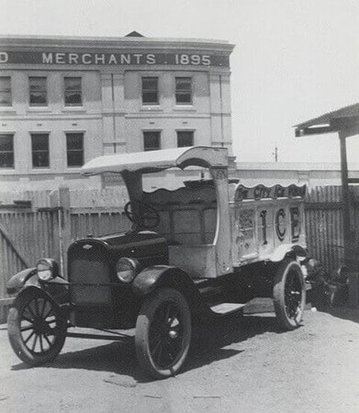
The next morning at 8 o'clock, when the iceman called, the cook told him that Miss Coulson wanted to see him in the basement.
"Well, ain't I the Olcott and Depew; not mentioning the first name at all?" said the iceman, admiringly, of himself.
As a concession he rolled his sleeves down, dropped his icehooks on a syringe and went back. When Miss Van Meeker Constantia Coulson addressed him he took off his bat.
"There is a rear entrance to this basement," said Miss Coulson, "which can be reached by driving into the vacant lot next door, where they are excavating for a building. I want you to bring in that way within two hours 1,000 pounds of ice. You may have to bring another man or two to help you. I will show you where I want it placed. I also want 1,000 pounds a day delivered the same way for the next four days. Your company may charge the ice on our regular bill. This is for your extra trouble."
Miss Coulson tendered a ten-dollar bill. The iceman bowed, and held his hat in his two hands behind him.
"Not if you'll excuse me, lady. It'll be a pleasure to fix things up for you any way you please."
Alas for May!
About noon Mr. Coulson knocked two glasses off his table, broke the spring of his bell and yelled for Higgins at the same time.
"Bring an axe," commanded Mr. Coulson, sardonically, or send out for a quart of prussic acid, or have a policeman come in and shoot me. I'd rather that than be frozen to death."
"It does seem to be getting cool, Sir," said Higgins. "I hadn't noticed it before. I'll close the window, Sir."
"Do," said Mr. Coulson. "They call this spring, do they? If it keeps up long I'll go back to Palm Beach. House feels like a morgue."
Later Miss Coulson dutifully came in to inquire how the gout was progressing.
"'Stantia," said the old man, "how is the weather outdoors?"
"Bright," answered Miss Coulson, "but chilly."
"Feels like the dead of winter to me," said Mr. Coulson.
"An instance," said Constantia, gazing abstractedly out the window, " of 'winter lingering in the lap of spring,' though the metaphor is not in the most refined taste."
A little later she walked down by the side of the little park and on westward to Broadway to accomplish a little shopping.
A little later than that Mrs. Widdup entered the invalid's room.
"Did you ring, Sir?" she asked, dimpling in many places. "I asked Higgins to go to the drug store, and I thought I heard your bell."
"I did not," said Mr. Coulson.
"I'm afraid," said Mrs. Widdup, "I interrupted you sir, yesterday when you were about to say something."
"How comes it, Mrs. Widdup," said old man Coulson sternly, "that I find it so cold in this house?"
"Cold, Sir?" said the housekeeper, "why, now, since you speak of it it do seem cold in this room. But, outdoors it's as warm and fine as June, sir. And how this weather do seem to make one's heart jump out of one's shirt waist, sir. And the ivy all leaved out on the side of the house, and the hand-organs playing, and the children dancing on the sidewalk -- 'tis a great time for speaking out what's in the heart. You were saying yesterday, sir -- "
"Woman!" roared Mr. Coulson; "you are a fool. I pay you to take care of this house. I am freezing to death in my own room, and you come in and drivel to me about ivy and hand-organs. Get me an overcoat at once. See that all doors and windows are closed below. An old, fat, irresponsible, one-sided object like you prating about springtime and flowers in the middle of winter! When Higgins comes back, tell him to bring me a hot rum punch. And now get out!"
But who shall shame the bright face of May? Rogue though she be and disturber of sane men's peace, no wise virgins cunning nor cold storage shall make her bow her head in the bright galaxy of months.
Oh, yes, the story was not quite finished.
A night passed, and Higgins helped old man Coulson in the morning to his chair by the window. The cold of the room was gone. Heavenly odours and fragrant mildness entered.
In hurried Mrs. Widdup, and stood by his chair. Mr. Coulson reached his bony hand and grasped her plump one.
"Mrs. Widdup," he said, "this house would be no home without you. I have half a million dollars. If that and the true affection of a heart no lonoer in its youthful prime, but still not cold, could -- "
"I found out what made it cold," said Mrs. Widdup, leanin' against his chair. "'Twas ice -- tons of it -- in the basement and in the furnace room, everywhere. I shut off the registers that it was coming through into your room, Mr. Coulson, poor soul! And now it's Maytime again."
"A true heart," went on old man Coulson, a little wanderingly, "that the springtime has brought to life again, and -- but what will my daughter say, Mrs. Widdup?"
"Never fear, sir," said Mrs. Widdup, cheerfully. "Miss Coulson, she ran away with the iceman last night, sir!"
Featured in our collection of Short Stories for High School II. You may also like O. Henry's Springtime a La Carte.
Frequently Asked Questions about The Marry Month Of May
What is "The Marry Month of May" by O. Henry about?
"The Marry Month of May" is a comic short story about the mischievous power of spring. Wealthy, gout-ridden Mr. Coulson is seized by the romantic spirit of May and begins proposing marriage to his plump, cheerful housekeeper, Mrs. Widdup. His stern, unmarried daughter Miss Constantia Coulson overhears and schemes to kill the mood by secretly filling the basement with tons of ice, chilling the house to winter-like cold. The plan works temporarily—Mr. Coulson turns grumpy and dismissive—but spring cannot be defeated. Mrs. Widdup discovers the ice, shuts off the registers, and the warmth returns along with Mr. Coulson's affections. In a classic twist, Miss Coulson herself has eloped with the iceman she hired.
Why is the story called "The Marry Month of May" instead of "The Merry Month of May"?
The title is a deliberate pun on the traditional phrase "the merry month of May," which comes from a sixteenth-century poem by Thomas Dekker. By swapping merry for marry, signals that the story will be about marriage and romance rather than simple springtime cheer. The wordplay foreshadows the story's central action—Mr. Coulson's attempted proposal to his housekeeper and his daughter's elopement—while also capturing O. Henry's characteristic love of linguistic wit and misdirection.
What is the twist ending in "The Marry Month of May"?
The twist ending is one of 's most satisfying ironies. Miss Constantia Coulson, the cold, practical daughter who schemed to prevent her father from marrying the housekeeper, runs away with the iceman she hired to fill the basement with ice. The very person she enlisted to kill the spirit of spring becomes her own romantic downfall. The ending demonstrates O. Henry's signature theme that no one is immune to the power of love, no matter how rational or resistant they believe themselves to be.
What role does the personification of May play in the story?
personifies the month of May as a powerful, mischievous trickster figure—calling her "no goddess, but Circe" and comparing her influence to that of Puck and his fairy train. May is portrayed as an irresistible force that makes "millionaires marry stenographers" and "wise professors woo white-aproned gum-chewers." These frequent narrative interruptions serve as a comic chorus, reminding the reader that the characters are helpless pawns of the season. The personification elevates a simple domestic comedy into a mock-epic battle between human willpower and the unstoppable force of spring.
Who are the main characters in "The Marry Month of May"?
The story features four main characters:
Mr. Coulson — A wealthy, elderly widower with gout who lives near Gramercy Park with half a million dollars in government bonds. Spring fever makes him romantic and eager to propose to his housekeeper.
Mrs. Widdup — The cheerful, plump housekeeper described as "comely, fair, flustered, forty and foxy." She is receptive to Mr. Coulson's attentions and ultimately discovers the ice scheme.
Miss Van Meeker Constantia Coulson — Mr. Coulson's tall, rigid, thirty-five-year-old daughter who considers herself immune to romance and plots to stop her father's courtship.
The Iceman — A minor but pivotal character who delivers the ice at Miss Coulson's request and, in the story's ironic twist, elopes with her.
What are the main themes in "The Marry Month of May"?
"The Marry Month of May" explores several interconnected themes:
The Power of Nature Over Reason — The spring weather overwhelms rational behavior, proving that human beings are, as the narrator says, "not gods, but overconceited members" of nature's family.
Love and Social Class — Both romances cross class boundaries: a wealthy man proposes to his housekeeper, and a society woman elopes with an iceman, suggesting that love is indifferent to social status.
Irony and Hypocrisy — Miss Coulson dismisses love as "a humiliating thing" yet falls victim to it herself, exposing the gap between her self-image and her actions.
The Futility of Resistance — Despite Miss Coulson's elaborate ice scheme, May ultimately triumphs, reinforcing the idea that natural impulses cannot be permanently suppressed.
What literary devices does O. Henry use in "The Marry Month of May"?
employs a rich array of literary devices in this story:
Personification — May is treated as a living character, a "Circe" and enchantress who manipulates human emotions.
Allusion — References to Thomas Dekker's poem, Tennyson's "In the spring a young man's fancy", Shakespeare's Puck, and Homer's Circe enrich the mock-heroic tone.
Irony — Dramatic irony builds as Miss Coulson's anti-romance scheme backfires spectacularly. Situational irony drives the twist ending.
Hyperbole — The narrator's exaggerated descriptions of May's power create a comic, larger-than-life atmosphere.
Wordplay — The title's marry/merry pun and Mrs. Widdup's mishearing of "thirteen" for "three" and "Irish" for "iris" provide verbal comedy throughout.
What is the significance of the ice in "The Marry Month of May"?
The ice in the story serves as both a literal plot device and a powerful symbol. Literally, Miss Coulson orders 1,000 pounds of ice daily to be secretly stored in the basement, turning the warm spring house frigid and killing her father's romantic mood. Symbolically, the ice represents Miss Coulson's own emotional coldness and her attempt to impose winter's chill on the natural warmth of love and spring. The irony is that the ice ultimately fails—Mrs. Widdup discovers it and restores warmth, while the very agent of coldness (the iceman) becomes the instrument of Miss Coulson's romantic awakening.
What collection was "The Marry Month of May" originally published in?
"The Marry Month of May" was originally published in 's collection Whirligigs in 1910. Whirligigs was one of O. Henry's later collections, published the same year as his death. The collection contains 24 stories showcasing his mature style, including his trademark surprise endings, vivid New York City settings, and compassionate humor about ordinary people. The story reflects O. Henry's deep familiarity with Gramercy Park and the social dynamics of early twentieth-century Manhattan.
How does "The Marry Month of May" compare to other O. Henry love stories?
Like many of 's love stories, "The Marry Month of May" features a surprise twist that reframes everything the reader assumed. However, it stands apart in several ways. Unlike the poignant sacrifice of The Gift of the Magi or the gentle romance of "Springtime à la Carte," this story takes a purely comic approach to love, treating it as an almost mechanical force triggered by weather rather than deep emotion. The story also features two parallel romances rather than one—both crossing class lines—which doubles the irony. It shares DNA with "October and June" in its May-December romance theme, but here the humor is broader and the satire sharper.
Save stories, build your reading list, and access all study tools — completely free.
Save The Marry Month Of May to your library — it's free!Need help with The Marry Month Of May?
Study tools to help with homework, prepare for quizzes, and deepen your understanding.
Flashcards →