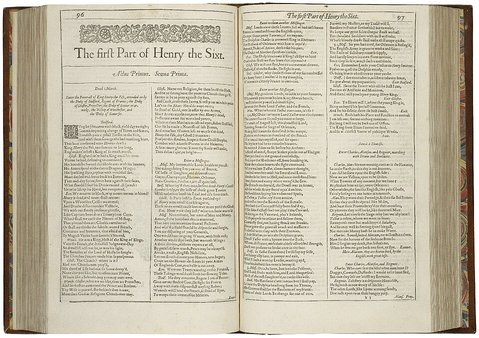
Henry VI, Part I

Henry VI, Part I, believed to have been written around 1591, is one of Shakespeare's earliest history plays and the opening chapter of his first great dramatic cycle. The play begins with the funeral of the warrior-king Henry V and immediately plunges into the crises that follow: England is losing its territories in France, and the young Henry VI is too much an infant to govern. The valiant Lord Talbot fights desperately to hold the English positions against the French forces, which are inspired and led by Joan la Pucelle, Shakespeare's complex and controversial portrayal of Joan of Arc.
At home, the seeds of the Wars of the Roses are planted as Richard Plantagenet (later Duke of York) and the Duke of Somerset choose the white and red roses in the famous Temple Garden scene, symbolizing the factional divide that will tear England apart. The bickering English nobles fail to support Talbot in France, and his heroic death, alongside his son, marks the effective end of England's continental empire. The play closes with a politically expedient but ominous marriage arrangement between Henry VI and Margaret of Anjou.
While sometimes regarded as apprentice work, Henry VI, Part I is a vigorous and theatrically compelling drama. Its depiction of national decline caused by internal division, weak leadership, and the erosion of a previous generation's achievements gives it a timeless political resonance. The play launched Shakespeare's career as England's great dramatist of national history.