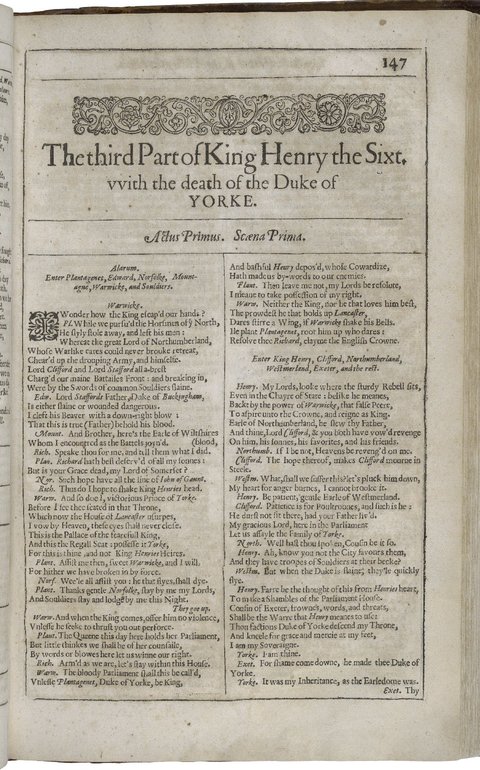
Henry VI, Part III

Henry VI, Part III, written around 1591, plunges England into the full fury of the Wars of the Roses. The play opens in the aftermath of the Yorkist victory at St Albans, with Richard, Duke of York, demanding the crown. A compromise is reached whereby Henry VI may reign for his lifetime but must disinherit his own son, Prince Edward. Queen Margaret, outraged by this betrayal of her child, raises an army and defeats the Yorkists at the Battle of Wakefield, where York is captured, mocked with a paper crown, and killed.
York's sons, led by the future Edward IV, rally and win a series of devastating battles. The pivotal Battle of Towton, the bloodiest battle ever fought on English soil, is represented by the harrowing scene in which Henry VI, sitting apart from the fighting, witnesses a son who has killed his father and a father who has killed his son. This scene is one of Shakespeare's most powerful emblems of the horror of civil war. Edward IV eventually takes the throne, but his impulsive marriage to Lady Elizabeth Grey alienates the Earl of Warwick, leading to further reversals.
The play's most electrifying presence is Richard of Gloucester, the future Richard III, whose chilling soliloquies reveal a ruthless ambition undeterred by any moral scruple. His murder of Henry VI in the Tower of London closes the play and sets the stage for Shakespeare's next great villain-protagonist. Henry VI, Part III is a brutal, relentless chronicle of ambition and bloodshed that established Shakespeare as a dramatist of extraordinary power.