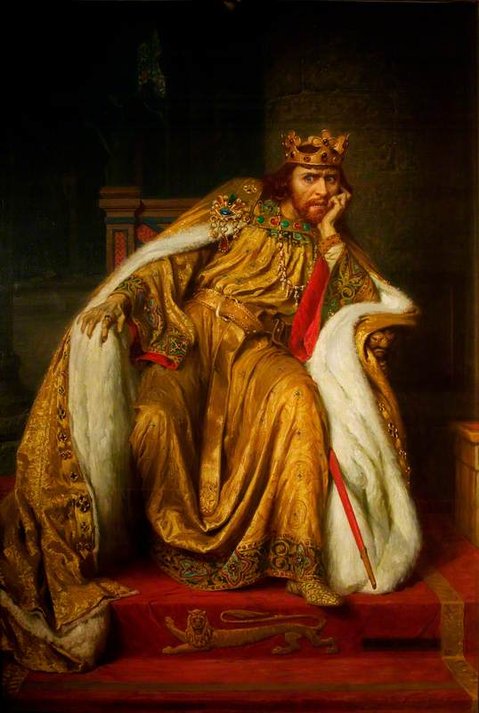
King John
King John, written around 1596, dramatizes the turbulent reign of the early thirteenth-century English monarch. The play opens with a dispute over the English throne between King John and his nephew Arthur, whose claim is supported by King Philip of France. This dynastic conflict drives much of the action, as alliances shift, treaties are made and broken, and the papal legate Pandulph manipulates the warring parties for Rome's advantage.
The most compelling character is Philip the Bastard, the illegitimate son of Richard the Lionheart, who serves as both a loyal soldier and a sardonic commentator on the political maneuvering around him. His famous speech on "Commodity" (self-interest) offers a clear-eyed critique of the cynicism underlying the play's grand declarations of honor and right. The play's most moving scene is the death of young Arthur, who leaps from the castle walls while trying to escape imprisonment, prompting a crisis of conscience among the English nobles.
King John's reign ends with his poisoning by a monk and a deathbed scene of agony and delirium. The Bastard delivers the play's final patriotic rallying cry, asserting that England can never be conquered so long as it remains true to itself. King John stands apart from Shakespeare's other histories for its lack of a clear hero or moral center, offering instead a bracing portrait of political pragmatism, religious conflict, and the human costs of dynastic ambition.