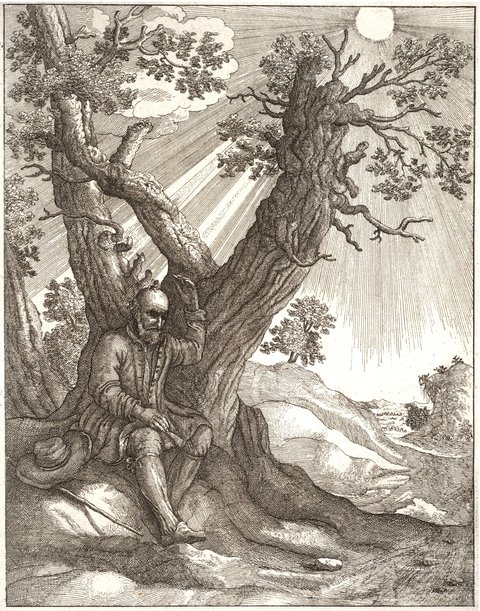
The Bald Man and the Fly (Perry Index 525) is one of the oldest and most memorable fables by Aesop, found in the earliest surviving collections of the Aesopica. The story illustrates the folly of disproportionate retaliation: the bald man, stung by a tiny fly, injures himself far more than the insect ever could. Through the centuries, it has served as a concise lesson in restraint, teaching that overreacting to trivial provocations often causes more harm to oneself than to one's tormentor.
A fly landed on the head of a bald man and bit him sharply. The man, annoyed by the sting, raised his hand and brought it down with a tremendous slap — but the fly darted away just in time, and the man only succeeded in giving himself a painful blow on his own bare head.
The fly settled on a nearby branch and laughed. "You were willing to hurt yourself," it said, "just to punish a creature as small as me?"
"I can bear the sting of something so small," replied the man, rubbing his sore head. "What I cannot bear is a fool who adds insult to injury."
"And yet," said the fly, buzzing off, "you are the one with the red mark on your head."
Do not harm yourself trying to punish a trivial enemy.
Frequently Asked Questions about The Bald Man and the Fly
What is the moral of The Bald Man and the Fly?
The moral is: Do not harm yourself trying to punish a trivial enemy. Aesop teaches that overreacting to minor provocations causes more damage to yourself than to the person or thing that provoked you. The bald man's self-inflicted slap hurts far more than the fly's original bite.
What is the Perry Index number for The Bald Man and the Fly?
The Bald Man and the Fly is number 525 in the Perry Index, the standard scholarly catalog of Aesop's fables compiled by Ben Edwin Perry. It appears in the earliest surviving collections of Aesopica, confirming it as one of the oldest fables in the Western tradition.
What does the fly represent in this fable?
The fly represents any minor annoyance or trivial adversary that is not worth a strong reaction. Its small size and ability to escape easily make it the perfect symbol for provocations that are beneath serious retaliation. The fly also serves as an ironic voice of reason, pointing out the foolishness of the man's overreaction.
Why is the man described as bald?
The man's baldness is essential to the story on two levels. Physically, his bare head makes him more vulnerable to both the fly's bite and his own slap — there is no hair to cushion either. Symbolically, his baldness means the red mark from his self-inflicted blow is visible to everyone, representing how overreaction publicly exposes our foolishness.
How does this fable relate to other Aesop stories about proportionate response?
Several Aesop fables explore the theme of proportionality. In Two Travelers and a Bear, a crisis reveals who your true friends are — another lesson about measuring response to circumstances. The Frog and the Mouse shows how a scheme to harm another can backfire fatally on the schemer, much like the bald man's slap harms only himself.
What is the lesson of The Bald Man and the Fly for modern life?
The fable remains remarkably relevant. It warns against escalating minor conflicts — whether online arguments, workplace slights, or petty disagreements — when the cost of retaliation far exceeds the original offense. The 'red mark' the bald man gives himself is a metaphor for the reputational and emotional damage we inflict on ourselves when we overreact to trivial provocations.
Is The Bald Man and the Fly based on a real ancient Greek source?
Yes. The fable appears in the earliest known collections of Aesopica and is referenced by ancient Greek and Roman writers. It is cataloged as Perry Index 525, placing it among the core fables attributed to Aesop from antiquity. The story's simple structure and universal theme helped it survive through oral and written transmission for over 2,500 years.
What is the difference between the fly's perspective and the man's perspective?
The fly takes a pragmatic, almost Stoic view: why would you hurt yourself over something so small? The man, driven by pride, argues that it is the insult — not the injury — that demands a response. This clash captures a timeless debate about whether dignity requires retaliation or whether true strength lies in restraint. Aesop sides with restraint: the man is left with the red mark, not the fly.
Save stories, build your reading list, and access all study tools — completely free.
A fly bites a bald man on his exposed head. In a flash of irritation, the man swats at the fly but misses, striking himself hard instead. The fly, safe on a nearby …
...
Advertisement
Understanding The Bald Man and the Fly
A short summary of the story
Summary
A fly bites a bald man on his exposed head. In a flash of irritation, the man swats at the fly but misses, striking himself hard instead. The fly, safe on a nearby branch, mocks him for being willing to hurt himself just to punish something so small. The man retorts that he can endure the sting but not the insult. The fly buzzes away, pointing out that the man is the one left with a red mark on his head.
Moral
The central moral is stated directly at the close of the fable: Do not harm yourself trying to punish a trivial enemy. Aesop warns that when we overreact to minor offenses, the damage we inflict on ourselves far exceeds any harm the original provocation caused. The bald man's slap is more painful than the fly's bite ever was.
Analysis
This fable operates on a deceptively simple premise, but its psychological insight runs deep. The bald man's exposed head makes him uniquely vulnerable — there is no hair to cushion either the bite or the blow. His baldness is not just a physical detail but a metaphor for the transparency of his reaction: everyone can see the red mark he leaves on himself.
The dialogue between man and fly creates a miniature philosophical debate. The fly represents the detached, almost Stoic view: why escalate when the original offense is trivial? The man's response — that it is the insult rather than the injury that stings — reveals how pride and ego drive disproportionate retaliation. He would rather suffer real pain than let a perceived slight go unanswered.
The fable resonates with other Aesopian themes of proportionality. In The Fisherman and the Little Fish, a fisherman must decide whether a small catch is worth keeping or releasing — another lesson about weighing value against effort. Similarly, The Miser shows how clinging too tightly to something can leave you with nothing at all.
The fly's final quip — "you are the one with the red mark" — delivers the fable's sharpest point. In conflicts with trivial adversaries, the visible damage always falls on the person who escalated. This insight has made the fable a favorite reference in discussions of diplomacy, conflict resolution, and personal temperance for over two thousand years.
Advertisement
Find this helpful? Create a free account to bookmark stories and save explanations for quick reference.