Why the Stork's Revenge Is Perfectly Fair
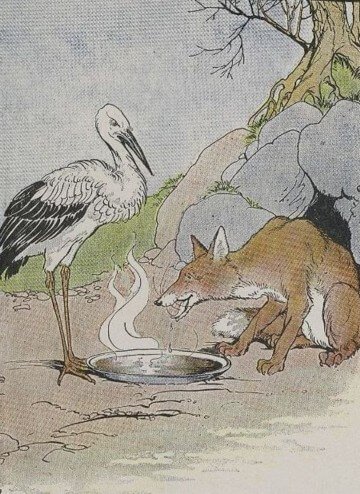
The Fox and the Stork is a fable about the boomerang nature of cruelty. The Fox does not merely fail to feed his guest—he deliberately chooses a …
Understanding The Fox And The Stork
Why the Stork's Revenge Is Perfectly Fair
The Fox and the Stork is a fable about the boomerang nature of cruelty. The Fox does not merely fail to feed his guest—he deliberately chooses a dish that makes it impossible for the Stork to eat while allowing himself to feast. The cruelty is not accidental; it is engineered for the Fox's amusement. What makes this fable so satisfying, and so enduring, is that the Stork's response mirrors the offense with surgical precision.
The genius of Aesop's structure is the perfect symmetry of the two meals. The shallow dish and the narrow jar are exact inversions of each other. Neither host breaks any rule of hospitality on the surface—both serve real food, both invite their guest politely. But the form of the serving vessel transforms generosity into mockery. Aesop is making a subtle point: context determines whether an act is kind or cruel. What looks like a dinner invitation can be a weapon, depending on who holds it and how it is designed.
The Stork's restraint is just as important as her revenge. She does not fly into a rage at the Fox's table, does not insult him or refuse to return the invitation. She simply waits, plans, and delivers an identical experience. This calm, measured response elevates the fable beyond a simple revenge story. The Stork is not vindictive—she is instructive. She gives the Fox exactly what he gave her, nothing more and nothing less, so that he can understand through experience what he inflicted through malice.
The moral—"Do not play tricks on your neighbors unless you can stand the same treatment yourself"—is a variation of the Golden Rule, but delivered from the opposite direction. Instead of urging us to treat others well because it is virtuous, Aesop warns us that mistreatment will be returned in kind. It is the pragmatist's version of "treat others as you wish to be treated": if you cannot endure the medicine, do not prescribe it.
This fable resonates strongly with The Fox and the Goat, where the Fox again uses cleverness at another animal's expense, and with The Tortoise and the Hare, where patience and composure triumph over arrogance. In all three tales, the character who thinks himself superior is humbled—not by force, but by the quiet competence of the one he underestimated.
Find this helpful? Create a free account to bookmark stories and save explanations for quick reference.
Sign Up FreeAlready have an account? Log in