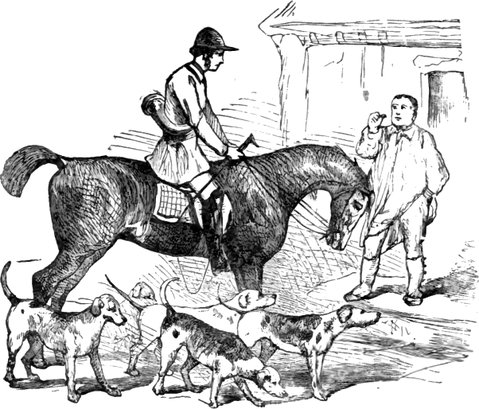
The Fox and the Woodcutter (Perry Index 22) is one of Aesop's sharpest critiques of hypocrisy. The tale appears in the earliest Greek collections and was later adapted by the Roman fabulist Phaedrus, who changed the fox to a hare and the woodcutter to a herdsman. Through centuries of retelling—from medieval emblem books to modern classroom anthologies—the fable's central insight has endured: that deeds, not words, reveal true character. The 2nd-century philosopher Maximus of Tyre recorded an alternate version in which a lion, a stag, and a fox play the roles, underscoring how universally the moral resonated across ancient cultures.
A fox, hard-pressed by hunters and their hounds, came running through the forest until she found a woodcutter sitting outside his hut.
"Please," gasped the fox, "hide me somewhere, and do not tell the hunters which way I have gone."
The woodcutter nodded and pointed to the inside of his hut. "Hide in there," he said. The fox crept inside and lay trembling behind a pile of logs.
Soon the hunters came riding up. "Have you seen a fox pass this way?" they asked.
"No," said the woodcutter loudly, shaking his head. But even as he spoke, he pointed with his finger toward the hut where the fox was hidden. The hunters, in their haste, did not notice his gesture and rode on.
When they were safely gone, the fox came out of the hut and began to trot away without a word.
"You ungrateful creature!" cried the woodcutter. "I saved your life and you leave without so much as a thank you!"
The fox turned back and looked him in the eye. "I would have thanked you gladly," she said, "if your hands had agreed with your words."
Frequently Asked Questions about The Fox and the Woodcutter
What is the moral of The Fox and the Woodcutter?
The moral is that deeds, not words, reveal true character. The woodcutter claims to help the fox by hiding her, but simultaneously points the hunters toward her hiding place. Aesop teaches that saying the right thing means nothing if your actions tell a different story—integrity requires consistency between what we say and what we do.
Why does the fox refuse to thank the woodcutter?
The fox refuses to thank the woodcutter because his actions contradicted his words. While he verbally denied seeing the fox, he secretly pointed the hunters toward her hiding spot. The fox's parting words—"I would have thanked you gladly if your hands had agreed with your words"—expose his hypocrisy and make clear that half-hearted help driven by deceit deserves no gratitude.
What is the Perry Index number for The Fox and the Woodcutter?
The Fox and the Woodcutter is Perry Index 22 in the standard classification of Aesop's fables. The Perry Index, compiled by scholar Ben Edwin Perry, is the most widely used numbering system for Aesopic fables. This particular tale appears in the earliest Greek collections and has been retold by numerous fabulists across centuries.
Why is the fox the hero instead of the trickster in this fable?
In most Aesop fables, the fox plays the role of a cunning trickster, but here Aesop inverts expectations by casting the fox as the moral authority. The fox sees through the woodcutter's duplicity and delivers the story's lesson. This role reversal strengthens the fable's message: when a supposedly untrustworthy animal has more integrity than a human, it forces readers to reexamine their own sincerity.
How does The Fox and the Woodcutter relate to the saying "actions speak louder than words"?
This fable is one of the oldest literary sources for the concept behind "actions speak louder than words." The woodcutter says he will protect the fox but uses hand gestures to betray her location. Aesop's point is that verbal promises are meaningless when contradicted by behavior—a principle that has been echoed by philosophers from Aristotle to modern ethicists and remains a cornerstone of moral reasoning.
What does the woodcutter represent in this fable?
The woodcutter represents the common hypocrite—someone who wants to appear virtuous without the cost of actually being virtuous. He offers the fox shelter to seem kind, yet betrays her to avoid any risk to himself. Worse, he feels entitled to gratitude for his hollow gesture. Aesop uses him as a warning that self-deception is the deepest form of dishonesty: the woodcutter has convinced himself that words alone count as action.
Are there other versions of this fable?
Yes. The Roman fabulist Phaedrus retold the story with a hare fleeing to a herdsman instead of a fox and a woodcutter. In some later Latin manuscripts, a scribal error changed the hare (lepus) to a wolf (lupus), so early printed editions in the 15th century featured a wolf. The 2nd-century philosopher Maximus of Tyre recorded yet another variant in which a lion, a stag, and a fox play the roles, showing how widely the moral traveled across ancient cultures.
What other Aesop fables teach similar lessons about trust and deception?
Several of Aesop's fables explore the tension between trust and deception. The Fisherman and the Little Fish warns against trusting empty promises of future reward. The Fox and the Monkey exposes pretenders who claim qualities they do not possess. The Wolf and the Kid shows how safety depends on reading true intentions, and The Boy Bathing teaches that reckless trust in others can lead to disaster.
Save stories, build your reading list, and access all study tools — completely free.
Few of Aesop's fables expose human dishonesty as precisely as The Fox and the Woodcutter. The story is deceptively simple: a fox fleeing hunters …
...
Advertisement
Understanding The Fox and the Woodcutter
A short summary of the story
When Hands Betray the Tongue: Aesop on Hypocrisy
Few of Aesop's fables expose human dishonesty as precisely as The Fox and the Woodcutter. The story is deceptively simple: a fox fleeing hunters begs a woodcutter for shelter; the woodcutter agrees but then secretly gestures toward her hiding place even as he tells the hunters he hasn't seen her. When the hunters miss his signal and ride on, the fox departs without thanking him—and when the woodcutter protests, she delivers the fable's devastating punchline: "I would have thanked you gladly if your hands had agreed with your words."
The woodcutter is the perfect portrait of a hypocrite. He wants credit for generosity without actually being generous. He speaks the words of a protector while performing the actions of a betrayer. Aesop's genius is in making the fox—traditionally cast as the trickster in fable literature—the moral authority here. The supposedly cunning animal sees through the supposedly trustworthy human, inverting the usual dynamic and forcing readers to question where real integrity lies.
What makes this fable especially cutting is that the woodcutter feels entitled to gratitude. He genuinely believes he has done the fox a favor, even though he tried to hand her over to the hunters. This self-deception is the deeper layer Aesop is exploring: hypocrisy is not just about deceiving others but about deceiving yourself. The woodcutter has convinced himself that words are enough, that saying the right thing is the same as doing the right thing.
The moral—"Deeds, not words, reveal true character"—has echoed through philosophy and literature for over two millennia. Aristotle made a similar point in the Nicomachean Ethics, arguing that virtue is a matter of habit and action, not mere declaration. In everyday life, the fable remains sharply relevant: we all know people who profess loyalty while undermining us, who offer help while hoping we fail, who say one thing and signal another.
The fox's refusal to thank the woodcutter is itself a lesson. She recognizes that acknowledging a half-hearted, two-faced gesture as genuine kindness would validate the very dishonesty she condemns. True gratitude, like true generosity, requires sincerity—and sincerity demands that our hands agree with our words.
Advertisement
Find this helpful? Create a free account to bookmark stories and save explanations for quick reference.