Summary
A doe who has lost the sight of one eye devises what seems like a clever strategy: she grazes on a cliff overlooking the sea, keeping her good eye turned toward the land …
Understanding The One-Eyed Doe
Summary
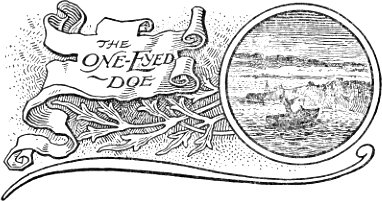
A doe who has lost the sight of one eye devises what seems like a clever strategy: she grazes on a cliff overlooking the sea, keeping her good eye turned toward the land where hunters might approach, while her blind eye faces the water. For a long time, the plan works perfectly—she spots every hunter who tries to creep up from the meadow and bounds away to safety. But one day, sailors rowing along the coast spot her grazing with her blind side toward them. They take careful aim from their boat and shoot her. As she lies dying, the doe realizes that the very direction she thought safest was the one that destroyed her.
Moral
The stated moral is: "Danger often comes from where we least expect it." The doe's fatal error was not her blindness itself, but her absolute certainty about where danger could and could not come from. She transformed a physical limitation into a philosophical one—deciding that the sea meant safety—and that assumption killed her. The fable warns against treating any direction, relationship, or situation as inherently safe simply because threats have not come from there before.
Analysis
"The One-Eyed Doe" is one of Aesop's most structurally elegant fables. The setup is economical: a disability, a compensating strategy, and a reversal. What makes the story powerful is that the doe's plan is genuinely rational. She cannot watch in all directions, so she positions her good eye toward the most likely source of danger. For a long time, this works. The fable does not mock her for being foolish—it mourns the limits of even the best-laid plans.
The deeper lesson concerns false security. The doe does not merely ignore the sea; she actively trusts it. That trust converts an unknown risk into an assumed certainty. In behavioral terms, this is the confirmation bias of safety: because no threat has ever come from the water, she concludes that no threat ever will. Modern risk analysts recognize this pattern in everything from financial markets to national defense—the catastrophic failure that arrives from the "impossible" direction.
The sea itself functions as a powerful symbol. In ancient Greek thought, the sea represented chaos, unpredictability, and the unknown. By turning her blind eye toward it, the doe is literally turning away from uncertainty—the very thing that should have demanded her greatest attention. Aesop suggests that the threats we cannot see (or refuse to consider) are often more dangerous than the ones we guard against.
The fable also touches on the paradox of vigilance. The doe is not careless; she is intensely watchful—but only in one direction. Her vigilance creates its own blind spot by giving her confidence that she has accounted for all risks. This is arguably more dangerous than no strategy at all, because complacency born from a system feels more justified than complacency born from laziness.
The dying doe's final words—recognizing that the "safest" quarter proved her undoing—give the fable a tragic rather than comic tone. Unlike many Aesop fables where the victim is punished for greed, vanity, or arrogance, here the victim is punished for a reasonable but incomplete strategy. The lesson is humbling rather than moralizing: no amount of cleverness can eliminate vulnerability entirely.
Themes
- False Security — The doe's greatest danger comes from the direction she trusts most, illustrating how assumed safety can become the deadliest vulnerability.
- The Limits of Vigilance — Even careful, sustained watchfulness cannot protect against threats from unconsidered directions.
- Assumptions and Blind Spots — The fable warns against converting the absence of past danger into a guarantee of future safety.
- Fate and Vulnerability — No strategy, however rational, can fully insulate us from misfortune. Some risk is irreducible.
- The Unexpected Source of Harm — Destruction often arrives not from obvious enemies but from trusted or overlooked quarters.
Historical Context
"The One-Eyed Doe" is catalogued as Perry Index 75 and appears in both the Babrius verse collection (2nd century CE) and the anonymous Augustana collection of Greek prose fables. In Babrius's telling, the animal is a one-eyed stag ("The One-Eyed Hart"), while later English retellings—particularly Joseph Jacobs's popular 1894 The Fables of Aesop—use a doe, which has become the standard English version.
The fable's imagery of coastal cliffs and sailors suggests a Mediterranean origin, consistent with the seafaring culture of ancient Greece. The theme of danger from the sea would have resonated powerfully with Greek audiences, for whom shipwreck, piracy, and naval warfare were constant realities. The sea was not merely a backdrop but an active agent of fate in Greek literature, from the Odyssey onward.
Though less well known than fables like "The Tortoise and the Hare" or "The Fox and the Grapes," "The One-Eyed Doe" has remained a staple of Aesop anthologies for centuries, valued for its clean narrative structure and its moral's broad applicability—from personal decision-making to military strategy to modern cybersecurity.
Find this helpful? Create a free account to bookmark stories and save explanations for quick reference.
Sign Up FreeAlready have an account? Log in