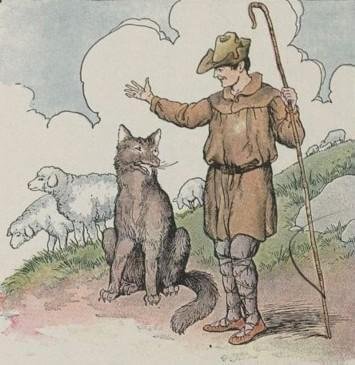
The Predator Who Played the Long Game
What makes this fable so unsettling is not the Wolf's attack — it is his patience. The Wolf does not charge in and grab a …
Understanding The Wolf And The Shepherd (2nd Fable)
The Predator Who Played the Long Game
What makes this fable so unsettling is not the Wolf's attack — it is his patience. The Wolf does not charge in and grab a lamb. He lingers. He watches. He behaves so well, for so long, that the Shepherd stops seeing him as a threat at all. The violence, when it finally comes, is not a failure of the Wolf's disguise. It is the natural conclusion of a strategy that worked exactly as intended.
Aesop draws a sharp distinction between changed behavior and changed nature. The Wolf's outward conduct shifts completely — from prowling predator to apparent guardian. But his nature never changes. He is simply waiting for the right opportunity. The Shepherd's mistake is not that he observed the Wolf's good behavior; it is that he concluded the Wolf had become something other than a wolf. He confused a temporary performance with a permanent transformation.
This is a fable about the psychology of trust, and specifically about how trust can become a weapon. The Wolf earns trust not through any single dramatic act but through sustained, unremarkable consistency. Day after day, nothing happens. The absence of harm starts to feel like evidence of safety. The Shepherd's vigilance, which once protected his flock, begins to feel unnecessary — even paranoid. And so he abandons it. This is precisely how confidence schemes work: the longer the con runs without incident, the more the victim invests in believing it.
The moral — "once a wolf, always a wolf" — sounds blunt, even fatalistic. But Aesop is not saying that people (or wolves) can never change. He is warning that the burden of proof for genuine transformation is high, and that the consequences of being wrong are catastrophic. The Shepherd did not lose one lamb to a quick raid. He lost the greater part of his flock because he handed over total control to the one creature he should never have trusted.
There is a modern edge to this lesson. We live in an era that celebrates second chances and redemption arcs, and rightly so. But Aesop reminds us that forgiveness and vigilance are not mutually exclusive. You can give someone the benefit of the doubt without handing them the keys. The Shepherd's error was not in tolerating the Wolf's presence — it was in promoting him to guardian. Trust, the fable suggests, should be proportional to evidence, not to the passage of time alone.
Find this helpful? Create a free account to bookmark stories and save explanations for quick reference.
Sign Up FreeAlready have an account? Log in