Twelfth Night
Twelfth Night, written around 1601, is widely considered Shakespeare's greatest romantic comedy, a play of exuberant wit, bittersweet longing, and joyous confusion. The story begins with a shipwreck that separates the twins Viola and Sebastian, each believing the other dead. Viola, stranded in the land of Illyria, disguises herself as a young man named Cesario and enters the service of Duke Orsino, with whom she quickly falls in love. Orsino, however, is hopelessly devoted to the mourning Countess Olivia, and he sends Cesario to woo her on his behalf. Olivia, to everyone's consternation, falls in love with Cesario instead.
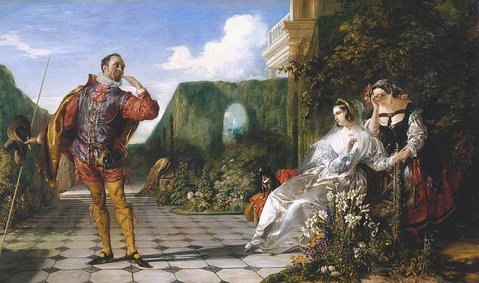
The play's comic subplot centers on Olivia's household: her drunken uncle Sir Toby Belch, his foolish companion Sir Andrew Aguecheek, the clever servant Maria, and the wise fool Feste. Together they conspire to humiliate Olivia's pompous steward Malvolio, tricking him with a forged letter into believing Olivia is in love with him. Malvolio's appearance in yellow stockings and crossed garters, grinning maniacally, is one of Shakespeare's most hilarious scenes, though his subsequent imprisonment adds a darker note to the comedy.
The arrival of Sebastian untangles the romantic confusions: Olivia marries Sebastian (thinking he is Cesario), Viola reveals her true identity and is united with Orsino, and order is restored in Illyria. Twelfth Night is a masterpiece of comic plotting, but it is also suffused with a melancholy awareness that revelry must end. Feste's closing song, "The rain it raineth every day," sends the audience home with a reminder that even the most festive comedy exists in the shadow of time and loss.