The Hare and the Hedgehog
by The Brothers Grimm
Often compared to “The Tortoise and the Hare,” this Grimm Brothers tale gives the race a sharper edge: the hare’s pride is still the problem, but the victory comes not from patience alone, rather from sly ingenuity and a dose of folk-tale mischief.
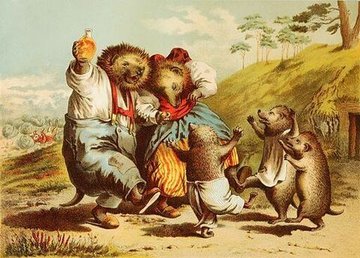
This story, my dear young folks, seems to be false, but it really is true, for my grandfather, from whom I have it, used always, when relating it, to say complacently, "It must be true, my son, or else no one could tell it to you." The story is as follows. One Sunday morning about harvest time, just as the buckwheat was in bloom, the sun was shining brightly in heaven, the east wind was blowing warmly over the stubble-fields, the larks were singing in the air, the bees buzzing among the buckwheat, the people were all going in their Sunday clothes to church, and all creatures were happy, and the hedgehog was happy too.
The hedgehog, however, was standing by his door with his arms akimbo, enjoying the morning breezes, and slowly trilling a little song to himself, which was neither better nor worse than the songs which hedgehogs are in the habit of singing on a blessed Sunday morning. Whilst he was thus singing half aloud to himself, it suddenly occurred to him that, while his wife was washing and drying the children, he might very well take a walk into the field, and see how his turnips were going on. The turnips were, in fact, close beside his house, and he and his family were accustomed to eat them, for which reason he looked upon them as his own. No sooner said than done. The hedgehog shut the house-door behind him, and took the path to the field. He had not gone very far from home, and was just turning round the sloe-bush which stands there outside the field, to go up into the turnip-field, when he observed the hare who had gone out on business of the same kind, namely, to visit his cabbages. When the hedgehog caught sight of the hare, he bade him a friendly good morning. But the hare, who was in his own way a distinguished gentleman, and frightfully haughty, did not return the hedgehog's greeting, but said to him, assuming at the same time a very contemptuous manner, "How do you happen to be running about here in the field so early in the morning?" "I am taking a walk," said the hedgehog. "A walk!" said the hare, with a smile. "It seems to me that you might use your legs for a better purpose." This answer made the hedgehog furiously angry, for he can bear anything but an attack on his legs, just because they are crooked by nature. So now the hedgehog said to the hare, "You seem to imagine that you can do more with your legs than I with mine." "That is just what I do think," said the hare. "That can be put to the test," said the hedgehog. "I wager that if we run a race, I will outstrip you." "That is ridiculous! You with your short legs!" said the hare, "but for my part I am willing, if you have such a monstrous fancy for it. What shall we wager?" "A golden louis-d'or and a bottle of brandy," said the hedgehog. "Done," said the hare. "Shake hands on it, and then we may as well come off at once." "Nay," said the hedgehog, "there is no such great hurry! I am still fasting, I will go home first, and have a little breakfast. In half-an-hour I will be back again at this place."
Hereupon the hedgehog departed, for the hare was quite satisfied with this. On his way the hedgehog thought to himself, "The hare relies on his long legs, but I will contrive to get the better of him. He may be a great man, but he is a very silly fellow, and he shall pay for what he has said." So when the hedgehog reached home, he said to his wife, "Wife, dress thyself quickly, thou must go out to the field with me." "What is going on, then?" said his wife. "I have made a wager with the hare, for a gold louis-d'or and a bottle of brandy. I am to run a race with him, and thou must be present." "Good heavens, husband," the wife now cried, "art thou not right in thy mind, hast thou completely lost thy wits? What can make thee want to run a race with the hare?" "Hold thy tongue, woman," said the hedgehog, "that is my affair. Don't begin to discuss things which are matters for men. Be off, dress thyself, and come with me." What could the hedgehog's wife do? She was forced to obey him, whether she liked it or not.
So when they had set out on their way together, the hedgehog said to his wife, "Now pay attention to what I am going to say. Look you, I will make the long field our race-course. The hare shall run in one furrow, and I in another, and we will begin to run from the top. Now all that thou hast to do is to place thyself here below in the furrow, and when the hare arrives at the end of the furrow, on the other side of thee, thou must cry out to him, 'I am here already!'"
Then they reached the field, and the hedgehog showed his wife her place, and then walked up the field. When he reached the top, the hare was already there. "Shall we start?" said the hare. "Certainly," said the hedgehog. "Then both at once." So saying, each placed himself in his own furrow. The hare counted, "Once, twice, thrice, and away!" and went off like a whirlwind down the field. The hedgehog, however, only ran about three paces, and then he stooped down in the furrow, and stayed quietly where he was. When the hare therefore arrived in full career at the lower end of the field, the hedgehog's wife met him with the cry, "I am here already!" The hare was shocked and wondered not a little, he thought no other than that it was the hedgehog himself who was calling to him, for the hedgehog's wife looked just like her husband. The hare, however, thought to himself, "That has not been done fairly," and cried, "It must be run again, let us have it again." And once more he went off like the wind in a storm, so that he seemed to fly. But the hedgehog's wife stayed quietly in her place. So when the hare reached the top of the field, the hedgehog himself cried out to him, "I am here already." The hare, however, quite beside himself with anger, cried, "It must be run again, we must have it again." "All right," answered the hedgehog, "for my part we'll run as often as you choose." So the hare ran seventy-three times more, and the hedgehog always held out against him, and every time the hare reached either the top or the bottom, either the hedgehog or his wife said, "I am here already."
At the seventy-fourth time, however, the hare could no longer reach the end. In the middle of the field he fell to the ground, blood streamed out of his mouth, and he lay dead on the spot. But the hedgehog took the louis-d'or which he had won and the bottle of brandy, called his wife out of the furrow, and both went home together in great delight, and if they are not dead, they are living there still.
This is how it happened that the hedgehog made the hare run races with him on the Buxtehuder heath till he died, and since that time no hare has ever had any fancy for running races with a Buxtehuder hedgehog.
The moral of this story, however, is, firstly, that no one, however great he may be, should permit himself to jest at any one beneath him, even if he be only a hedgehog. And, secondly, it teaches, that when a man marries, he should take a wife in his own position, who looks just as he himself looks. So whosoever is a hedgehog let him see to it that his wife is a hedgehog also, and so forth.
You may enjoy reading a parody poem of this story, The Persevering Tortoise and the Pretentious Hare.
Frequently Asked Questions about The Hare and the Hedgehog
What is "The Hare and the Hedgehog" about?
The Hare and the Hedgehog is a fable by about a race between a proud hare and a clever hedgehog. One Sunday morning, a hedgehog encounters a hare in the fields, and the hare mocks the hedgehog's short, crooked legs. Stung by the insult, the hedgehog challenges the hare to a race, wagering a gold louis-d'or and a bottle of brandy. The hedgehog then devises a trick: he places his wife — who looks identical to him — at the far end of the field. Each time the hare reaches either end, a hedgehog is already there calling "I am here already!" The baffled hare runs the course seventy-three more times before collapsing dead on the seventy-fourth attempt.
What is the moral of "The Hare and the Hedgehog"?
The tale states its morals explicitly at the end. The first is that no one, however great, should mock someone beneath them — even if that person is "only a hedgehog." The hare's contempt for the hedgehog's crooked legs is what provokes the entire contest and ultimately leads to his death. The second moral is that a man should marry someone from his own station who looks like him — a pragmatic lesson that also happens to be the key to the hedgehog's trick, since his wife's identical appearance makes the deception possible. Beyond these stated morals, the story carries an implicit warning: pride and stubbornness can be self-destructive. The hare could stop running at any time, but his refusal to accept defeat drives him to literal exhaustion and death.
How is "The Hare and the Hedgehog" different from "The Tortoise and the Hare"?
While both stories feature a slow animal defeating a fast hare in a race, they differ dramatically in method and moral. In Aesop's The Tortoise and the Hare, the tortoise wins honestly through steady persistence while the overconfident hare naps — the moral is that "slow and steady wins the race." In the Grimm version, the hedgehog wins through outright trickery, using his wife as a body double. There is no honest effort involved — it's a con from start to finish. The Grimm tale is also far darker: the hare doesn't merely lose face, he runs himself to death. Aesop teaches patience and humility; the Grimms teach that cleverness defeats arrogance, but also that trickery carries its own moral complications. The two stories come from entirely separate folklore traditions — Aesop's from ancient Greece, the Grimms' from Low Saxon (northern German) oral tradition.
How does the hedgehog win the race against the hare?
The hedgehog wins through a clever ruse that exploits one key fact: he and his wife look identical. Before the race begins, the hedgehog stations his wife at the far end of the furrow while he positions himself at the starting end. When the race begins, the hedgehog runs only about three steps before ducking down and hiding in his furrow. When the hare reaches the far end at full speed, the hedgehog's wife pops up and cries, "I am here already!" Bewildered, the hare races back — only to find the hedgehog himself waiting at the other end with the same cry. No matter how many times the hare runs, a hedgehog is always waiting for him. The hare never realizes there are two hedgehogs, and he runs the course seventy-three times before collapsing on the seventy-fourth.
What are the main themes in "The Hare and the Hedgehog"?
Several themes weave through this deceptively simple fable. Cleverness over physical superiority is the central lesson — the hedgehog cannot possibly outrun the hare, so he outthinks him instead. Class and social snobbery drive the conflict: the hare is described as a "distinguished gentleman" who is "frightfully haughty," while the hedgehog is a humble family man checking on his turnips. Their contest mirrors tensions between the rural peasantry and the landed gentry in 19th-century Germany. The danger of pride is demonstrated through the hare's fatal stubbornness — he could stop at any time but refuses to accept that he has lost. Teamwork in marriage is also central, as the hedgehog's plan only works because his wife participates willingly and executes her role perfectly.
Who wrote "The Hare and the Hedgehog" and when was it published?
The Hare and the Hedgehog was collected by Jacob and Wilhelm Grimm and first published in the fifth edition of Kinder- und Hausmärchen (Children's and Household Tales) in 1843, where it appears as tale number 187 (KHM 187). The story originates from Low Saxon (Plattdeutsch) oral tradition in northern Germany and was originally told in dialect. Unlike most Grimm tales, which appeared in the first edition of 1812, this story was a later addition. The tale's framing device — a narrator claiming his grandfather swore the story was true — preserves the flavor of its folk origins. The phrase "I am here already!" (Ick bün all hier in Low Saxon) became proverbial in Germany.
Why does the hare die in "The Hare and the Hedgehog"?
The hare's death is the tale's most striking and unsettling element. After being tricked seventy-three consecutive times, the hare attempts a seventy-fourth run and collapses in the middle of the field with blood streaming from his mouth. He dies from sheer physical exhaustion — his body literally gives out. The death serves as a dramatic illustration of the story's moral about the lethal consequences of pride: the hare could have conceded defeat at any point, but his arrogance makes surrender unthinkable. The severity of the punishment — death, not merely humiliation — reflects the darker sensibility of Grimm fairy tales compared to sanitized modern retellings. It also adds a genuinely cautionary note: the hedgehog's trick is clever, but the outcome is disproportionately grim, raising questions about whether cunning taken too far becomes cruelty.
What literary devices are used in "The Hare and the Hedgehog"?
The tale employs several notable literary techniques. It uses a frame narrative — the story opens with a narrator claiming his grandfather told it and swore it was true, a device that lends folksy authenticity. Repetition is the tale's engine: the phrase "I am here already!" echoes throughout, building comic momentum while ratcheting up the hare's frustration. Dramatic irony is central — the reader knows about the wife's role while the hare remains oblivious. The story uses anthropomorphism throughout, giving the animals human speech, clothing, social class, and marriage. Contrast between the hedgehog's humble contentment and the hare's haughty disdain establishes the moral framework from the first scene. The tale also features hyperbole — seventy-three repetitions of the race — to comic and then horrifying effect.
Is "The Hare and the Hedgehog" a fairy tale or a fable?
Though it appears in the Brothers Grimm's fairy tale collection, The Hare and the Hedgehog is technically a fable — a short story featuring animal characters that conveys an explicit moral lesson. Unlike typical Grimm fairy tales, it contains no magic, no supernatural elements, no quests, and no transformation. The animals behave like people (they talk, wear clothes, make wagers), but the hedgehog's trick is purely practical, not magical. The story even states its morals directly at the end, which is characteristic of fables in the tradition of Aesop. The Grimms' collection includes several such fables alongside its more fantastical tales, reflecting their goal of preserving all forms of German oral storytelling, not just magical fairy tales.
What does "I am here already" mean in "The Hare and the Hedgehog"?
The phrase "I am here already!" (Ick bün all hier! in the original Low Saxon dialect) is the story's central refrain, shouted by either the hedgehog or his wife each time the hare reaches an end of the field. Within the story, it serves as the mechanism of the trick — the hare believes one hedgehog is impossibly beating him every time. Beyond the tale, the phrase became a German proverb used to describe situations where someone appears to have achieved something impossibly fast, or where a slower party has outmaneuvered a faster one through cunning. It is still quoted in Germany today in comparable situations, much like the English expression "slow and steady wins the race" from Aesop. The phrase captures the tale's core message: brains can always stay one step ahead of brawn.
Save stories, build your reading list, and access all study tools — completely free.
Save The Hare and the Hedgehog to your library — it's free!Need help with The Hare and the Hedgehog?
Study tools to help with homework, prepare for quizzes, and deepen your understanding.
Flashcards → | Vocabulary → | Study Guide →