The Gift of the Magi
Study Guide for O. Henry's Classic Tale of Sacrifice and Love
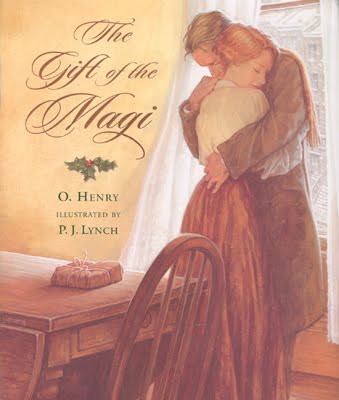
Which is the better gift, the comb or the pocket watch? O. Henry's short story, The Gift of the Magi (1905) offers a memorable ironic twist.
This beloved Christmas story explores the nature of true love and sacrifice through a young couple who each give up their most prized possession to buy a gift for the other, only to discover the beautiful irony of their situation.
This comprehensive study guide helps teachers and students appreciate O. Henry's clever use of irony and literary devices while exploring timeless themes of love, sacrifice, and the true meaning of gift-giving.
Read the Story
Before diving into the analysis, read the complete story:
Character Analysis & Summary
Characters
Della Dillingham - The young woman, married to Jim, whose prized possession was her long, beautiful hair.
Jim Dillingham - The young man, married to Della, whose prized possession was an old pocket watch with a leather strap.
Plot Summary
Jim and Della Dillingham are a poor, young married couple who don't have enough money to buy Christmas gifts. Both sell their most prized possessions in order to pay for a gift for the other at Christmas time. Della sells her beautiful long hair to buy a platinum chain for Jim's watch, while Jim sells his watch to buy ornamental combs for Della's hair. The result is a poignant irony where neither can use their gift, yet both have demonstrated the depth of their love through sacrifice.
Etymology of "Magi"

Magi is Latin, meaning skilled magicians, astrologers. Singular is "magus" which is the Persian root from Indo-Iranian "magh" which means powerful and rich, expressing ability. The Latins called them wise men, the Persians called them Magi.
Also from the Greek "magos" (5th century BCE) which refers to the Persian priestly and learned class as portrayed in The Bible in The Gospel of Matthew.
According to Ludolph of Saxony (died 1378):
"The three pagan kings were called Magi not because they were magicians but because of the great science of astrology which was theirs. Those whom the Hebrews called scribes and the Greeks, philosophers, and the Latins, wise men, the Persians called Magi. And the reason that they were called kings is that in those days it was the custom for the philosophers and wise men to be rulers."
Genre & Literary Devices

Genre
While The Gift of the Magi certainly falls in the fictional short story genre, it employs what could be called a sub-genre of "dramatic irony."
Dramatic irony is where the reader learns a secret that the main character(s) don't know about yet. Without the other knowing, both traded their most valuable possessions (priceless) for a gift that could no longer be used by the other because that person gave up their own possession. We wish we could stop Della from selling her hair, or Jim from selling his watch, but we can't. That's what makes for an engaging storyline that keeps us hooked. We want to know how they'll react when they find out.
Literary Devices
Intimacy - O. Henry effectively employs a literary technique of creating intimacy with his reader, addressing us directly so we feel like we are in the same room with the main characters. Examples: "...already introduced to you as Della" and "Perhaps you have seen a pier-glass in an $8 Flat."
Self-deprecating Humor - O. Henry makes fun of himself and his writing: "Oh, and the next two hours tripped by on rosy wings. Forget the hashed metaphor. She was ransacking the stores for Jim's present."
Similes - Comparing Della's hair, "rippling and shining like a cascade of brown waters" and describing herself after the haircut: "[I] look like a Coney Island chorus girl." Describing Jim standing still, "as immovable as a setter at the scent of quail."
Biblical References
- The Magi (wise men)
- King Solomon
- Queen of Sheba
Primary Themes
Sacrifice - Both characters willingly give up what they value most for the one they love.
Love - True love transcends material possessions.
Comparative Themes
- Yearning for what you can't have vs. receiving what you can't use
- Material happiness vs. spiritual or emotional happiness
Important Quotes

Explain what the following quotes mean and how they relate to the story:
"One dollar and eighty-seven cents. That was all. And sixty cents of it was in pennies."
The opening line establishes the couple's extreme poverty.
"Had King Solomon been the janitor, with all his treasures piled up in the basement, Jim would have pulled out his watch every time he passed, just to see him pluck at his beard from envy."
Demonstrates Jim's profound attachment to his prized possession.
"So now Della's beautiful hair fell about her, rippling and shining like a cascade of brown waters. It reached below her knee and made itself almost a garment for her."
Uses vivid imagery to emphasize what Della sacrifices.
"Don't you like me just as well, anyhow? I'm me without my hair, ain't I?"
Reveals Della's character and her priorities regarding love over possessions.
"Eight dollars a week or a million a year—what is the difference? A mathematician or a wit would give you the wrong answer."
Suggests that love transcends financial measurements.
"Let's put our Christmas presents away and keep 'em a while. They're too nice to use just at present."
Demonstrates the couple's graceful acceptance of their ironic predicament.
"But in a last word to the wise of these days let it be said that of all who give gifts these two were the wisest."
The story's conclusion elevates Jim and Della to the status of the biblical Magi through their selfless sacrifice.
Discussion Questions

The opening line, "One dollar and eighty-seven cents" (in 1905) is equivalent to how much in today's dollars? Here's an Inflation calculator. Why is this amount both important and unimportant in the story?
Define irony and how O. Henry employs it in the story.
Discuss the themes of sacrifice and love in the story.
Do Della's and Jim's reactions to their predicament giving up their most valued possessions for gifts that are now useless surprise you? Rather than be angry at each other or sad, Jim suggests they put the presents away for awhile and says, "And now suppose you put the chops on." How do material possessions compare to their true love for one another?
Della coveted the hair combs without the least hope of possession, and now that they were hers, she couldn't use them. Think of a situation in your own life that might be defined as ironic.
Why did O. Henry choose this simile? "Jim stopped inside the door, as immovable as a setter at the scent of quail."
Describe O. Henry's use of Biblical references (the magi, King Solomon, Queen Sheba) and his use of symbolism that Della and Jim are the magi. Link to The Holy Bible, Book of Matthew
Compare the events of "The Adoration of the Magi" to O. Henry's story. Recommended reading: Henry Wadsworth Longfellow's poem, The Three Kings, particularly noting his lines: "They [the people] thought the Wise Men were men insane" and, after the kings presented their precious gifts: "And the mother wondered and bowed her head, and sat as still as a statue of stone; her heart was troubled yet comforted..."
Describe the meaning of "wise" in the story. What does "word to the wise" mean (still a commonly used idiom)?
What's the definition of a "meaningful gift"? Why do you think this story is particularly touching at Christmas?
Compare the elements of irony in Federigo's Falcon with The Gift of the Magi. Identify literary devices used by each author to engage his reader in the protagonists' plight.
Read O. Henry's story, The Last Leaf, compare its themes of sacrifice and irony with The Gift of the Magi.
Describe your own philosophy of gift giving (and receiving) and what makes for the most meaningful gifts. Relate your experiences to the story.
Think of an incident which you consider ironic in your own life (or relate a movie or story where irony is central to the plot). Why is irony so appealing to readers/viewers? Discuss how coming to terms or resolving the conundrum is important.
Paired Reading Suggestions

Compare The Gift of the Magi to other stories of the sub-genre "dramatic irony":
Federigo's Falcon by Giovanni Boccaccio - A classic tale of sacrifice and irony from the Decameron.
The Last Leaf by O. Henry - Another masterpiece of sacrifice and irony by the same author.
Caline by Kate Chopin - A story featuring dramatic irony and unfulfilled longing.
The Ambitious Guest by Nathaniel Hawthorne - This one features scary, dark irony.
When comparing uses of dramatic irony, discuss plot, themes, the role of irony in engaging the reader, and contrasts that make each story unique.
Teachers: Challenge students to identify other stories they've read which contain dramatic irony, perhaps assign them to compose their own, to more fully appreciate the richness and appeal of irony in storytelling. It's both a pleasure for the audience and the writer!
Useful Links
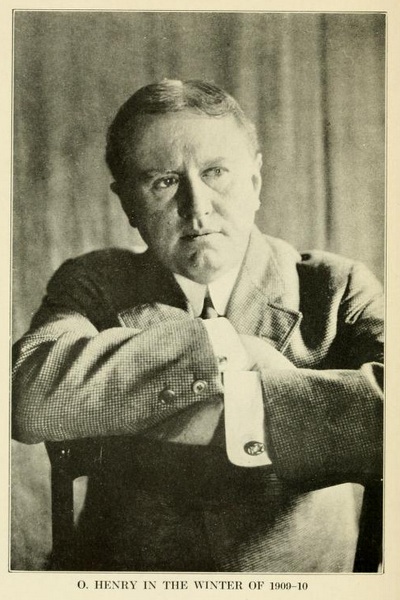
External Resources
- Is It Actually Ironic? - 3 TED-Ed lessons on irony
- ESL Lesson Plan for Gift of the Magi
- Storyboard That Plot Diagram for The Gift of the Magi
- Etymology of "Magi"
- Inflation calculator: 1905 dollars in 2017
Related Content on American Literature
Try Our Interactive Study Guides!
Test your knowledge with our gamified study guides
Active Learning
Engage with content through interactive exercises, not passive reading
Quick Sessions
Complete guides in 7-10 minutes, perfect for busy schedules
Track Progress
See your improvement with scores