Study Guides
Resources for Teachers and Students of Classic Literature
Dive deeper into literary classics and American Literature with comprehensive study guides.
Each guide offers plot summaries, character analysis, themes and literary devices, historical context, and thought-provoking discussion questions. Whether you're preparing for class discussion, need help with your homework, or want a deeper appreciation of the stories and novels you encounter, you'll find the insights you need in our study guides below.
We also feature Genre Study Guides for Romanticism, Dark Romanticism, Gothic Literature and more.
Guides by Title
A powerful allegory about the aftermath of slavery in America, told through the relationship between a young boy and a stray dog. Crane's story explores themes of abuse, loyalty, and the lasting effects of oppression.
"He wriggled contritely and showed his repentance in every way that was in his power. He pleaded with the child and petitioned him, and offered more prayers."
"In his mind he was being dragged toward a grim unknown. His eyes grew wild with the terror of it."
O'Connor's darkly comic masterpiece follows a family road trip that goes catastrophically wrong. A meditation on grace, violence, and the possibility of redemption in the most unlikely moments.
"She would of been a good woman if it had been somebody there to shoot her every minute of her life."
A haunting Civil War story exploring the devastating conflict between duty and family loyalty. When a Union soldier encounters a Confederate scout, he faces an impossible choice that reveals war's cruelest ironies.
"His first feeling was a keen artistic delight. On a colossal pedestal, the cliff,—motionless at the extreme edge of the capping rock and sharply outlined against the sky,—was an equestrian statue of impressive dignity."
Glaspell's masterful adaptation of her play Trifles, based on a real murder case she covered as a reporter. Two women accompanying their husbands to a crime scene quietly uncover the evidence the men overlook, raising profound questions about justice, gender, and the meaning of "trifles."
"Oh, I wish I'd come over here once in a while! That was a crime! Who's going to punish that?"
Weinbaum's 1934 debut revolutionized science fiction by introducing Tweel — one of the first truly alien characters in the genre. A crash-landed astronaut and a birdlike Martian discover that intelligence comes in forms neither can fully comprehend.
"A one-legged bird! The thing stood about four feet high, dressed in some vague, feathery covering... you couldn't tell if it had a beak or a nose."
A mother gets fifteen unexpected dollars and, for one luminous afternoon, remembers who she was before duty consumed her. Chopin's subtle 1897 exploration of self-sacrifice, desire, and the cost of motherhood.
"She was not going through any acute mental process or reasoning with herself, nor was she striving to explain to her satisfaction the motive of her action."
A Nebraska homesteader returns to Boston for a concert, and the music stirs powerful memories of the cultured life she sacrificed. Cather's poignant story explores the cost of pioneer life and the enduring power of art.
"Don't love it so well, Clark, or it may be taken from you."
Bierce's masterpiece of psychological fiction explores time, perception, and mortality through a Confederate sympathizer's final moments. The story's innovative narrative structure has influenced countless writers and filmmakers.
"Encompassed in a luminous cloud, of which he was now merely the fiery heart, without material substance, he swung through unthinkable arcs of oscillation, like a vast pendulum."
A stranded spaceman must stay awake for six days while ancient warring spirits fight to possess his mind. Bradbury transforms a simple survival story into a haunting meditation on the impossibility of escaping inherited conflict.
"Sleep, sleep, sang soft sea voices. Die, die, die, die, die, sang the voices."
An aging prizefighter faces a younger opponent with an empty stomach and fading strength. London's devastating study of naturalism reveals how a single piece of steak separates victory from ruin, youth from old age.
"Ah, that piece of steak would have done it!"
"He covered his face with his hands, and, as he cried, he remembered Stowsher Bill and how he had served him that night in the long ago."
Melville's enigmatic tale of a Wall Street copyist whose quiet refusal — "I would prefer not to" — confounds his employer and raises profound questions about work, free will, and human connection.
A mysterious Spanish slave ship harbors dark secrets in this gripping tale of deception and power. Melville's complex novella explores race, slavery, and the limits of perception in antebellum America.
"Follow your leader."
A chilling tale of guilt, madness, and the spirit of perverseness. A man's descent into alcoholism and cruelty toward his beloved pet cat sets off a chain of horrific events that culminates in murder and a shocking revelation.
"Who has not, a hundred times, found himself committing a vile or a silly action, for no other reason than because he knows he should not?"
A Boston scholar pieces together scattered documents and uncovers something no human mind was meant to know. Lovecraft's 1928 masterpiece introduced the Cthulhu Mythos and defined cosmic horror for a century.
"Ph'nglui mglw'nafh Cthulhu R'lyeh wgah'nagl fhtagn."
An American wife at an Italian hotel wants a cat crouching in the rain — and far more than any cat can give. Hemingway's quiet masterpiece of the Iceberg Theory, where every unspoken desire maps the contours of a marriage.
"I want to pull my hair back tight and smooth and make a big knot at the back that I can feel. I want to have a kitty to sit on my lap and purr when I stroke her."
A deaf-mute child wanders from home with a toy sword, encounters a procession of crawling wounded soldiers he mistakes for playmates, and returns to discover a horror beyond his comprehension. Bierce's devastating antiwar masterpiece of innocence destroyed.
"He moved among them freely, going from one to another and peering into their faces with childish curiosity."
A lonely young teacher dreading Christmas in an isolated community discovers that the warmth of strangers can heal even the deepest homesickness. Montgomery's holiday classic is a heartwarming tale of sacrifice, generosity, and unexpected grace.
"Christmas had suddenly lost all its horror for her."
A shipwrecked sailor adrift on the exposed ocean floor discovers a monolith older than humanity and the enormous creature that worships it. Lovecraft's first published story (1919) and a foundational text of the Cthulhu Mythos.
"I dream of a day when they may rise above the billows to drag down in their reeking talons the remnants of puny, war-exhausted mankind."
A Louisiana planter drives away his innocent wife over their baby's appearance — then finds a letter that destroys him. Chopin's devastating 1894 tale of race, identity, and betrayal in antebellum Louisiana.
"Tell me what it means!" she cried despairingly... "It means," he answered lightly, "that the child is not white; it means that you are not white."
An eccentric doctor invites four elderly friends to drink from the Fountain of Youth and watches them repeat every folly of their younger days. Hawthorne's witty and cautionary allegory about whether people can truly learn from their mistakes.
"If the fountain gushed at my very doorstep, I would not stoop to bathe my lips in it."
A scrappy Philadelphia office boy discovers a wanted murderer hiding at an illegal prizefight and risks everything to race the scoop back to his newspaper. Davis's beloved debut story captures the thrill of old-school journalism through an unforgettable young hero.
"He had a 'nose for news' that would have done credit to a veteran reporter."
Hemingway's masterpiece of subtext captures a tense conversation between a couple at a Spanish train station. What they don't say reveals everything about their relationship and the difficult decision they face.
"They look like white elephants."
"Would you please please please please please please please stop talking?"
A medical student's obsession with reanimating the dead spirals across six episodes of escalating horror. Lovecraft's serialized Frankenstein homage became his most adapted work, inspiring the cult classic Re-Animator films.
"The end, I think, is near. West is dead, and his work survives him."
A fifteen-year-old Kentucky boy's love of horses and horse racing leads him to Saratoga, where he witnesses the trainer he idolizes in a moment that shatters his innocence. Anderson's classic coming-of-age story asks why beauty and corruption can coexist in the same person.
"I want to know why."
A dreamlike voyage down a magical river past sleeping cities and forgotten gods — toward the pink cliffs at the edge of the world. The story that inspired H.P. Lovecraft's Dream Cycle.
"So I came down through the wood to the bank of Yann and found, as had been prophesied, the ship Bird of the River about to loose her cable."
A doctor rows his young son across a dark lake to deliver a baby — and discovers that birth and death have been sharing the same bunk all night. Hemingway's devastating initiation story about what a boy sees and what he cannot yet understand.
"In the early morning on the lake sitting in the stern of the boat with his father rowing, he felt quite sure that he would never die."
A Union soldier's farewell to his wife, written one week before his death at the First Battle of Bull Run. Sullivan Ballou's 1861 letter wrestles with love and duty in one of the most moving documents of the American Civil War.
"Sarah, my love for you is deathless, it seems to bind me to you with mighty cables that nothing but Omnipotence could break."
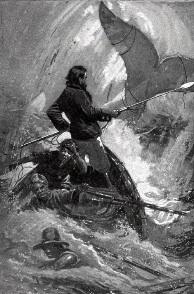
The great American novel of obsession, fate, and the limits of human knowledge. Captain Ahab's quest for the white whale becomes an exploration of good and evil, free will, and humanity's relationship with nature.
"Call me Ishmael."
"Ignorance is the parent of fear."
"For there is no folly of the beast of the earth which is not infinitely outdone by the madness of men."
A young man arrives in colonial Boston seeking his wealthy relative, only to discover the city has turned against the Major in a night of mob violence and dark carnival. Hawthorne's comic and unsettling masterpiece of American coming-of-age.
"He now became entangled in a succession of crooked and narrow streets, which crossed each other, and meandered at no great distance from the waterside."
A Czech immigrant farmer in Nebraska reflects on a life well-lived in this warm and deeply human story. Cather celebrates the quiet dignity of rural life, family bonds, and what it truly means to be a good neighbor.
"It was a nice graveyard, Rosicky reflected, sort of snug and homelike, not cramped or mournful — a big sweep all round it."
A sensitive and imaginative Pittsburgh boy seeks escape from his dreary life through art and fantasy. Cather's haunting story explores alienation, the longing for beauty, and the tragic consequences of misunderstood youth.
"It was at the Theatre and at Carnegie Hall that Paul really lived; the rest was but a sleep and a forgetting."
Whitman's revolutionary poem celebrates democracy, the human body, nature, and the interconnectedness of all life. This cornerstone of American poetry broke all conventions and created a new voice for the nation.
A young student in Padua becomes fascinated by the beautiful Beatrice, whose father has raised her among poisonous plants with terrifying results. Hawthorne weaves a dark tale of science, forbidden love, and the fine line between protection and destruction.
"Blessed are all simple emotions, be they dark or bright! It is the lurid intermixture of the two that produces the illuminating blaze of the infernal regions."
Dick's chilling novelette imagines a post-nuclear world where self-replicating robots have evolved to perfectly mimic humans. As survivors struggle to tell friend from machine, trust itself becomes the deadliest weapon.
"They're getting more complex, more elaborate, barring our way. The damn things got our whole area taped."
A young veteran returns from the Great War to find his Oklahoma hometown has already moved on. To be listened to at all, he must lie — and each lie erodes what little of himself the war left intact.
"He did not want any consequences. He did not want any consequences ever again."
A sickly ten-year-old boy invents a religion around a ferret in the garden shed and prays for deliverance from his cruel guardian. Saki's darkest and most celebrated story explores childhood rebellion, imagination as survival, and the terrible prayers that get answered.
"Do one thing for me, Sredni Vashtar."
A brilliant scientist becomes obsessed with removing a tiny birthmark from his beautiful wife's cheek, convinced it is the sole flaw marring her perfection. Hawthorne's chilling parable of science, obsession, and the fatal cost of pursuing human perfection.
"The crimson hand expressed the ineludible gripe in which mortality clutches the highest and purest of earthly mould."
A paranoid Swede arrives at a Nebraska hotel certain he will be murdered, and his terror sets in motion the very violence he feared. Crane's masterpiece of irony and collective guilt asks who is really responsible when a self-fulfilling prophecy turns deadly.
"Every sin is the result of a collaboration."
A frontier hermit lives alone in a cabin with one window sealed shut forever. The horrifying truth of what happened the night his wife died — and what the panther did — is revealed only at the very end.
"He had no combative instinct; he was not combatively inclined. Simply he knew that there was a panther in the room."
Buck's transformation from pampered pet to wild wolf explores themes of nature versus civilization, survival, and primal instincts. London's adventure classic remains a powerful study of adaptation and self-discovery.
"He was sounding the deeps of his nature, and of the parts of his nature that were deeper than he, going back into the womb of Time."
A compulsive gambler's champion jumping frog is secretly loaded with quail shot by a crafty stranger. Twain's 1865 breakout story — told through a deadpan narrator's rambling monologue — launched American humor and the tall tale tradition into literature.
"He was the curiousest man about always betting on anything that turned up you ever see, if he could get anybody to bet on the other side; and if he couldn't he'd change sides."
A meteorite poisons a Massachusetts farm with an alien presence that has no name, no motive, and no mercy. Lovecraft himself considered this 1927 tale his finest work.
"It was just a colour out of space — a frightful messenger from unformed realms of infinity."
A Union officer finds his mortally wounded best friend on the battlefield — and the one man who witnesses his mercy killing is his bitterest enemy. Bierce's devastating exploration of compassion, cruelty, and the impossible moral choices of war.
"It was a survey of the survey that combats of half the modern world have been fought upon—'the field of honor.'"
Told through a coroner's inquest, this supernatural mystery follows the death of Hugh Morgan, killed by an invisible creature whose color exists beyond human perception. A pioneering work of cosmic horror that predates Lovecraft by three decades.
"I am not combative, but I am not combatively inclined. I am a man of science... I don't believe in the supernatural."
A father's doomed attempts to entertain customers with egg tricks and preserved chicken monstrosities become a darkly comic portrait of American ambition. Told through his bewildered son's eyes, Anderson's masterpiece turns a humble egg into a devastating symbol of failure.
"My father was, I am sure, intended by nature to be a cheerful, kindly man."
Two swindlers convince an emperor they're weaving him magnificent invisible clothes, and no one dares speak the truth until a child's honest voice shatters the illusion. Andersen's beloved satire on vanity, conformity, and the courage to speak truth to power.
"But he has nothing on at all!"
"But among all the people no one dared to say so."
Dick's hilarious flash fiction follows a narrator who reads a novel and becomes convinced it describes aliens — because he takes every figurative expression literally. A comic gem about language, paranoia, and the absurdity of idioms.
"The eyes roved about the room... His heart pounded and sweat broke out on his forehead. It was too late to escape."
A village plagued by Hell-sent dreams sends a young hero to forge a legendary sword from a dragon's spine and storm a fortress that cannot be taken except by the blade Sacnoth. One of the founding works of modern fantasy quest fiction.
"In a wood older than record, a foster brother of the hills, stood the village of Allathurion."
O. Henry's beloved Christmas story about a young couple's sacrificial gift-giving demonstrates that love's true value lies not in material possessions but in selfless devotion. A perfect study in irony and sentiment.
"Of all who give and receive gifts, such as they are wisest... They are the magi."
A boy's harmless April Fool's prank spirals into a wildfire of gossip that sweeps through an entire community, producing consequences no one could have predicted. Montgomery's comic masterpiece skewers small-town rumor mills with warmth and wit.
"It was the first of April, and Julius Barrett counted that day lost."
A man emerges from his basement to find a body hanging from a lamppost in the town square — and no one else seems to care. Dick's paranoid masterpiece explores alien invasion, conformity, and the terror of being the only one who sees the truth.
"There was something wrong. He sat down at his workbench slowly, staring ahead. He could feel it. Something was not as it should be."
A knight devises the cleverest plan ever conceived to steal a legendary treasure from man-eating monsters — the Gibbelins have heard that before. Dunsany's darkly comic masterpiece of mock-heroic fantasy.
"Without saying a word, or even smiling, they neatly hanged him on the outer wall — and the tale is one of those that have not a happy ending."
Two men who have feuded their entire lives over a strip of forest confront each other at last — only to discover that nature has its own ideas about who the real interlopers are. Saki's devastating twist ending is one of the most anthologized in short fiction.
"And each prayed a private prayer that his men might be the first to arrive, so that he might be the first to show honourable attention to the enemy that had become a friend."
A mysterious young woman living alone in a ruined lighthouse on the Welsh coast hides a secret tied to love, betrayal, and class prejudice. Shelley weaves Gothic atmosphere with a tender romance in this atmospheric tale of isolation and devotion.
"The sea was placid as a lake, and the moonlight shone abroad, shedding its silver radiance on the wide expanse."
Two hired killers walk into a small-town diner looking for a man who already knows there's nothing to be done. Hemingway's most influential crime story pioneered hard-boiled fiction and confronts the terrifying passivity of fate.
"I can't stand to think about him waiting in the room and knowing he's going to get it. It's too damned awful."
This famous puzzle story challenges readers with an unresolved ending that sparks endless debate. Explore themes of jealousy, justice, and human nature while examining one of literature's most tantalizing ambiguous conclusions.
"And so I leave it with all of you: Which came out of the opened door—the lady, or the tiger?"
A blind old man sits alone in the snow as his tribe leaves him behind to die. London's spare, powerful story asks the hardest question: when nature demands your life, is acceptance wisdom or surrender?
"Nature was not kindly to the flesh. She had no concern for that concrete thing called the individual."
"What did it matter after all? Was it not the law of life?"
A traveling salesman arrives during a thunderstorm to sell lightning rods, but his fearful pitch meets stubborn resistance. Melville's satirical tale pits faith against fear and exposes the tactics of those who profit from terror.
"In thunder as in sunshine, I stand at ease in the hands of my God."

Andersen's poignant tale of a poor child on New Year's Eve addresses poverty, indifference, and the comfort of imagination. A powerful story for discussing social responsibility and compassion.
"She had had a quantity of them, but what was that? They all went out."
"No one had the slightest suspicion of what beautiful things she had seen."
A small town gathers for its annual lottery in this deeply unsettling story that shocked readers when it first appeared in The New Yorker. Jackson's tale of blind tradition remains one of the most powerful stories in American literature.
"It isn't fair, it isn't right."
"Although the villagers had forgotten the ritual and lost the original black box, they still remembered to use stones."
Prince Prospero locks himself and a thousand revelers inside an abbey to escape a deadly plague, but death cannot be walled out. Poe's allegorical masterpiece uses vivid color symbolism and an unforgettable masked intruder to explore mortality's triumph over wealth and privilege.
"And Darkness and Decay and the Red Death held illimitable dominion over all."
A celebrated big-game hunter becomes the prey when he's stranded on a remote Caribbean island with a refined aristocrat who hunts humans for sport. Connell's iconic thriller explores the line between civilization and savagery.
"The world is made up of two classes — the hunters and the huntees."
"I wanted the ideal animal to hunt. So I said, 'What are the attributes of an ideal quarry?' And the answer was, of course, 'It must have courage, cunning, and, above all, it must be able to reason.'"
Hawthorne's parable explores secret sin, isolation, and the masks we wear. When Reverend Hooper dons a black veil and refuses to remove it, his congregation confronts their own hidden guilt and hypocrisy.
"Why do you tremble at me alone? Tremble also at each other!"
"I look around me, and, lo! on every visage a Black Veil!"

A classic horror tale warning about the dangers of tampering with fate. When a magical talisman grants three wishes, a family learns that getting what you wish for can have devastating consequences.
"Be careful what you wish for, you may receive it."
"It had a spell put on it by an old fakir, a very holy man. He wanted to show that fate ruled people's lives."
A young alchemist's apprentice drinks what he believes is a cure for love, only to discover it grants eternal youth. As centuries pass and his beloved wife ages and dies, Winzy confronts the devastating loneliness of immortality.
"I have lived on for many a year — alone, and weary of myself — desirous of death, yet never dying — a mortal immortal."
Maupassant's devastating story of vanity and its consequences follows Mathilde Loisel's life-changing decision to borrow a diamond necklace. The famous twist ending offers lessons about honesty, materialism, and fate.
"She was one of those pretty and charming girls born, as though fate had blundered over her, into a family of artisans."
"Oh, my poor Mathilde! But mine was imitation. It was worth at the very most five hundred francs!"
A solitary creature escapes his dark castle and climbs an endless tower to reach the world above, only to discover his true nature in a devastating twist. Lovecraft's most Poe-influenced story explores identity, alienation, and the horror of self-knowledge.
"I know always that I am an outsider; a stranger in this century and among those who are still men."
A fifteen-year-old girl tells a nervous stranger the most convincing ghost story he has ever heard — every word of it a lie. Saki's most famous story is a masterclass in dramatic irony and the power of storytelling.
"Romance at short notice was her speciality."
Four shipwreck survivors in a ten-foot dinghy discover that the sea, the shore, and the universe itself are utterly indifferent to whether they live or die. Based on Crane's real 1897 shipwreck, this is one of the greatest works of American literary naturalism.
"When it occurs to a man that nature does not regard him as important, and that she feels she would not maim the universe by disposing of him, he at first wishes to throw bricks at the temple."
A taut manhunt through the Grand Canyon of the Arkansas, where U.S. Marshal Bob Banks and his bloodhounds race through the night to track down Peg-Leg Eldridge and his gang after a brazen train robbery. Authentic frontier law enforcement from a writer who lived it.
"The headlight threw its rays up serried columns of granite half a mile high."
Bradbury's very first published story (1939): an inventor sealed inside his own creation swings through centuries as the cruelest prisoner of time. A meditation on ambition, punishment, and the darkest irony of progress.
"The Prisoner Of Time, Layeville, had indeed travelled along the centuries. And the journey was at an end."
Poe's masterful tale of terror during the Spanish Inquisition explores fear, hope, and human resilience. The narrator's psychological torment and desperate survival create one of horror literature's most intense experiences.
"In the deepest slumber—no! In delirium—no! In a swoon—no! In death—no! even in the grave all is not lost."
Detective C. Auguste Dupin outwits both the police and a cunning minister to recover a stolen letter of immense political power. The final installment of Poe's Dupin trilogy explores the superiority of creative reasoning over brute-force methods.
"Perhaps the mystery is a little too plain."
America's most famous poem explores grief, madness, and the torment of lost love. Poe's hypnotic rhythm and dark imagery create an unforgettable meditation on death and memory that defined American Gothic poetry.
"Quoth the Raven, 'Nevermore.'"
"Deep into that darkness peering, long I stood there wondering, fearing."
A wealthy Mexican ranchero is kidnapped by border bandits from his sprawling Agua Dulce ranch in southern Texas. Adams draws on his decade of firsthand experience along the Rio Grande to tell a gripping tale of frontier brigandage and the lawless border country.
"This frontier on the south has undergone few changes in the last half century, and no improvements have been made."
An American heir restores his ancestral English priory and discovers what his family has been hiding beneath it for centuries. Lovecraft's 1924 tale of hereditary evil and psychological descent.
"The rats — the rats in the walls — they are calling me down."
A young Yale-educated reporter is shipwrecked on a South Pacific island and promptly takes it over, running it like his own kingdom. Davis's adventure satire skewers American ambition and colonial hubris with wit and dash.
"He did not see why he should not run this island as he would run a newspaper."
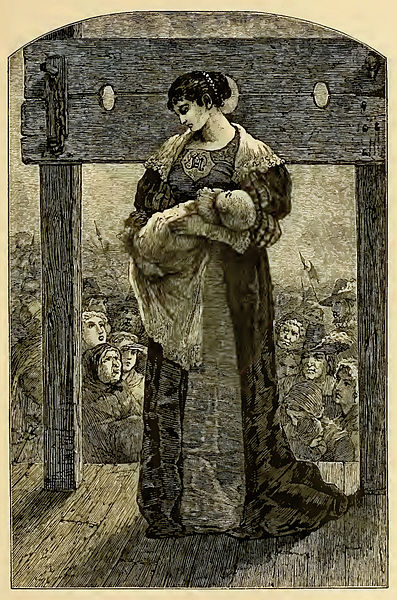
Hawthorne's examination of sin, guilt, and redemption in Puritan New England follows Hester Prynne as she bears the consequences of adultery. A profound exploration of individual conscience versus social judgment.
"She had not known the weight until she felt the freedom."
"No man, for any considerable period, can wear one face to himself and another to the multitude, without finally getting bewildered as to which may be the true."
Andersen's magnificent seven-part epic follows brave Gerda on a perilous quest to rescue her friend Kai from the cold and beautiful Snow Queen. The story that inspired Disney's Frozen explores the power of love and warmth against cold reason and isolation.
"The flakes of snow grew larger and larger, till at last they looked like great white chickens."
A dying writer on an African safari tallies every story he never wrote and every experience he traded for comfort. Hemingway's unflinching meditation on wasted talent, memory, and the frozen summit that waits above it all.
"He had destroyed his talent by not using it, by betrayals of himself and what he believed in."
Two former sweethearts, a darkened house, and a thunderstorm that gives everyone exactly what they need. Chopin's boldest story — so frank about desire that she never attempted to publish it in her lifetime.
"So the storm passed and every one was happy."
Chopin's groundbreaking story explores marriage, freedom, and identity through a woman's complex reaction to news of her husband's death. A powerful feminist text that challenged Victorian assumptions about women's desires.
"Free! Body and soul free!"
"There would be no one to live for during those coming years; she would live for herself."
A tender and lyrical account of a range steer's life from his birth in a chaparral thicket on a moonlit Texas night, through the perils and adventures that give him his unusual name. Unique in Adams' work for its animal-centered perspective and poetic prose.
"He was born in a chaparral thicket, south of the Nueces River in Texas. It was a warm night in April, with a waning moon hanging like a hunter's horn high overhead."
A thirteen-year-old Inuit boy defies his village's hunters and rises from poverty to leadership through courage and ingenuity. London's Arctic fable shows that "headcraft, not witchcraft" is the truest path to respect.
"It is headcraft, not witchcraft."
"And no widow nor weak one shall cry in the night because there is no meat, when the strong men are groaning in great pain for that they have eaten overmuch."
The most beautiful sled dog in the Klondike is also the laziest, most unkillable, and most impossible to get rid of. London's hilarious tall tale proves that in the battle of man vs. dog, the dog always wins.
A city defended only by the legend of dead heroes — until their ghosts return from Paradise to guide a sleeping boy's hand. One of the founding stories of modern fantasy fiction.
"I have never seen a city in the world so beautiful as Merimna seemed to me when first I dreamed of it."
Poe's masterpiece of psychological horror follows a narrator who insists on his sanity while confessing to murder. The beating heart beneath the floorboards has haunted readers for nearly two centuries.
"Villains! Dissemble no more! I admit the deed! — tear up the planks! — here, here! — it is the beating of his hideous heart!"
A lone traveler braves the frozen Yukon at seventy-five below zero, ignoring an old-timer's warning never to travel alone. London's masterpiece of Naturalism is one of the most widely taught American short stories.
"The trouble with him was that he was without imagination."
"You were right, old hoss; you were right."
A scientist teaches a cat to speak English at a country house party — and the cat immediately begins repeating every secret the guests thought they were keeping. Saki's wickedest satire of Edwardian hypocrisy.
"An animal that can be reasoned with is beyond-rats!"
A dissipated young nobleman makes a Faustian bargain with a monstrous dwarf, exchanging his handsome body for a chest of gold. Shelley's tale of vanity, identity, and redemption through love explores what it truly means to be human.
"I am a love — Loss, shame, and scorn were to be heaped on my devoted head. No wonder that I cursed the hour I was born."
A young bird ridiculed for being different endures cruelty and hardship before discovering he has become a beautiful swan. Andersen's most autobiographical tale is a timeless parable of identity, perseverance, and self-discovery.
"He now felt glad at having suffered sorrow and trouble, because it enabled him to enjoy so much better all the pleasure and happiness around him."
Old Henry Fleming calmly admits he ran from battle during the Civil War, then walks into a burning barn to save the animals and never comes back out. Crane's sequel to The Red Badge of Courage redefines what courage really means.
"That was at Chancellorsville. Of course, afterward I got kind of used to it."
A young woman's courageous New Year's Day visit to her proud, estranged uncle leads to an unexpected reconciliation over a home-cooked dinner. Montgomery's touching holiday story explores how a single act of kindness can dissolve years of stubborn pride.
"Should think New Year's would be pretty much the same as any other day to you."
A young Puritan man ventures into the forest one night and discovers that the people he most trusts may harbor terrible secrets. Hawthorne's masterful allegory of faith, doubt, and the hidden darkness of human nature is one of the most widely taught stories in American literature.
"My Faith is gone! There is no good on earth; and sin is but a name. Come, devil; for to thee is this world given."
Children play the most exciting game ever — "Invasion" — while their parents laugh it off. A chilling story about what happens when adults stop listening, and the most terrifying game of peek-a-boo ever written.
"Peek-a-boo," said Mink.
Guides by Genre
Explore the shadowy counterpart to Transcendentalism. Dark Romantic writers like Poe, Hawthorne, and Melville examined human fallibility, sin, and the darker aspects of nature and the psyche.
"All that we see or seem is but a dream within a dream."
Cautionary tales of societies gone wrong, featuring dangerous technology, environmental collapse, and lost freedoms. From Orwell to Bradbury, dystopian fiction warns us about possible dark futures.
"It was a pleasure to burn."

Classic tales from the Brothers Grimm, Hans Christian Andersen, and Charles Perrault that have shaped storytelling for centuries. Explore the origins, themes, and enduring appeal of these beloved stories.
"Once upon a time..."
"And they lived happily ever after."

Groundbreaking works by women writers who challenged societal norms and explored female identity. From Kate Chopin to Charlotte Perkins Gilman, these stories redefined women's voices in literature.
"She was becoming herself and daily casting aside that fictitious self which we assume like a garment with which to appear before the world."
Terror, mystery, and the supernatural define this influential genre. Gothic literature explores fear, decay, and the unknown through haunted settings and psychologically complex characters.
"I became insane, with long intervals of horrible sanity."
The literary movement that depicted life as it truly is, without idealization. Realist writers like Twain, James, and Wharton captured the complexities of American society with unprecedented honesty.
"The difference between the almost right word and the right word is really a large matter—it's the difference between the lightning bug and the lightning."
The artistic movement celebrating emotion, nature, and individualism that transformed American literature. Romantic writers valued imagination over reason and found the sublime in the natural world.
"There is a sacredness in tears. They are not the mark of weakness, but of power."
Masters of psychological depth and moral complexity, Russian writers like Tolstoy, Dostoevsky, and Chekhov created some of world literature's most profound explorations of the human condition.
"All happy families are alike; each unhappy family is unhappy in its own way."

From H.G. Wells' time machines to Asimov's robots, science fiction imagines possible futures and explores technology's impact on humanity. These stories ask "what if?" in profound and entertaining ways.
"No one would have believed in the last years of the nineteenth century that this world was being watched keenly and closely by intelligences greater than man's."

The uniquely American philosophical movement led by Emerson and Thoreau that emphasized self-reliance, intuition, and the divine in nature. These ideas continue to shape American thought and identity.
"I went to the woods because I wished to live deliberately, to front only the essential facts of life."
A narrative technique where readers cannot fully trust the storyteller. Explore how authors from Poe to Fitzgerald use unreliable narrators to create suspense, irony, and deeper thematic meaning.
"True!—nervous—very, very dreadfully nervous I had been and am; but why will you say that I am mad?"