The Magnificent Ambersons & Alice Adams
The Magnificent Ambersons (1919) and Alice Adams (1922) earned Tarkington two Pulitzer Prizes for Fiction, making him one of only a handful of authors to win the award more than once.
Honoring achievement in American literature since 1917 — the novels, poetry, drama, and biography that shaped the nation's literary identity.
The Magnificent Ambersons (1919) and Alice Adams (1922) earned Tarkington two Pulitzer Prizes for Fiction, making him one of only a handful of authors to win the award more than once.
Awarded the Pulitzer Prize in 1921, Wharton became the first woman to win the award for fiction. Her novel explores the conflict between individual desire and social convention in Gilded Age New York.
Winner of the 1923 Pulitzer Prize, Cather's novel follows a young Nebraskan who finds purpose and meaning during World War I.
Winner of the 1925 Pulitzer Prize. Though not yet in the public domain, we feature many of Ferber's eclectic short stories, including One of the Old Girls.
Awarded the 1926 Pulitzer Prize, which Lewis famously refused. We recommend his landmark novels Main Street and Babbitt.
Winner of the 1932 Pulitzer Prize, Buck's novel chronicles the life of a Chinese farmer and his family through hardship and prosperity.
Winner of the 1940 Pulitzer Prize, Steinbeck's masterwork follows the Joad family's migration from Oklahoma to California during the Great Depression.
Winner of the 1943 Pulitzer Prize. We recommend Sinclair's groundbreaking novel The Jungle.
Winner of the 1953 Pulitzer Prize. We recommend his short story My Old Man.
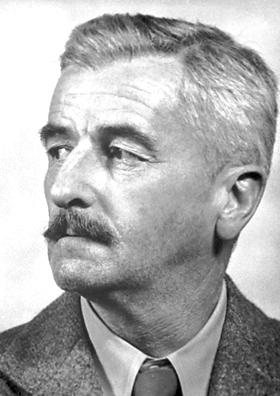
A Fable (1955) and The Reivers (1963) earned Faulkner two Pulitzer Prizes. We recommend his iconic short story A Rose for Emily.
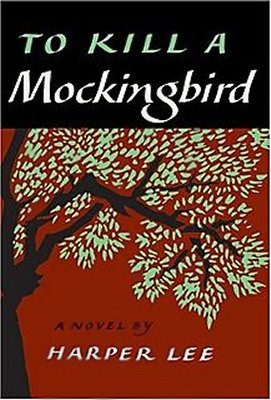
Winner of the 1961 Pulitzer Prize, Lee's novel of racial injustice in the American South remains one of the most widely read and taught books in the country.
Winner of the 1966 Pulitzer Prize, Porter's collected stories are masterworks of precise prose and psychological depth.
Winner of the 1918 Pulitzer Prize (originally the Columbia Poetry Prize), Love Songs was the first collection to receive the award for poetry.
Cornhuskers (1919) and Complete Poems (1951) earned Sandburg two Pulitzer Prizes for Poetry. Favorites include Prairie and Laughing Corn.
Co-winner of the 1919 Pulitzer Prize alongside Sandburg's Cornhuskers. The title poem of Widdemer's acclaimed collection.
Winner of the 1923 Pulitzer Prize, the title poem of a collection that also included Eight Sonnets and A Few Figs from Thistles.
New Hampshire (1924), Collected Poems (1931), A Further Range (1937), and A Witness Tree (1943) earned Frost an unmatched four Pulitzer Prizes for Poetry. Favorites include Stopping by Woods on a Snowy Evening, The Road Not Taken, and Home Burial.
Winner of the 1948 Pulitzer Prize, Auden's long poem explores the anxieties of the modern age. We recommend The More Loving One.
Beyond the Horizon (1920), Anna Christie (1922), Strange Interlude (1928), and Long Day's Journey Into Night (1957) earned O'Neill an unmatched four Pulitzer Prizes for Drama.
Winner of the 1921 Pulitzer Prize for Drama, Gale became the first woman to win in this category. Based on her own novel of the same name.
Winner of the 1931 Pulitzer Prize for Drama. We recommend Glaspell's landmark one-act play Trifles.
Winner of the first Pulitzer Prize for Biography in 1917, this comprehensive life of the author of The Battle Hymn of the Republic was written by her two daughters.
Winner of the Pulitzer Prize for History in 1940, Sandburg's monumental four-volume work is a landmark achievement in American biographical writing.
For a complete list of winners, visit The Pulitzer Prizes by Year at pulitzer.org. Multiple award winners are noted in parentheses in the gallery above.
"The aim of every artist is to arrest motion, which is life, by artificial means and hold it fixed so that a hundred years later, when a stranger looks at it, it moves again since it is life." — William Faulkner, two-time Pulitzer Prize winner